Sushi Making Classes Near Harajuku: Real Tokyo Options You Can Book
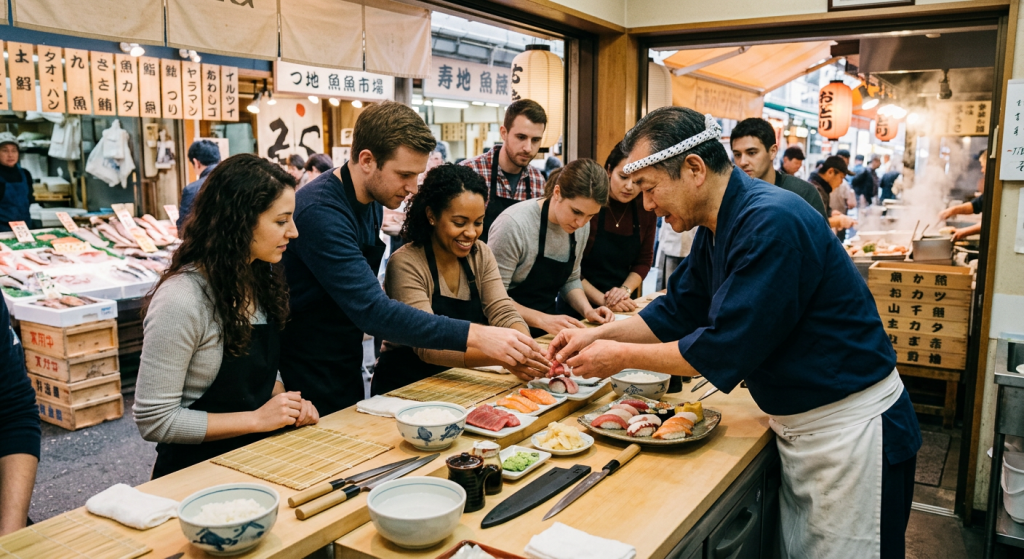
If you want a sushi making class near Harajuku, there is one clearly bookable hands-on option right in the Harajuku area, and a stronger range of alternatives once you widen the search to nearby Shibuya and central Tokyo districts such as Tsukiji and Asakusa. That matters because some pages use “Harajuku” loosely, while the actual class venue may be in Sendagaya, Shibuya, Hiroo, or farther east in Tokyo.
For most travelers, the practical answer is simple. Book Harajuku if staying around Takeshita Street, Omotesando, or Meiji-jingumae and you want the least travel time. Book Shibuya if you want another close-in option. Expand to Tsukiji or Asakusa if the class itself is the main event and you want a broader or more polished format. Harajuku sits between Shibuya and Shinjuku on the Yamanote Line, so Shibuya is especially easy to fold into the same day.
Quick comparison of real classes
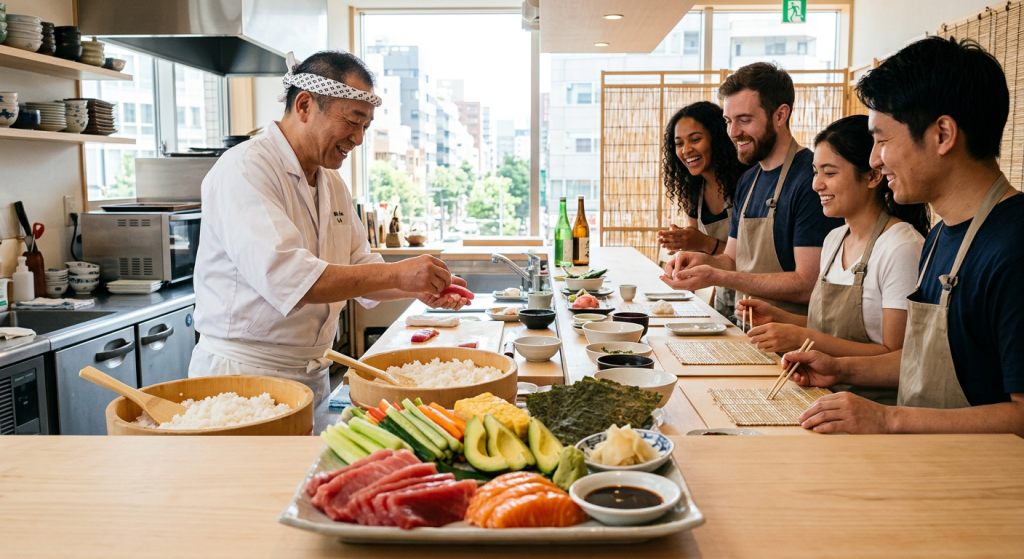
| Experience | Area | Best for | What you make | Duration | Price | Language | Class style | Special note |
|---|---|---|---|---|---|---|---|---|
| Hand-Rolled Sushi Experience by SHOGUN Cafe | Harajuku / Sendagaya | Travelers who want a class actually near Harajuku Station | Hand-rolled sushi with tuna, salmon, shrimp, cucumber, egg, and more | 90 min | ¥6,600 | English and Japanese guidance confirmed on booking pages | Small workshop; official booking currently requires at least 2 participants | Venue is on the 2F SHOGUN Cafe, about 2 minutes from Harajuku Station. |
| Sushi Making Experience in Shibuya | Marketed as Shibuya; page also describes Hiroo as the setting | Travelers who want chef-led instruction and a more upscale feel | Nigiri, maki, and gunkan | About 1 hr 45 min | ¥20,000 per person | English | Small-group workshop | The provider highlights a former Michelin-trained chef and asks for dietary requests at least 3 days ahead. |
| Shibuya Hands On Sushi Making Class with Chef | Shibuya | Travelers who want a compact class close to Harajuku with a very small group cap | Tuna and salmon nigiri plus rolls, with more than 7 types of neta listed | About 90 min | Check current price | English and one more language listed | Shared class, maximum 6 travelers | Includes a traditional tenugui hand towel souvenir and 24-hour free cancellation on the booking page. |
| Private Tsukiji Outer Market Tour and Cooking Class by Tsukiji Cooking | Tsukiji | Food-focused travelers who want a market visit as part of the experience | Menu selectable, including sushi options, after shopping in the market | 3 hours | ¥176,000 total for 1–10 people; ¥17,600 per person for 11+ | English class or English interpretation included | Private group format | Best for families, friend groups, or company outings rather than a casual solo booking. |
| Nigiri Sushi Experience Course at SUSHI GARYU Asakusa | Asakusa | Couples, small groups, or travelers who want a private-feeling nigiri class | Tuna and salmon nigiri plus rolls | About 90 min on the Viator listing | ¥13,200 | English and one more language listed on Viator | Private activity on Viator; official booking lists use by 1–6 people | Vegetarian and gluten-free menus are published on TableCheck, with additional dietary requests available in advance on the tour listing. |
| Sushi Making Tokyo by Sushi Making Japan | Asakusa | Travelers who want a structured English-friendly class with strong dietary support and large-group capacity | Nigiri and maki rolls | About 90 min | ¥13,000 per person | English | Standard class; private classes also offered separately | One of the easiest Tokyo options for large groups, school trips, and travelers who need halal, vegan, vegetarian, or allergy-friendly options with advance notice. |
Sushi Making Kakida: A Premium, Hands-On Sushi Experience in Tokyo
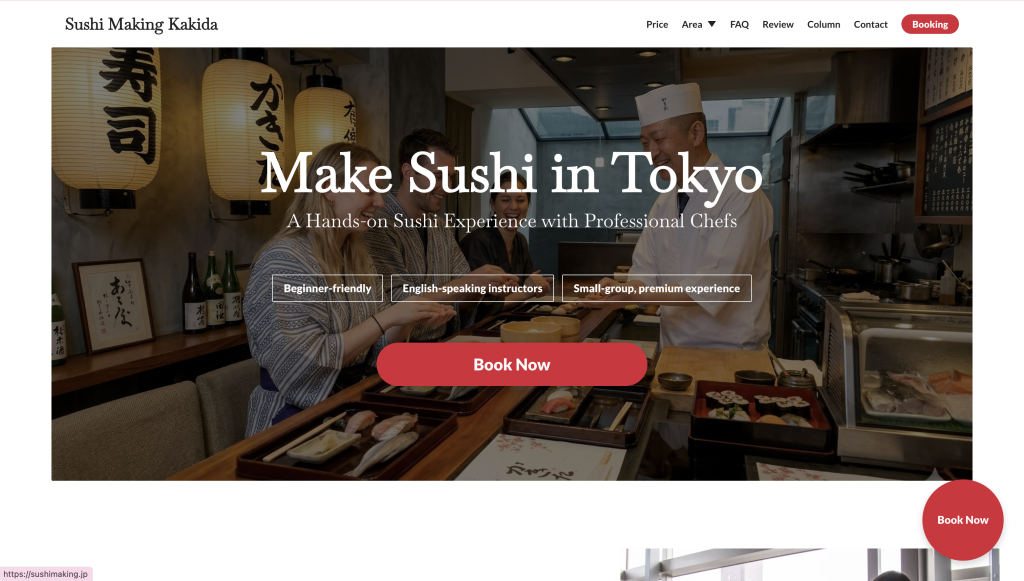
For travelers who want to do more than simply eat sushi, Sushi Making Kakida offers an authentic, hands-on experience guided by professional Japanese sushi chefs.
Rather than joining a large, demonstration-style cooking class, guests learn in a small, private-style group of up to four people. A professional sushi chef and English-speaking interpreter guide you through each step, making the experience easy to follow even if you have never cooked or made sushi before.
During the class, you will learn how to shape traditional nigiri and make approximately 10 pieces of sushi using fresh, high-quality ingredients. Depending on seasonal availability, the selection may include premium toppings such as otoro fatty tuna, chutoro medium-fatty tuna, akami lean tuna, sea urchin, scallop, sea bream, salmon and other Japanese seafood.
The experience is not only educational but also highly interactive. You can watch a professional chef demonstrate authentic techniques, practise making nigiri yourself, eat the sushi you have created and take memorable photos at the sushi counter while wearing a traditional Japanese kappogi apron.
Sushi Making Kakida has already welcomed international visitors from around the world. With clear English support, personal attention and a relaxed atmosphere, it is an excellent choice for couples, families, solo travelers and small groups looking for a memorable Japanese cultural experience.
More Than a Sushi Class: Experience the World of Japanese Tuna
What makes Sushi Making Kakida particularly special is the expertise of the restaurant group behind it.
The Kakida team also operates spectacular maguro tuna-cutting shows, where professional sushi chefs break down whole bluefin tuna weighing more than 100 kilograms in front of an audience. These live events have been held for corporate parties, international exchange events, weddings and large-scale gatherings with hundreds of guests.
Unlike a typical cooking workshop, Sushi Making Kakida is backed by working sushi professionals who regularly source, prepare and serve premium tuna and seafood. Their knowledge extends far beyond showing guests how to shape rice—the team understands how fish is selected, cut and transformed into high-quality sushi.
The tuna-cutting show is a separate event service and is not included in the standard sushi-making class. However, it demonstrates the level of craftsmanship, seafood knowledge and entertainment experience behind the Kakida name.
For visitors searching for a sushi making class in Tokyo or Shinjuku, Sushi Making Kakida offers more than a fun activity. It is an opportunity to step behind the sushi counter, learn directly from professionals and experience one of Japan’s most iconic culinary traditions for yourself.
Make sushi, meet real Japanese chefs and create a Tokyo memory you can actually taste.
The class actually in Harajuku
Hand-Rolled Sushi Experience by SHOGUN Cafe
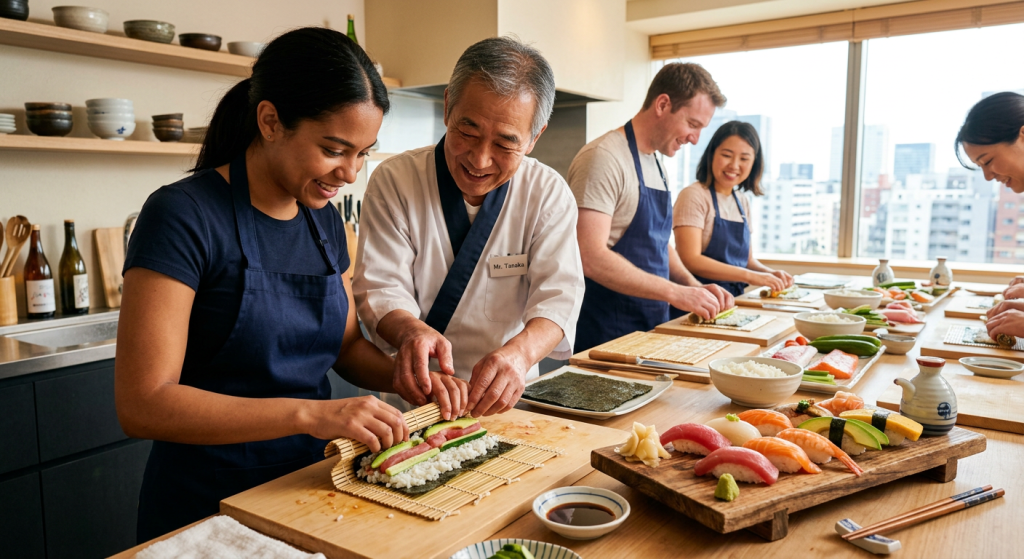
For travelers searching specifically for a sushi making class in Harajuku, this is the most direct match. The workshop takes place at SHOGUN Cafe, on the second floor of the Monster Kart building at 3-61-7 Sendagaya, Shibuya, and the official site says it is about a 2-minute walk from Harajuku Station and about 4 minutes from Meiji-jingumae Station. The current published price is ¥6,600 and the official booking page lists the class at about 90 minutes.
The format is straightforward and traveler-friendly. You learn hand-rolled sushi in a traditional-style setting, use fresh ingredients such as tuna, salmon, shrimp, cucumber, and egg, hear a short explanation about sushi history and rice handling, and finish by eating what you made. Booking pages also mention English- and Japanese-speaking instruction, a happi coat for photos, and vegetarian, vegan, and gluten-free options.
This option makes the most sense if Harajuku is already a major part of your day. You can fit it around Meiji Shrine, Takeshita Street, Omotesando, or afternoon shopping without making the class feel like a cross-city detour. The trade-off is flexibility: the current official Klook package requires at least two participants, so solo travelers should check whether a different channel or date allows a single booking.
Before booking, check the small details. The official booking page says full refunds are available up to 24 hours before the activity, but late arrivals and no-shows are non-refundable, and rebooking due to lateness can incur a ¥2,000 fee. Because the venue is on the second floor, travelers who need step-free access should confirm current accessibility directly, even though a GetYourGuide listing describes the activity as wheelchair accessible.
The strongest nearby options from Harajuku
Sushi Making Experience in Shibuya
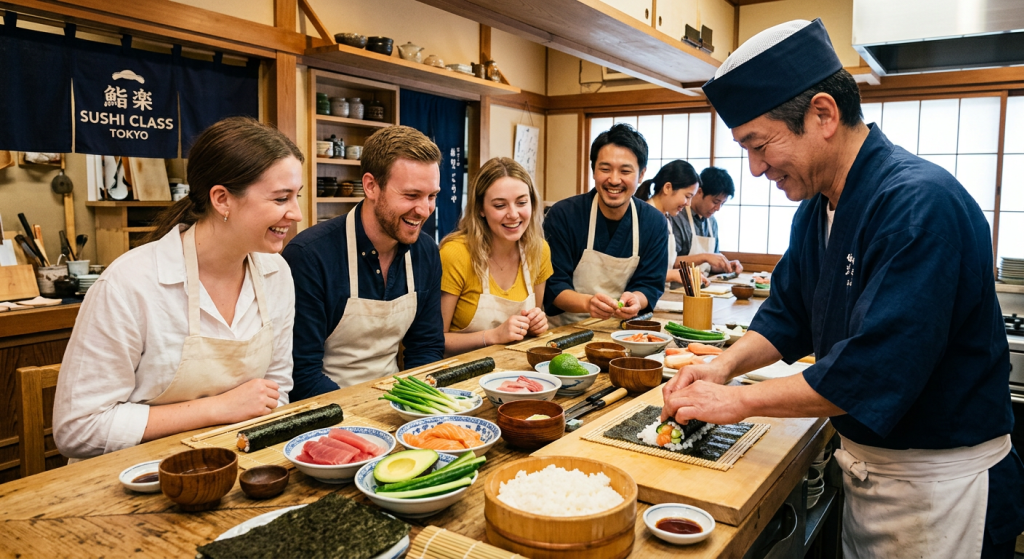
If you are open to leaving Harajuku itself but want something that still fits naturally into a Shibuya-side Tokyo itinerary, this is one of the more appealing nearby options. The provider sells it as a Shibuya sushi class, led by a former Michelin-trained chef, with hands-on instruction covering nigiri, maki, and gunkan. The page lists the class at about 1 hour 45 minutes and ¥20,000 per person.
The class reads more like a chef-led workshop than a quick tourist add-on. You get a short introduction to sushi history, a live chef demonstration, hands-on shaping practice, and time to sit down and eat the sushi you made. The page also says the class size is limited, which should appeal to travelers who want more guidance rather than a large demonstration-heavy format.
There is one location detail worth noticing. The experience page calls it “in Shibuya,” but it also has a section titled “About Hiroo,” describing Hiroo as the neighborhood setting for the workshop. For travelers booking by area, that means you should not assume the venue is right by Shibuya Crossing. It still works well from Harajuku, but the exact meeting point should be checked during booking.
Dietary support is one of the class’s strengths on paper. The provider asks for dietary restrictions at least 3 days in advance, says vegan and vegetarian options are available, and says it will do its best to accommodate allergies. That makes it a more comfortable option than classes that publish little or nothing about food restrictions.
Shibuya Hands On Sushi Making Class with Chef
This is another practical near-Harajuku sushi experience, and it is easier to place geographically than the Shibuya/Hiroo listing above. The booking page uses a meeting point at 2-chome-14-6 Shibuya, Tokyo 150-0002, near the Nishida Building, and lists the class at about 1 hour 30 minutes. It is offered in English and one more language, with a maximum of 6 travelers, which makes it one of the more intimate shared classes in this group.
The class emphasizes classic nigiri technique rather than a broad home-cooking menu. The published sample menu lists toppings including tuna, salmon, gizzard shad, sea bream, squid, shrimp, sweet omelet, salmon roe, and tuna roll, and the inclusions mention all sushi ingredients, use of the necessary tools, and a traditional tenugui hand towel souvenir.
This one works well for travelers who want a compact class on a Harajuku–Shibuya day and care about small group size more than extras like a market walk or a long culture lecture. The main limitation is pricing transparency in yen: the Viator page shows pricing in foreign currency, so the cleanest approach is to check the current booking page rather than assume a converted yen number. The listing also says you can cancel up to 24 hours in advance for a full refund.
Accessibility is not ideal here. The page says the activity is not wheelchair accessible, though it is near public transportation. If barrier-free access is important, another venue will be safer.
When it is worth going beyond Shibuya
Private Tsukiji Outer Market Tour and Cooking Class by Tsukiji Cooking
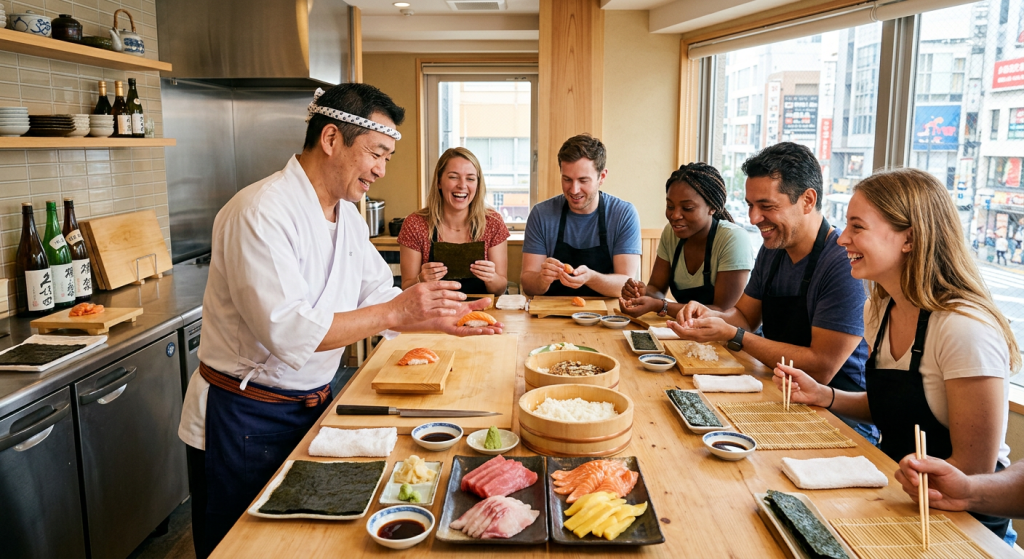
For travelers who see a sushi class as part of a bigger food-culture day, Tsukiji is where the format changes. Tsukiji Cooking has operated cooking classes in Tsukiji since 2013, is based in SOLASIA BLDG. TSUKIJI 5F, 4-13-8 Tsukiji, and publishes a private outer market tour and cooking class that begins with shopping in Tsukiji Outer Market before returning to the studio to cook. The official schedule shown on the site is 10:00 a.m. to 1:00 p.m., or 3 hours total.
This is not the cheapest or simplest class, but it is easily one of the most substantial. The official page explains that after roughly an hour in the market, participants return to the studio for a class with a selectable menu, including sushi options, and then eat what they make. The published rate is ¥176,000 total for 1–10 participants, or ¥17,600 per person for 11 or more, with English instruction or English interpretation included.
That pricing tells you who this class is really for. It is a strong fit for families traveling together, friend groups, incentive trips, and corporate events, but much less practical for a casual solo traveler or couple just trying to squeeze in a quick activity near Harajuku. If you are staying in central Tokyo and want a market component, though, this is one of the clearest officially published options.
Dietary flexibility is another plus. Tsukiji Cooking says vegetarian options and special dietary needs can be discussed in advance. The company also notes that lessons are available in English and that recipes are provided in English. Cancellation terms are stricter than many booking-platform experiences, so this is one to read carefully before paying: the official terms escalate after reservation confirmation and reach 100% cancellation fees within 7 days of the class date.
Nigiri Sushi Experience Course at SUSHI GARYU Asakusa
Asakusa is not “near Harajuku” in the same way Shibuya is, but it is a realistic Tokyo alternative if your trip already includes Senso-ji, Kaminarimon, or the eastern side of the city. SUSHI GARYU Asakusa publishes a Nigiri Sushi Experience Course on TableCheck at ¥13,200, and the venue description says it is an experience near Kaminarimon. The listing says participants make tuna and salmon nigiri sushi and rolls, work with an expert sushi chef, and can wear traditional Japanese attire.
The address is 1-18-3 Asakusa, Taito City, and a parallel booking listing for the same provider and address describes the experience as a 90-minute activity at “SUSHI GARYU ASAKUSA” 2nd Floor, about 3 minutes from Asakusa Station Exit 1, operated as a private activity for your group. That combination makes it a good choice for couples or small groups who want more privacy than a big shared class.
It is also one of the easier options for dietary restrictions, as long as you ask ahead. The official TableCheck page says vegetarian and gluten-free menus are available, while the paired activity listing says vegetarian, vegan, and gluten-free options are available if requested in advance, and asks guests to message any food allergies beforehand.
There are a couple of practical catches. TableCheck notes that the venue cannot accommodate wheelchairs or strollers because there is no elevator, and children under 4 must share a meal with their family. If those points matter to your group, this is something to confirm before you commit.
Sushi Making Tokyo by Sushi Making Japan
If you want a polished, scalable, English-first class and do not mind going to Asakusa, Sushi Making Tokyo is one of the cleanest officially documented options. The official site places the class at 2-17-9 Kaminarimon, Taito City, about a 3-minute walk from Asakusa Station, and publishes a current price of ¥13,000 per person for a 1.5-hour class in English.
The class covers both nigiri and maki, with the official site highlighting sushi rice preparation, fish handling and cutting techniques, plating, etiquette, and the chance to eat the sushi at the end. It also publishes a relatively high capacity of up to 90 people, which makes it far more suitable for schools, large family groups, or company outings than most small cooking studios.
This is also one of the strongest options for dietary accommodation. The official page says the class can handle vegan, vegetarian, halal, and allergy-friendly requests with advance notice, and specifically mentions halal-certified ingredients. It also says recipes are sent after class, which is a small detail but helpful if you want a souvenir that is actually usable back home.
For travelers coming from Harajuku, the downside is obvious: it is not nearby. This only makes sense if you are already planning to spend time around Asakusa, Senso-ji, or Tokyo Skytree, or if the class quality and dietary flexibility matter more than distance. The official site also offers free cancellation up to 24 hours before the class.
How to choose the right sushi experience from Harajuku

For a true Harajuku-area booking, SHOGUN Cafe is the easiest fit. It is physically close to Harajuku Station, priced well below the more chef-led alternatives, and short enough to slot into a shopping or sightseeing day. The main drawback is that the current booking page requires at least two participants.
For a close nearby class with more chef focus, the Shibuya options make more sense. Food Tour Tokyo’s class is the stronger match if you want a chef-centered lesson and published pricing in yen, while the Viator-listed Shibuya class is more useful if you care about a very small group cap, a specific Shibuya meeting point, and a shorter 90-minute format.
For a deeper food-culture experience, Tsukiji stands out because it adds the market component. That is especially appealing for travelers who care as much about ingredient culture and the neighborhood atmosphere as they do about the actual shaping of sushi rice. It is also the clearest option here for private group bookings with a market walk built in.
For families or groups with dietary needs, the Asakusa classes are easier to trust because they publish more operational detail. Sushi Making Tokyo is the strongest if you need explicit halal, vegan, vegetarian, or allergy-friendly support. SUSHI GARYU is better if you want a more compact nigiri experience with a private-group feel.
What to check before booking
Before you book any sushi experience near Harajuku, check five things.
First, confirm the actual venue area, not just the headline keyword. “Harajuku,” “Shibuya,” and “Tokyo” are sometimes used in a broad marketing sense, while the real class venue may be in Sendagaya, Hiroo, Tsukiji, or Asakusa.
Second, check whether the class is private or shared. Tsukiji Cooking’s market class is a private-group format, SUSHI GARYU’s Viator listing is published as a private activity, SHOGUN Cafe is sold as a small workshop with quantity limits, and the Shibuya hands-on class has a maximum of six travelers.
Third, do not assume dietary support. Some providers publish it clearly and some do not. SHOGUN Cafe, Food Tour Tokyo, SUSHI GARYU, and Sushi Making Tokyo all publish at least some dietary accommodation, but the exact lead time and scope vary.
Fourth, pay attention to refund and late-arrival rules. Several classes allow 24-hour free cancellation, but Tsukiji Cooking’s private group program uses a much stricter schedule, and SHOGUN Cafe states that no-shows and lateness are not refunded.
Fifth, check the booking format for solo travelers and children. SHOGUN Cafe’s current package requires at least two people, Food Tour Tokyo allows kids 5 and under free of charge, SUSHI GARYU says children under 4 share a meal, and some venues publish no clear child policy at all.
Frequently asked questions
Are there sushi-making classes in Harajuku?
Yes, but the number of clearly identifiable hands-on classes in Harajuku itself is limited. The clearest current option is the Hand-Rolled Sushi Experience at SHOGUN Cafe in Sendagaya, close to Harajuku Station. If you are flexible on area, you will find more options in nearby Shibuya and broader central Tokyo.
What is the closest sushi-making class to Harajuku Station?
The SHOGUN Cafe workshop is the closest clearly published option in this group. The official site says the venue is about 2 minutes on foot from Harajuku Station and about 4 minutes from Meiji-jingumae Station.
How much does a sushi-making class near Harajuku cost?
Published prices vary a lot by format. The Harajuku hand-rolled sushi workshop is ¥6,600, Food Tour Tokyo’s chef-led Shibuya experience is ¥20,000 per person, Sushi Making Tokyo in Asakusa is ¥13,000 per person, SUSHI GARYU’s nigiri experience is ¥13,200, and Tsukiji Cooking’s market-tour class is priced as a private group at ¥176,000 for 1–10 people.
Are these classes taught in English?
Several are. English instruction is explicitly published for the Harajuku SHOGUN Cafe workshop on booking pages, Food Tour Tokyo’s Shibuya class, Tsukiji Cooking, and Sushi Making Tokyo. The Shibuya hands-on class and SUSHI GARYU listings also publish English as an available language.
Can beginners join?
Yes. These classes are built for travelers, not professional cooks. The Harajuku workshop, the Shibuya chef-led classes, and Sushi Making Tokyo all describe step-by-step or beginner-friendly instruction.
Do you eat the sushi you make?
Usually, yes. That is explicitly published for SHOGUN Cafe, Food Tour Tokyo, Tsukiji Cooking, and Sushi Making Tokyo, and the Shibuya and SUSHI GARYU listings also describe eating the class meal or the sushi made during the session.
Are vegetarian or vegan options available?
Some classes do publish them, but not all. SHOGUN Cafe lists vegetarian, vegan, and gluten-free options. Food Tour Tokyo says vegan and vegetarian options are available with notice. SUSHI GARYU publishes vegetarian and gluten-free support on TableCheck and broader special requests on its activity listing. Sushi Making Tokyo also publishes vegan and vegetarian options, plus halal and allergy-friendly support.
Can solo travelers book a sushi class near Harajuku?
Sometimes, but not every option is equally solo-friendly. The main Harajuku workshop currently shows a minimum of two participants on one booking page, so solo travelers should verify availability before planning around it. Shibuya and Asakusa classes are generally more promising, especially where the booking pages show shared departures or single-booking order limits.
The practical bottom line
For a traveler who typed “sushi making class Harajuku,” the shortest answer is this: yes, there is a real Harajuku-area class, but the broader and often better-documented choices start once you include nearby Shibuya and other central Tokyo neighborhoods. SHOGUN Cafe is the most direct Harajuku pick. Shibuya gives you a couple of close, chef-led alternatives. Tsukiji is stronger for market-focused food travelers. Asakusa is worth the extra travel for polished English support, wider dietary accommodation, or a more private-feeling format.
The best next step is to compare location, class format, dietary policies, and cancellation terms before choosing. After that, check the latest schedule on the official site or an authorized booking page, confirm any child or allergy requirements in advance, and book the class that fits your Tokyo route rather than the one that simply uses the most convenient keyword.