Sushi Making Classes in Shinjuku: Actual Options and How to Choose
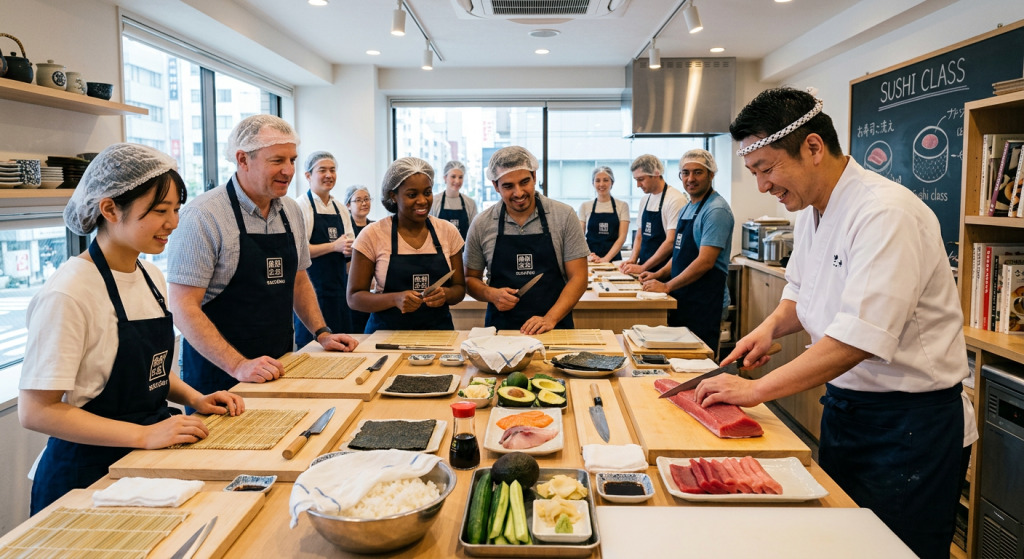
If you are searching for a sushi making class in Shinjuku, you do have real options. The main catch is that they are not all the same kind of experience. In and around Shinjuku, the current choices range from a culinary-school lesson in West Shinjuku to a chef-led class in Kabukicho, a temari sushi workshop in Shinjuku-sanchome, and a private lesson at a long-established sushi restaurant in Yotsuya. That makes Shinjuku practical for travelers who want a hands-on food experience without crossing the city, but it also means you need to compare class style, language support, and booking rules before you reserve.
Two details matter more than most travelers expect. First, “Shinjuku” on a booking page can mean central Shinjuku Station, Kabukicho, Shinjuku-sanchome, West Shinjuku, or Yotsuya within Shinjuku City. Second, English support is not equally clear across all classes. Some providers publish full English details, while others are bookable in English but ask you to confirm the language or request an assistant in advance.
Quick comparison
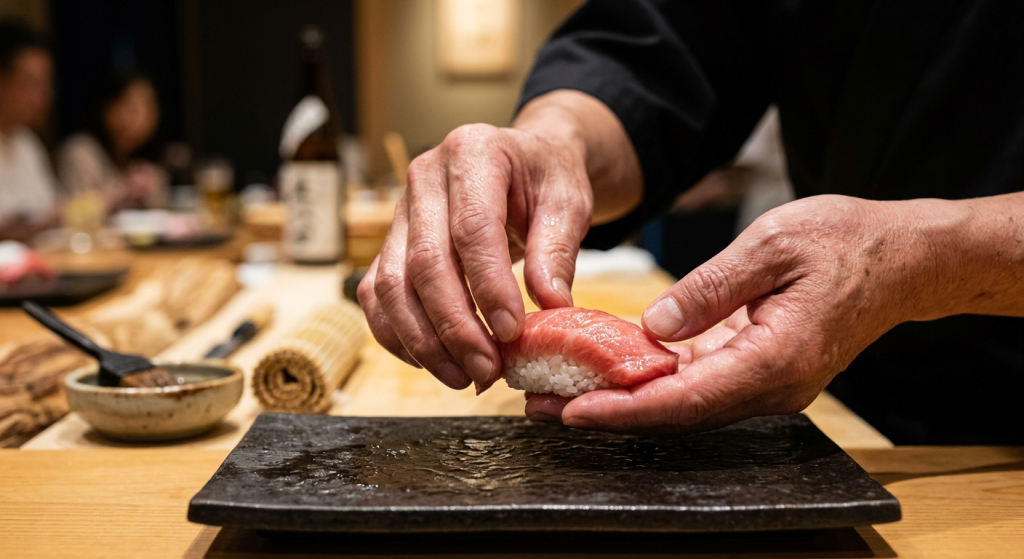
- SUSHI KANPAI — Kabukicho, 90 minutes, official English support, up to 14 guests, hands-on nigiri and California roll making, with a live sea bream filleting show and one drink included. The official site lists a regular price of ¥16,500, with a limited-time special offer of ¥13,200 valid through September 2026.
- Sushi-Making Class in a Sushi School in Shinjuku — held at Inshokujuku near the west side of Shinjuku Station, 2 hours, English, 2 to 10 guests, family-friendly, with sushi etiquette, tea, a meal, and a certificate. Current pricing is shown on the booking page.
- Adorable Temari Sushi Class in Shinjuku — at FLOWER WALL MONE in Shinjuku-sanchome, 1.5 hours, join-in group format, centered on decorative temari sushi in a flower-themed café. Current pricing is shown on the booking page, and the venue is easy to reach from both Shinjuku-sanchome Station and Shinjuku Station.
- Tokyo Sushi-Making Class at a 100-Year-Old Sushi Bar — a private class at Sushi Yachiyo Yotsuya / Sushi Dokoro Yachiyo Sohonten Bettei, around 1.5 hours, 2 to 13 guests, with five types of sushi, English materials, and an optional English-speaking assistant. Current pricing is shown on the booking page.
Sushi Making Kakida: A Premium, Hands-On Sushi Experience in Tokyo
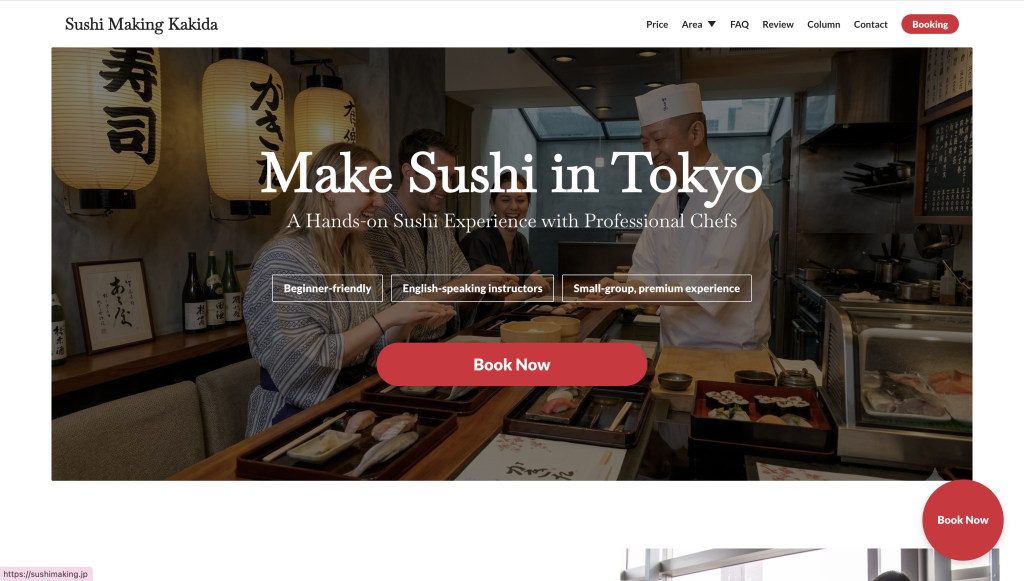
For travelers who want to do more than simply eat sushi, Sushi Making Kakida offers an authentic, hands-on experience guided by professional Japanese sushi chefs.
Rather than joining a large, demonstration-style cooking class, guests learn in a small, private-style group of up to four people. A professional sushi chef and English-speaking interpreter guide you through each step, making the experience easy to follow even if you have never cooked or made sushi before.
During the class, you will learn how to shape traditional nigiri and make approximately 10 pieces of sushi using fresh, high-quality ingredients. Depending on seasonal availability, the selection may include premium toppings such as otoro fatty tuna, chutoro medium-fatty tuna, akami lean tuna, sea urchin, scallop, sea bream, salmon and other Japanese seafood.
The experience is not only educational but also highly interactive. You can watch a professional chef demonstrate authentic techniques, practise making nigiri yourself, eat the sushi you have created and take memorable photos at the sushi counter while wearing a traditional Japanese kappogi apron.
Sushi Making Kakida has already welcomed international visitors from around the world. With clear English support, personal attention and a relaxed atmosphere, it is an excellent choice for couples, families, solo travelers and small groups looking for a memorable Japanese cultural experience.
More Than a Sushi Class: Experience the World of Japanese Tuna
What makes Sushi Making Kakida particularly special is the expertise of the restaurant group behind it.
The Kakida team also operates spectacular maguro tuna-cutting shows, where professional sushi chefs break down whole bluefin tuna weighing more than 100 kilograms in front of an audience. These live events have been held for corporate parties, international exchange events, weddings and large-scale gatherings with hundreds of guests.
Unlike a typical cooking workshop, Sushi Making Kakida is backed by working sushi professionals who regularly source, prepare and serve premium tuna and seafood. Their knowledge extends far beyond showing guests how to shape rice—the team understands how fish is selected, cut and transformed into high-quality sushi.
The tuna-cutting show is a separate event service and is not included in the standard sushi-making class. However, it demonstrates the level of craftsmanship, seafood knowledge and entertainment experience behind the Kakida name.
For visitors searching for a sushi making class in Tokyo or Shinjuku, Sushi Making Kakida offers more than a fun activity. It is an opportunity to step behind the sushi counter, learn directly from professionals and experience one of Japan’s most iconic culinary traditions for yourself.
Make sushi, meet real Japanese chefs and create a Tokyo memory you can actually taste.
The most useful Shinjuku sushi classes right now
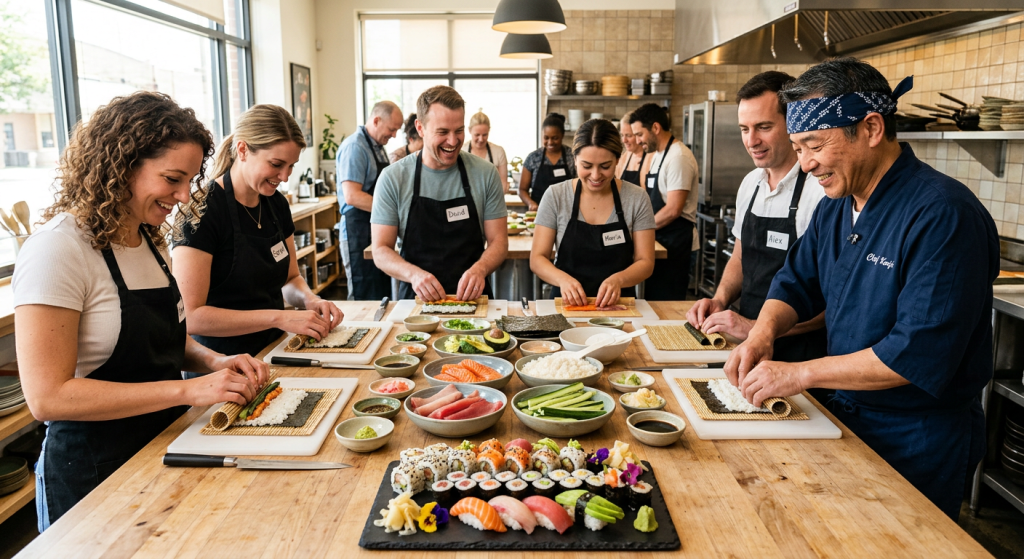
SUSHI KANPAI for travelers who want a chef-led class with extra performance elements
SUSHI KANPAI is one of the clearest choices if you want a polished, tourist-friendly sushi experience in Shinjuku itself. The class is held in Kabukicho at Eiwa Building, 2-26-1 Kabukicho, about an 8-minute walk from JR Shinjuku Station East Exit and 3 minutes from Seibu-Shinjuku Station. The venue is operated by Ikesu Mugen, and the official English site is unusually detailed, which makes this one easier to evaluate before booking.
The format is broader than simple nigiri practice. You make a California roll and nigiri sushi with tuna, salmon, sea bream, shrimp, and tamagoyaki, and the program also includes a live sea bream filleting show, real wasabi tasting, a Wagyu aburi sushi performance, and sea bream soup served at the end. The official duration is 90 minutes, group size is up to 14 guests, and the class is run in English.
This is the strongest match for travelers who want more than a basic workshop. It suits couples, friends, and small groups especially well, and it is the only option on this shortlist with a clearly advertised fish-filleting show. It is also one of the more transparent choices for children: the official site says children aged 6 and over pay the adult price, children aged 0 to 5 can join free if they do not need a seat, and children aged 6 to 12 must be accompanied by a parent or guardian.
There are two booking details worth checking carefully. The official FAQ says solo travelers are welcome, but the Klook package visible at the time of checking required at least two participants on that platform, so solo travelers should compare the direct booking page with third-party listings before paying. The dietary policy also needs attention: the FAQ says a vegetarian menu is available if requested when booking, while the class details page says ingredient substitutions or special dietary accommodations are not available. If you have allergies or strict dietary needs, confirm your exact menu in writing before you reserve.
Inshokujuku for a more classroom-style sushi session near Shinjuku Station
If you want a lesson that feels closer to a cooking school than a themed attraction, the Inshokujuku class stands out. Inshokujuku is a professional Japanese culinary school run from Shinjuku Center Building MB1, 1-25-1 Nishi-Shinjuku. The class booking page places the experience near the west side of Shinjuku Station, and the school’s own site confirms the Nishi-Shinjuku address.
The standard class page lists a 2-hour session in English for 2 to 10 guests. It is family-friendly, includes ingredients and utensils, complimentary tea, a sushi meal, uniform rental that may not be available for children, and a certificate of completion. The class teaches sushi making alongside etiquette and history, and one published version of the experience highlights four pieces of sushi plus a hand roll. Another related Inshokujuku experience page also notes that dietary restrictions and allergies should be mentioned at booking.
This is a practical option for visitors who want a straightforward lesson in a central location. It makes sense for first-time sushi makers, families with children aged 6 and over, and travelers who like the idea of a culinary-school setting rather than a restaurant performance. The downside is that the meeting point is only disclosed in detail after booking, and the published guest count starts at two, so solo participation is not clearly supported on the page I checked.
The booking page offers free cancellation up to 48 hours before the start time. Current pricing is displayed on the booking page, but it was not clearly published in yen on the accessible version I checked, so this is one to price-check directly when you are ready to book.
The temari sushi class at FLOWER WALL MONE for travelers who want something lighter and more visual
Not every traveler wants a serious nigiri lesson. If you are looking for a softer, more decorative food experience in central Shinjuku, the temari sushi class at FLOWER WALL MONE is the most distinctive option I found. The workshop is held at FLOWER WALL MONE in Shinjuku-sanchome. Public venue listings place the café at B1F, Takayama Land Kaikan, 3-5-3 Shinjuku, with Shinjuku-sanchome Station Exit B2 just outside and Shinjuku Station about 400 meters away.
The Klook page describes a 1.5-hour join-in class where participants make temari sushi and then eat it. The workshop is positioned as a casual, beginner-friendly session in a flower-themed café rather than a chef-training style class. That makes it a good fit for couples, friend groups, and travelers who care as much about atmosphere and presentation as technique.
This is also the easiest Shinjuku option to pair with shopping or a short sightseeing day around Shinjuku-sanchome and the east side of the station. It is indoor, central, and simpler to slot into a Tokyo itinerary than a longer cooking program. At the same time, the listing is less explicit than some other classes about instruction language, age policy, and dietary accommodations. If English explanation matters to you, or if you have allergies, confirm those points before you pay.
As with several platform-listed experiences in Tokyo, the price and availability depend on the selected date. Check the booking page for the current yen rate and any cancellation terms attached to your chosen slot.
Sushi Yachiyo Yotsuya for travelers who prefer a private class in a long-established restaurant
If you want a quieter, more private setting than Kabukicho or Shinjuku-sanchome, Sushi Yachiyo Yotsuya is the most useful alternative. This class is held in the Yotsuya area of Shinjuku City rather than around Shinjuku Station itself, so it is not the most central on foot. Still, it remains an easy public-transport option for travelers staying in Shinjuku. Tabelog lists Sushi Dokoro Yachiyo Sohonten Bettei at 2-18 Arakicho, a 3-minute walk from Yotsuya-sanchome Station, and the byFood booking page uses Yotsuya-sanchome as the meeting point.
The class itself is consistently described across platforms as a private session of about 1.5 hours. You make five types of sushi, including nigiri and tamagoyaki, and learn two shaping methods. The byFood page also highlights a private room overlooking a Japanese garden and includes a certificate of completion. Klook lists different package structures for groups of 2 to 4 and 5 to 13, and byFood lists 2 to 13 guests.
This is the strongest option here for travelers who specifically want a private class rather than a shared group session. It also works well for couples or families celebrating something small, because the environment is more intimate than the busier Shinjuku venues. The language point, however, needs to be read carefully. The overall booking pages are in English, but the host chef is described as speaking limited English, with written English materials provided, and an English-speaking assistant available as an optional package. If live spoken explanation is essential, make sure you reserve the package that includes the assistant.
Cancellation on byFood is listed as free up to 48 hours before the experience. Pricing is available on the booking page, but the version I checked did not clearly publish a yen figure, so this is another case where you should verify the latest per-person price on the authorized booking page before you commit.
How to choose the right Shinjuku sushi experience
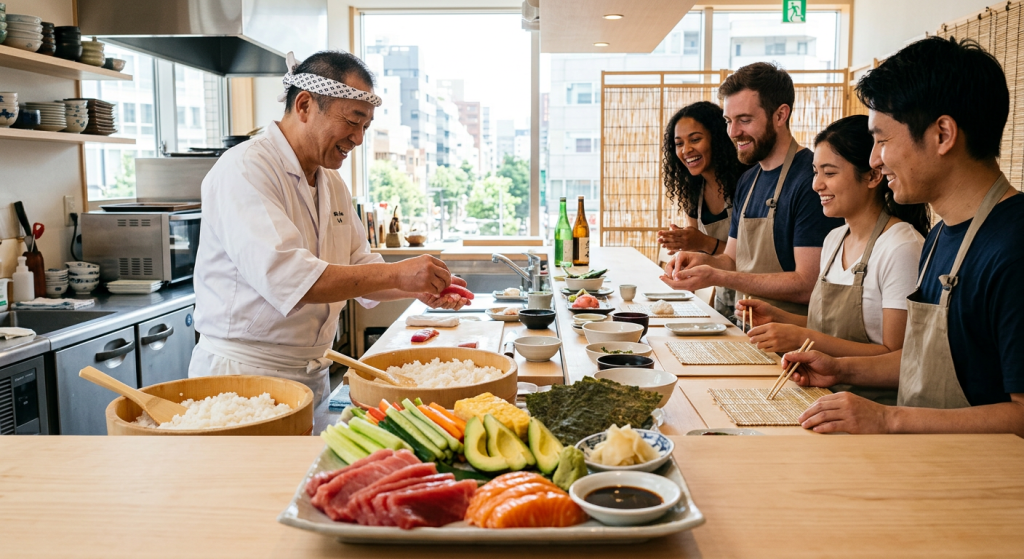
The fastest way to narrow this down is to decide what kind of class you actually want. If you want a more complete production with chef demonstrations, choose SUSHI KANPAI. If you want a more instructional, school-style setting near Shinjuku Station, Inshokujuku is the cleaner fit. If the experience is more about a cute, casual meal-making activity than technique, go for the temari sushi class at FLOWER WALL MONE. If you want privacy and a calmer restaurant atmosphere, Sushi Yachiyo Yotsuya is the strongest candidate.
Language support should be your second filter. SUSHI KANPAI and Inshokujuku publish straightforward English information. Sushi Yachiyo Yotsuya can work well in English, but only if you understand that the chef’s spoken English is limited and the assistant is optional. The temari sushi class is less clearly documented on this point, so travelers who do not want any uncertainty should confirm language support before booking.
Group format matters too. Yachiyo is the clearest private option. FLOWER WALL MONE is a join-in group class. Inshokujuku is published as 2 to 10 guests, which suggests a small-group format. SUSHI KANPAI is built to handle larger mixed groups, up to 14 guests, and the official FAQ also says it can accommodate families, friends, corporate events, and tour groups.
Price, dietary needs, and booking details

If price is your main filter, SUSHI KANPAI is the easiest one to benchmark because the official site publishes a regular price of ¥16,500 and a limited-time offer of ¥13,200 through September 2026. The other shortlisted classes were bookable when checked, but their accessible booking pages did not all publish a clearly fixed yen price in the version available to me, so the safest approach is to compare the official or authorized booking page on your exact date.
For dietary needs, there is no single Shinjuku answer. Inshokujuku says you should notify the provider about allergies or dietary restrictions when booking. SUSHI KANPAI specifically warns that the class uses major allergens including shrimp, egg, sesame, salmon, beef, and soy sauce. Its official pages also give mixed signals on vegetarian accommodation, so that one needs especially careful confirmation in advance. Yachiyo and the temari class are less explicit in the accessible material, so travelers with food allergies, halal requirements, vegan diets, or strict vegetarian diets should ask before paying rather than assuming substitutions are available.
If cancellation flexibility matters, the clearest published rule is 48-hour free cancellation on both Inshokujuku’s byFood page and Yachiyo’s byFood page. SUSHI KANPAI offers free cancellation up to 2 days before the scheduled experience date on its official FAQ. Platform-listed experiences such as the temari class may vary by date and booking conditions, so read the cancellation line on the final checkout page rather than assuming it matches another site.
Frequently asked questions
Are there really sushi-making classes in Shinjuku?
Yes. Confirmed hands-on options include classes in Kabukicho, West Shinjuku, and Shinjuku-sanchome, plus a private Yotsuya option within Shinjuku City. They are not all the same format, so compare location and teaching style before you book.
What is the closest sushi-making class to Shinjuku Station?
For station convenience, the Inshokujuku class and the FLOWER WALL MONE temari class are among the easiest. Inshokujuku is near the west side of Shinjuku Station, while FLOWER WALL MONE is about 400 meters from Shinjuku Station and directly by Shinjuku-sanchome Station Exit B2.
Can solo travelers book a sushi class in Shinjuku?
Sometimes, but not every class makes this easy. SUSHI KANPAI’s official FAQ says solo travelers can join, but the Klook package I checked required at least two participants. Inshokujuku and Yachiyo both publish guest counts starting from two on the booking pages I reviewed.
Are sushi-making classes in Shinjuku taught in English?
Some are clearly English-friendly, and some require confirmation. SUSHI KANPAI publishes full English class details, and Inshokujuku lists English as the language. Yachiyo provides English materials and optional English assistance, while the temari class is less explicit about instruction language on the accessible materials, so it is worth confirming that point before paying.
Can children join?
Yes, in some cases. SUSHI KANPAI publishes the clearest child policy, and Inshokujuku says children aged 6 and over can participate. For the temari class and Yachiyo, age requirements were not as clearly published on the accessible pages I checked, so families should confirm before booking.
Are there sushi classes in Shinjuku with a market tour or tuna cutting show?
Not on the shortlist above. None of these Shinjuku-centered options advertises a market tour. The most performance-oriented add-on I confirmed in this area is SUSHI KANPAI’s live sea bream filleting show rather than a tuna cutting show.
Final take
For most travelers, the right sushi making class in Shinjuku comes down to four questions: Do you want a shared class or a private one, do you need spoken English, how close do you want to stay to Shinjuku Station, and are you looking for classic nigiri practice or a more casual sushi experience. Shinjuku is good for all of those, but each option serves a different kind of trip.
If you want the most clearly documented English-language class with extra chef demonstrations, compare SUSHI KANPAI first. If you want a cooking-school feel, check Inshokujuku. If you prefer a private lesson, look at Sushi Yachiyo Yotsuya. If you want a lighter, visually styled activity, the temari sushi class at FLOWER WALL MONE is the one to check. Before booking, review the latest schedule, confirm the meeting point, check whether your selected class is private or shared, and ask about dietary restrictions or child policies if those matter for your trip.