Sushi Making Classes in Ikebukuro and Nearby Tokyo Options
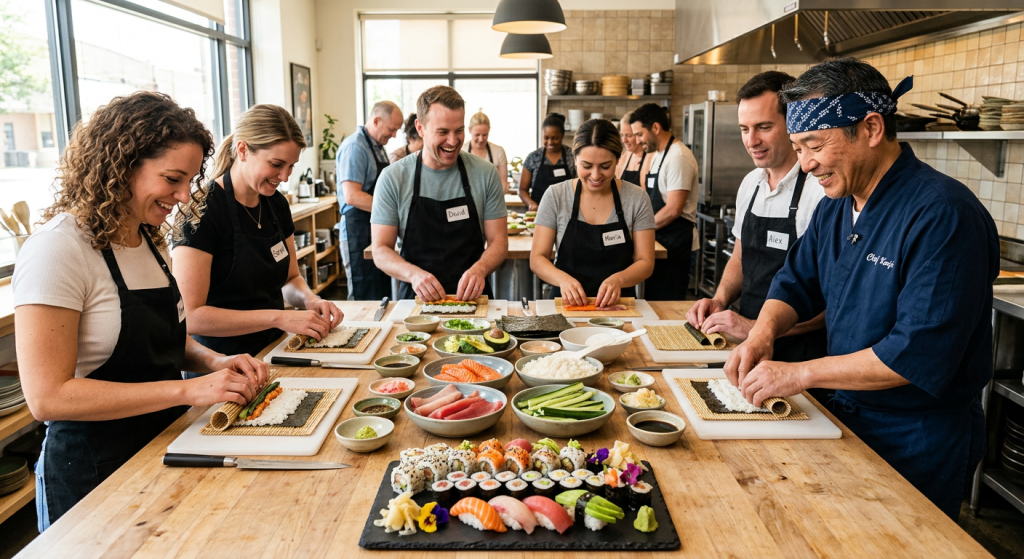
If you are searching for a sushi making class in Ikebukuro, you do have real hands-on options in the area. The catch is that Ikebukuro’s lineup is fairly small and mixed: a professional training school with a half-day experience, a short class inside a neighborhood sushi shop, and a near-Ikebukuro home-style lesson with a supermarket stop. If you want a broader choice of English-friendly classes, nearby Asakusa and Tsukiji are still easier places to compare.
For most travelers, the decision comes down to format more than prestige. Some classes are private and slow-paced. Others are short shared sessions designed to fit between sightseeing stops. A few are better if you want a chef-led cultural activity with clear English support, while others feel closer to a school or local workshop than a polished tourism product.
Quick comparison of actual sushi classes you can consider
| Experience | Area | Best for | What you make | Duration | Price | Language | Format |
|---|---|---|---|---|---|---|---|
| Tokyo Sushi School Half-Day Sushi-Making Experience | Higashi-Ikebukuro | Travelers who want a school-style lesson in Ikebukuro itself | Edomae-style basics; nigiri, rolls, and menu examples vary by ingredients | 1:30 pm–3:30 pm | ¥12,000 | Lesson language is not clearly stated on the half-day course page, so confirm before booking | School-based experience in Ikebukuro. |
| Tokyo Sushi Making Experience in Ikebukuro | Ikebukuro | A short class in a working sushi shop | Nigiri and rolls; 7 pieces included | 1.5 hours | Check current booking page | English and Japanese | Small group, up to 10 participants; wheelchair accessible. |
| Tokyo Sushi Class with Pro Chef & Local Supermarket Tour | Near Ikebukuro | Private or small-group travelers who want a more personal lesson | Nigiri, gunkan maki, and sushi rolls, plus miso soup | Check current listing | ¥21,969 on the listing page reviewed | English-speaking interpreter | Private or small-group; near Ikebukuro; local supermarket stop included. |
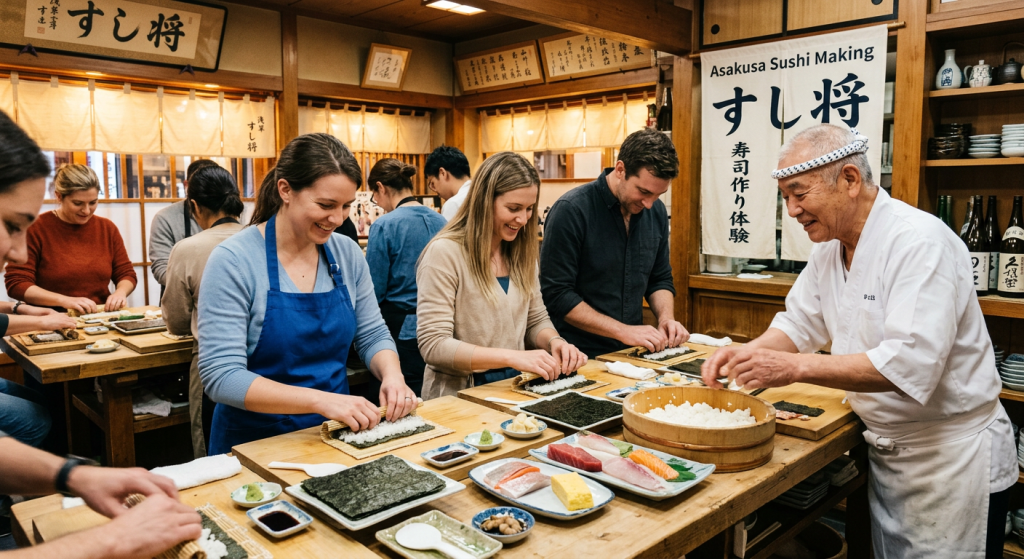
| Sushi Making Tokyo | Asakusa | Travelers who want clearly published English support and dietary options | Nigiri and roll sushi | 1.5 hours | ¥13,000 | English | Group class; operator says it works for solo travelers, families, and larger groups. |
| Sushi Making Class in Tsukiji | Tsukiji | Travelers who want a lower fixed-price class near the market | 4 nigiri and 1 roll, with tea and soup | 10:30 am–12:00 pm or 1:00 pm–2:30 pm | ¥9,000 | English guide | Format is not detailed on the landing page, so check the current booking page for class size and meeting details. |
Published prices and availability can change. For platform-based activities, recheck the current booking page before paying, especially if the listing shows dynamic platform pricing or only limited date availability.
Sushi Making Kakida: A Premium, Hands-On Sushi Experience in Tokyo
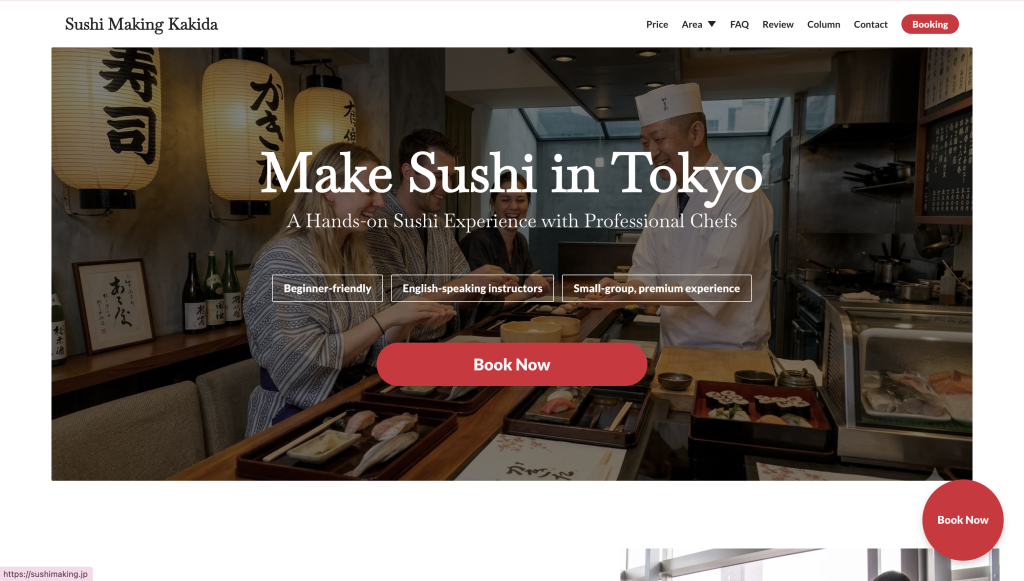
For travelers who want to do more than simply eat sushi, Sushi Making Kakida offers an authentic, hands-on experience guided by professional Japanese sushi chefs.
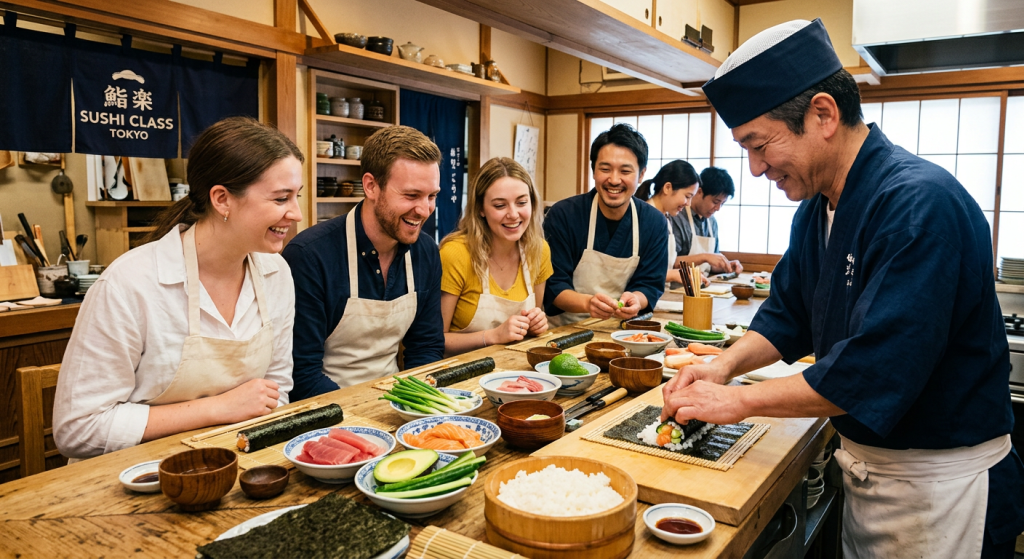
Rather than joining a large, demonstration-style cooking class, guests learn in a small, private-style group of up to four people. A professional sushi chef and English-speaking interpreter guide you through each step, making the experience easy to follow even if you have never cooked or made sushi before.
During the class, you will learn how to shape traditional nigiri and make approximately 10 pieces of sushi using fresh, high-quality ingredients. Depending on seasonal availability, the selection may include premium toppings such as otoro fatty tuna, chutoro medium-fatty tuna, akami lean tuna, sea urchin, scallop, sea bream, salmon and other Japanese seafood.
The experience is not only educational but also highly interactive. You can watch a professional chef demonstrate authentic techniques, practise making nigiri yourself, eat the sushi you have created and take memorable photos at the sushi counter while wearing a traditional Japanese kappogi apron.
Sushi Making Kakida has already welcomed international visitors from around the world. With clear English support, personal attention and a relaxed atmosphere, it is an excellent choice for couples, families, solo travelers and small groups looking for a memorable Japanese cultural experience.
More Than a Sushi Class: Experience the World of Japanese Tuna
What makes Sushi Making Kakida particularly special is the expertise of the restaurant group behind it.
The Kakida team also operates spectacular maguro tuna-cutting shows, where professional sushi chefs break down whole bluefin tuna weighing more than 100 kilograms in front of an audience. These live events have been held for corporate parties, international exchange events, weddings and large-scale gatherings with hundreds of guests.
Unlike a typical cooking workshop, Sushi Making Kakida is backed by working sushi professionals who regularly source, prepare and serve premium tuna and seafood. Their knowledge extends far beyond showing guests how to shape rice—the team understands how fish is selected, cut and transformed into high-quality sushi.
The tuna-cutting show is a separate event service and is not included in the standard sushi-making class. However, it demonstrates the level of craftsmanship, seafood knowledge and entertainment experience behind the Kakida name.
For visitors searching for a sushi making class in Tokyo or Shinjuku, Sushi Making Kakida offers more than a fun activity. It is an opportunity to step behind the sushi counter, learn directly from professionals and experience one of Japan’s most iconic culinary traditions for yourself.
Make sushi, meet real Japanese chefs and create a Tokyo memory you can actually taste.
Tokyo Sushi School Half-Day Sushi-Making Experience
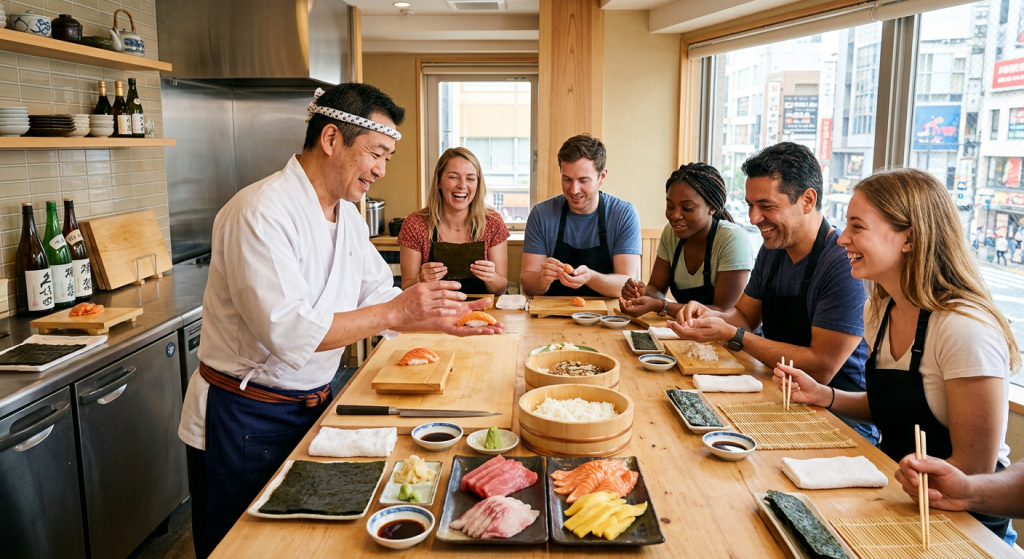
This is the clearest option if you specifically want a sushi class in Ikebukuro itself and like the idea of learning inside a dedicated sushi school rather than a host’s home or a short tourism activity. Tokyo Sushi School is in Higashi-Ikebukuro at 2-60-21, about a 7-minute walk from Ikebukuro Station, and the school says its half-day experience runs from 1:30 pm to 3:30 pm, Monday through Saturday, for ¥12,000.
The feel here is different from most traveler-first booking-platform experiences. The school presents itself as a professional sushi training center and says the half-day course lets guests make their own sushi and take it home. On the broader school site, it explains that its teaching focus is on Edomae basics such as nigiri and rolls, and the half-day page sits alongside longer professional programs rather than tourist day tours. That makes it a practical pick for travelers who want a more workshop-like setting.
The trade-off is clarity. The school has an English site, but the half-day course page does not clearly state the lesson language in the way some tourism-focused operators do. If English instruction is essential, confirm it before booking. The same goes for child policy, solo participation, allergy handling, and cancellation terms for the half-day class, because those points are not clearly laid out on the course page reviewed.
This option makes the most sense if you are staying near Ikebukuro, want a fixed-price class in yen, and do not need a glossy market tour or large hospitality add-ons.
Tokyo Sushi Making Experience in Ikebukuro
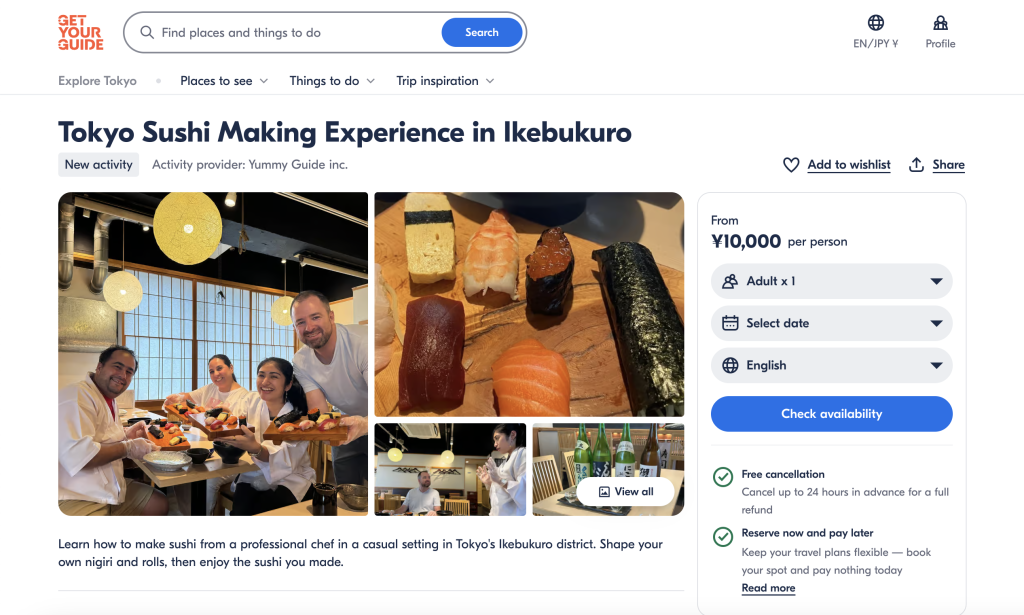
If your priority is a short, straightforward sushi experience in Ikebukuro, this GetYourGuide listing is one of the simplest fits. The published details describe a 1.5-hour session in a neighborhood sushi shop, with instruction in English and Japanese, a small-group cap of 10 participants, and wheelchair accessibility. The class includes ingredients, seven pieces of sushi, and a drink, with optional sake tasting.
This is a good choice for travelers who want a slot that feels easy to add between shopping, anime stops, or an evening food plan in Ikebukuro. The session is explicitly beginner-friendly, and the listing says no cooking experience is needed. Because the class happens inside a working sushi shop, it should appeal to travelers who would rather learn in a restaurant setting than in a classroom.
Compared with longer options, this one is lighter on extras. The product page reviewed does not clearly publish dietary accommodation details, child rules, or the exact sushi lineup beyond nigiri and rolls plus the total piece count. The meeting point is shared through Google Maps on the booking page rather than being fully written out in the text version reviewed. The cancellation policy is clearer: free cancellation up to 24 hours in advance.
Choose this one if you want convenience, a small group, and a working-shop atmosphere more than a long cultural program.
Tokyo Sushi Class with Pro Chef & Local Supermarket Tour
https://livejapan.com/en/in-tokyo/in-pref-tokyo/in-ikebukuro/activity-water_activities/ac0161473
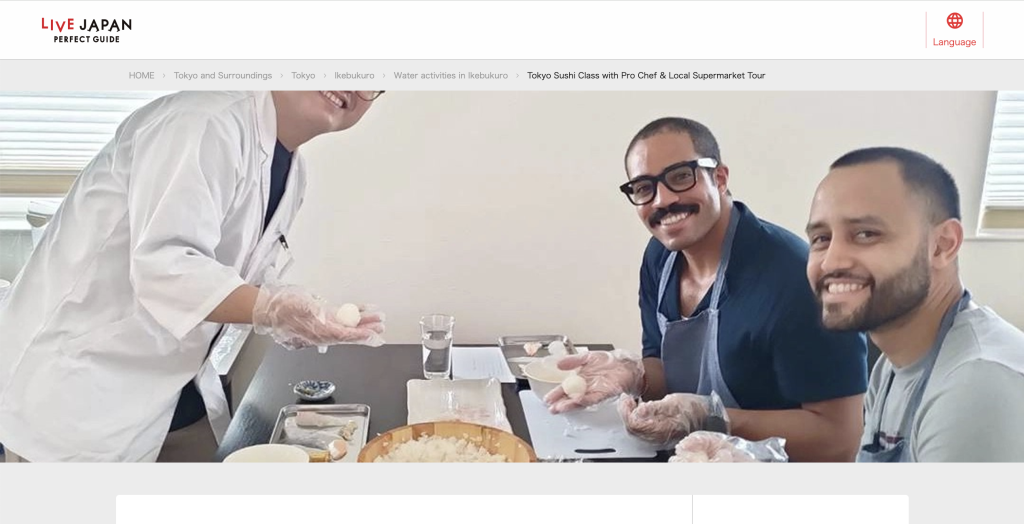
This near-Ikebukuro class is the most personal-looking option among the Ikebukuro-area listings reviewed. LIVE JAPAN describes it as a hands-on sushi class in a cozy home kitchen near Ikebukuro, led by Chef Kodaira, with an English-speaking interpreter. The class covers nigiri, gunkan maki, and sushi rolls, followed by miso soup and a local supermarket visit with the chef. The same activity appears on the LIVE JAPAN listing page at ¥21,969, with bookable dates shown on the page reviewed.
This format stands out because it mixes cooking and practical food shopping. If you enjoy the idea of learning what to buy in Japan, not just how to shape the rice, this is the only Ikebukuro-area option in this guide that clearly includes a supermarket component. The listing also says the venue is just two minutes from the nearest station and suitable for private or small-group participation, which should appeal to couples, families, or friends who do not want a bigger room.
There are still a few things to confirm. The text reviewed does not clearly publish the total duration, exact station name, or detailed cancellation terms. It also does not publish the same level of dietary detail as some other operators. So while the concept is strong, it is worth checking the live booking page for date-specific conditions before committing.
This is a strong fit for travelers who want something more personal than a standard class and do not mind paying more for that style.
Sushi Making Tokyo in Asakusa
https://sushimakingjapan.com/tokyo
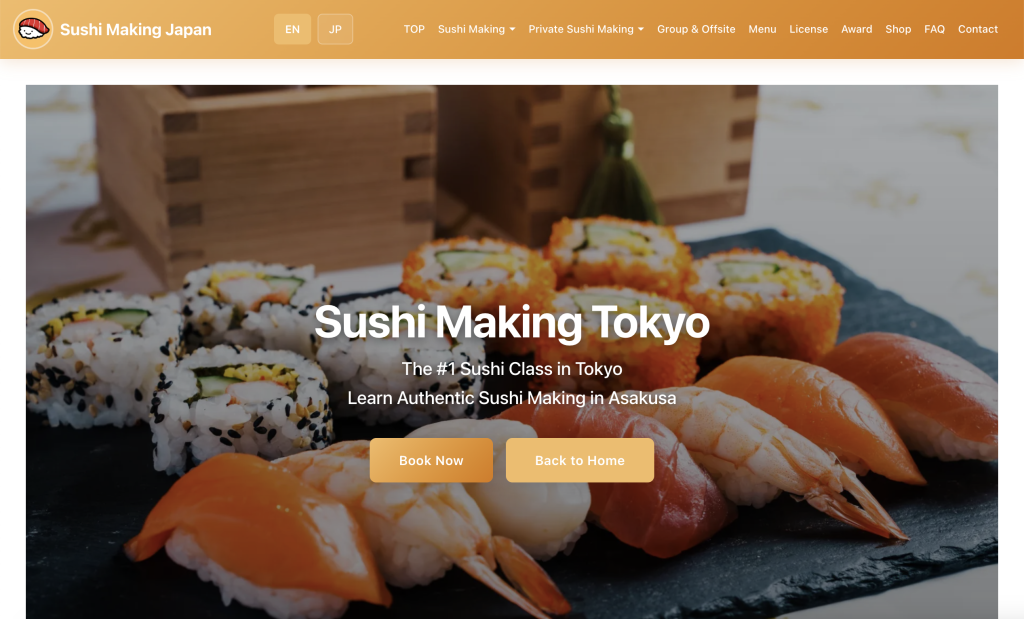
If you are happy to leave Ikebukuro for a more clearly structured English sushi class, Asakusa is one of the most practical nearby alternatives. Sushi Making Japan publishes a clear set of quick facts for its Asakusa class: 1.5 hours, English, up to 90 people, and ¥13,000. The class location is in the Relink KAMINARIMON Building, 2-17-9 Kaminarimon, a 3-minute walk from Asakusa Station.
This one is easier to recommend to first-time visitors because the operator is unusually specific about what is included. The site says you will learn to make roll sushi and nigiri, work with professional English-speaking instructors, enjoy your handmade sushi at the end, and receive the recipe after class. It also says no prior experience is needed.
It is also one of the clearest picks for dietary needs. The operator says vegan, vegetarian, halal, and allergy-friendly options are available with advance notice. That matters because many sushi class pages are vague on dietary support, while this one is direct. If you are traveling with mixed dietary needs, this clarity is useful.
The main reason not to choose it is location. This is not an Ikebukuro class. It makes the most sense if your Tokyo itinerary already includes Sensō-ji, Tokyo Skytree, or the east side of the city. If you want to stay entirely around Ikebukuro Station, one of the local options above will be easier.
Sushi Making Class in Tsukiji

For travelers who care most about price transparency and a sushi-focused class near one of Tokyo’s most famous food districts, Japan Wonder Travel’s Tsukiji class is one of the easiest nearby options to understand. The operator publishes two class times, 10:30 am to 12:00 pm and 1:00 pm to 2:30 pm, with a price of ¥9,000 per person. The included lesson covers four different nigiri and one rolled sushi, plus tea and soup, with an English guide.
This is the most straightforward fixed-price English option in this guide. It also works well if you want to combine a sushi class with a morning around Tsukiji Outer Market without paying for a longer premium package. The operator explicitly recommends visiting the market before or after the class, especially for the afternoon session, because the market is mostly closed later in the day.
What the published landing page does not clearly spell out is class size, private versus shared format, and dietary policy. So this is a strong value choice, but not the best option if you need detailed booking conditions in advance. In that case, you should verify the current booking page before final payment.
If your real search intent is less “Ikebukuro only” and more “an English sushi class that is easy to compare,” this Tsukiji option belongs on your shortlist.
How to choose the right class from Ikebukuro
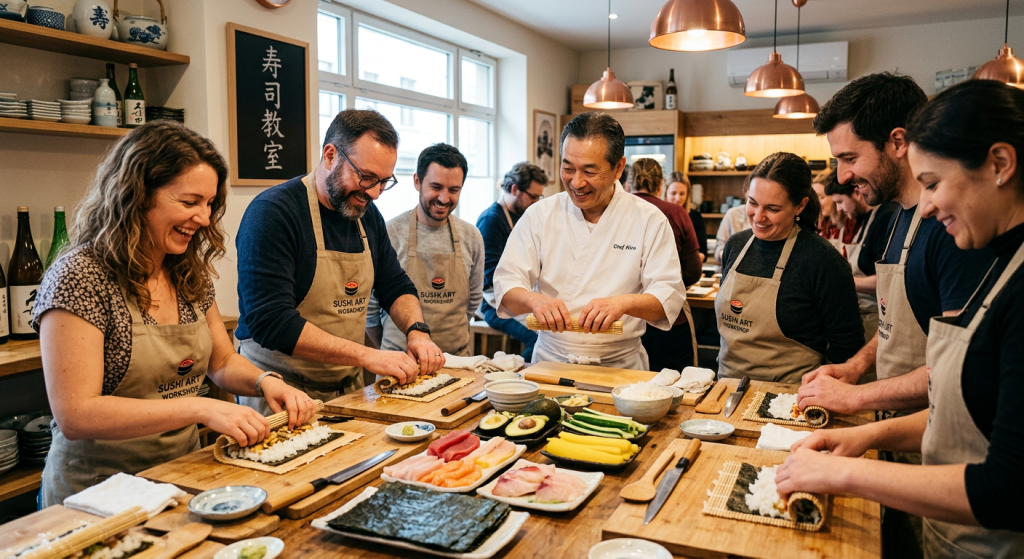
If you want to stay in Ikebukuro and minimize travel, Tokyo Sushi School, the GetYourGuide shop class, and the near-Ikebukuro Chef Kodaira class make the most sense. They are the closest fit to the phrase “sushi making class Ikebukuro,” and each solves a different need: school-style learning, a short shared session, or a more personal private-style lesson.
If English support is your top priority, Asakusa and Tsukiji become more appealing. Sushi Making Japan clearly states English-language instruction and detailed dietary options, while Japan Wonder Travel clearly publishes English guidance and a fixed yen price for its Tsukiji class. Tokyo Sushi School is less explicit on lesson language, so confirm before paying if that matters for your group.
If you are traveling with dietary needs, the strongest published information in this group comes from Sushi Making Japan, which states vegan, vegetarian, halal, and allergy-friendly options with advance notice. The near-Ikebukuro LIVE JAPAN/Klook class and the GetYourGuide Ikebukuro shop class do not publish the same level of detail on the pages reviewed, so those are the ones to ask about before booking.
If you are deciding between private and shared, the distinction is practical. The near-Ikebukuro Chef Kodaira class is explicitly described as private or small-group, while the GetYourGuide Ikebukuro class is clearly a small-group activity, and Sushi Making Japan also sells a separate private Tokyo option from ¥200,000 for custom groups. That private choice is only worth considering if you are booking for a family celebration, a team event, or a large group that wants exclusive use.
Nearby areas worth considering from Ikebukuro
If your ideal sushi experience includes a market component, Ikebukuro is not the strongest base for that. Tsukiji is better. Japan Wonder Travel publishes a 4-hour “Tokyo Sushi Making Workshop + Explore Tsukiji Fish Market” at ¥18,000 with an English guide, market samples, and handmade sushi. It also separately sells the shorter ¥9,000 class-only format.
Tsukiji is also where premium chef-led formats start to appear. For example, byFood lists a Chef Saisho market tour and sushi-making experience that includes a Tsukiji walk, a short taxi ride to Ginza Saisho in Nagatacho, and sushi-making with the chef. The page reviewed publishes English support, 2 to 8 guests, a 3-hour duration, and 48-hour cancellation, though the international page displayed non-yen pricing at the time reviewed.
That matters if your search for a sushi experience near Ikebukuro is really about food culture depth rather than strict geography. In that case, Tsukiji is often worth the extra transit.
Frequently asked questions
Are there actually sushi-making classes in Ikebukuro?
Yes. At the time reviewed, real options in or around Ikebukuro included Tokyo Sushi School in Higashi-Ikebukuro, a short GetYourGuide class in an Ikebukuro sushi shop, and a near-Ikebukuro class with Chef Kodaira listed on LIVE JAPAN/Klook.
What is the closest fixed-price sushi class in Ikebukuro?
Tokyo Sushi School is the clearest fixed-price option physically in Ikebukuro itself, with its half-day experience listed at ¥12,000 and an address in Higashi-Ikebukuro.
How much does a sushi-making class near Ikebukuro cost?
Based on the pages reviewed, published yen prices ranged from ¥9,000 for Japan Wonder Travel’s Tsukiji class, to ¥12,000 for Tokyo Sushi School’s half-day experience, to ¥13,000 for Sushi Making Japan in Asakusa, with the near-Ikebukuro Chef Kodaira class listed at ¥21,969 on LIVE JAPAN/Klook. Some platform pages, however, do not show a clean yen rate on every locale, so always recheck the current booking page.
Are these classes taught in English?
Several are. The GetYourGuide Ikebukuro class publishes English and Japanese instruction, Sushi Making Japan in Asakusa publishes English, and Japan Wonder Travel’s Tsukiji class includes an English guide. Tokyo Sushi School’s half-day course page is less explicit, so confirm before booking.
Can beginners join?
Yes, in most cases. The GetYourGuide Ikebukuro class explicitly says no cooking experience is needed, and Sushi Making Japan says prior experience is not required. These are designed as hands-on introductory activities, not professional chef training.
Can solo travelers book a sushi class?
Some can. Sushi Making Japan explicitly says its class works for solo travelers, and the GetYourGuide Ikebukuro activity is sold as a small-group experience rather than a private-only session. Tokyo Sushi School and some other listings do not clearly spell out solo booking rules on the pages reviewed, so that is worth checking.
Are vegetarian, vegan, or halal options available?
Sometimes, but not across every class. Sushi Making Japan clearly says vegan, vegetarian, halal, and allergy-friendly options are available with advance notice. The near-Ikebukuro Chef Kodaira listing does not publish the same level of dietary detail in the text reviewed, and Tokyo Sushi School’s half-day page is also not as clear on this point.
Are there classes with market tours or tuna cutting shows?
There are market-tour options, especially in Tsukiji, but a dedicated tuna cutting show is not clearly published in the Ikebukuro-centered options covered here. Japan Wonder Travel sells a 4-hour Tsukiji market-and-sushi workshop, and the Chef Saisho byFood experience includes a market walk where you may see large slabs of tuna being sliced, which is different from a guaranteed tuna cutting show.
Ikebukuro can work well for a sushi lesson, especially if you want to avoid crossing Tokyo just for one activity. The most practical local choices are Tokyo Sushi School, the short Ikebukuro shop-based class, and the near-Ikebukuro Chef Kodaira lesson. If you care more about confirmed English instruction, clearer dietary support, or combining your class with a food district, widening your search to Asakusa or Tsukiji gives you stronger options.
Before booking, compare the class format, check whether the lesson is private or shared, confirm the meeting point, and ask about dietary needs, child rules, and cancellation terms if the booking page is vague. Once those details match your itinerary, book through the provider’s official site or an authorized booking platform.