Sushi Making Classes in Ginza: Real Options in Ginza and Nearby Tsukiji
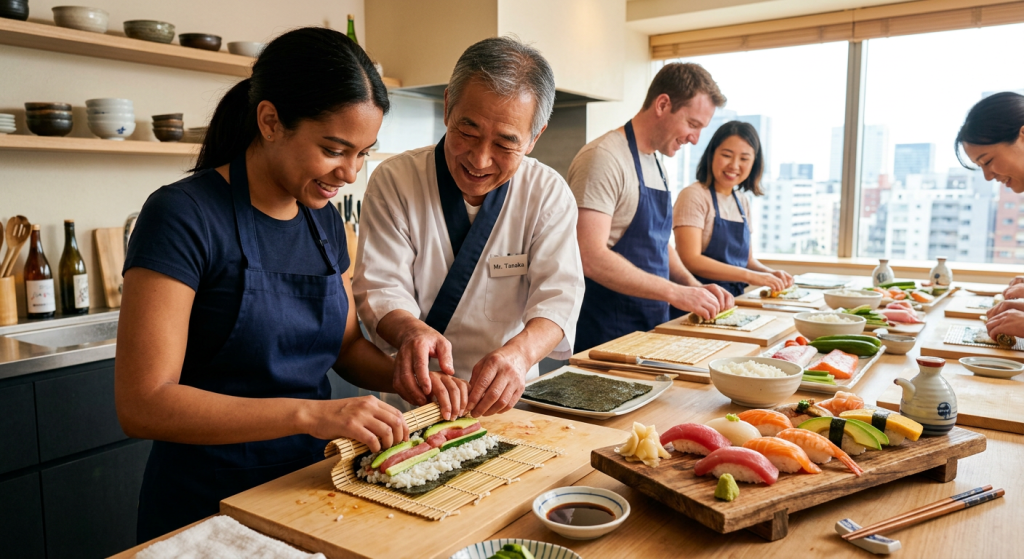
If you are specifically looking for a sushi making class in Ginza, you do have real options in the neighborhood itself. The catch is that the Ginza choices are still fairly limited and small-scale, while nearby Tsukiji adds more chef-led workshops, demonstration-heavy formats, and classes with clearer dietary notes. For most travelers, the practical choice is to start with Ginza if location matters most, then widen the search to Tsukiji if you want more variety.
Ginza works especially well if you want to fit a class between shopping, department stores, Yurakucho, Hibiya, or an evening dinner booking. Tsukiji is the stronger nearby alternative if you want a market atmosphere, a live fish-prep element, or a class that feels more like a food-culture activity than a simple lesson.
Quick comparison of real classes in and near Ginza
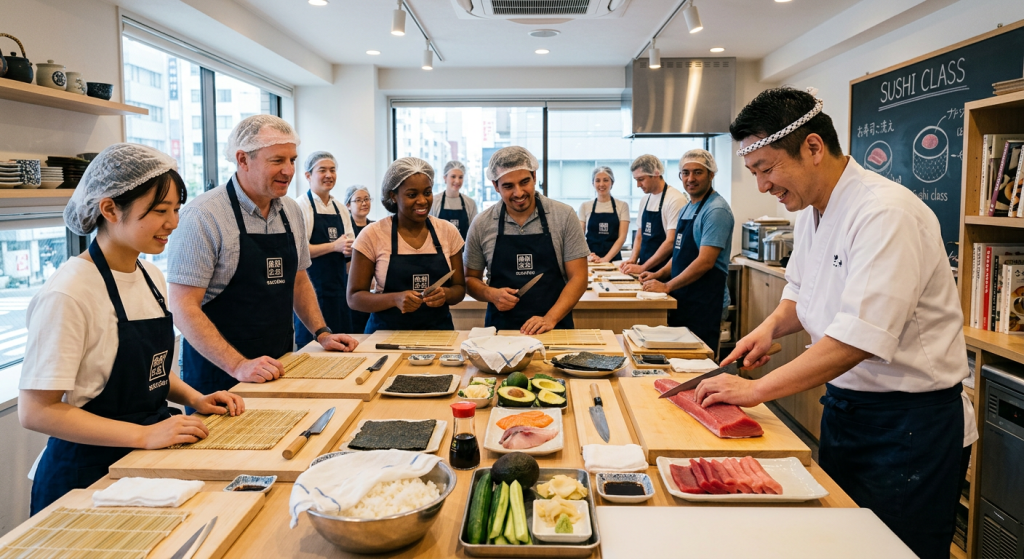
| Experience | Area | Best for | What you make | Duration | Price | Language | Class format |
|---|---|---|---|---|---|---|---|
| Tokyo Sushi Making Experience in Ginza | Ginza | Travelers who want a central Ginza class in a working sushi shop | Nigiri and rolls | 1.5 hours | Check current price | English / Japanese | Small group, up to 10 |
| Hidden Ginza Sushi Sakura | Ginza | Couples, solo travelers, and small groups who want a very intimate setting | Smoked salmon, sakura-salt sea bream, shrimp tempura, nigiri | 1.5 hours | Check current price | English | Small group, up to 7 |
| Tokyo: sushi experience Ginza on airKitchen | Ginza | Budget-focused travelers who want a simple hands-on class near Ginza Station | Nigiri and roll sushi | 2 hours | ¥2,200 per person listed on airKitchen | Not fully specified; confirm your date | Max 10 guests |
| Art SUSHI ROLL 3hrs @ Ginza/Tsukiji by Mami | Tsukiji | Families, vegetarians, and travelers who prefer no raw fish | Three decorative sushi rolls | 3 hours | ¥22,000 per person | English textbook provided | Max 4 guests |
| Tsukiji Fish Market Sushi Making Class with Pro Chef by Japan Wonder Travel | Tsukiji | Travelers who want pro-chef instruction, a fish-cutting demo, or a more structured workshop | Standard class: 5 nigiri and 1 maki; some options vary | 75 minutes to 4 hours, depending on option | Check current price | English | Shared class; option-dependent |
| Sushi Academy Ginza private venue | Ginza | Corporate groups and private events | Nigiri and rolls; premium course adds more from-scratch work | 1.5 hours or 2.5 hours | Check booking page | English | Private groups in Ginza |
Tokyo Sushi Making Experience in Ginza
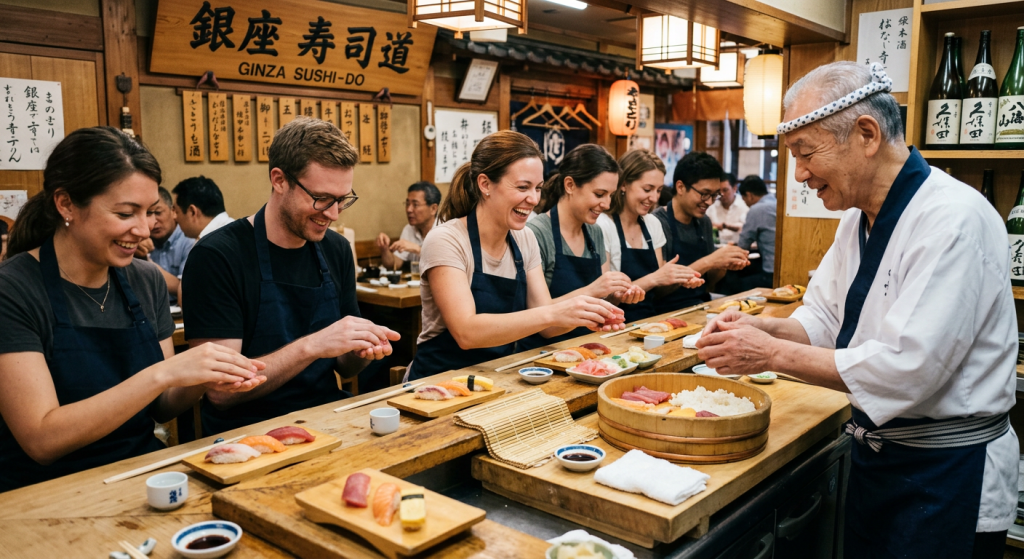
This is one of the clearest choices if you want your sushi making class Ginza search to lead to an actual class in Ginza rather than a nearby district. The session is listed as a 90-minute experience led by a professional chef, with a bilingual setup in English and Japanese. Participants make their own nigiri and rolls, then eat what they made. The booking page also notes that the class takes place inside a working sushi shop, which is useful if you want something more restaurant-based than a home kitchen format.
The published meeting point is Seiko House Ginza Clock Tower, and the class is wheelchair accessible. It is also beginner-friendly, so it makes sense for first-time sushi makers who do not want a high-pressure lesson. The small-group cap is 10, which is a nice middle ground: small enough to ask questions, but not as intimate as the 7-seat Sakura format below. Tea or water is included, and optional sake tasting is available.
This is a good fit if your priority is location, English support, and a straightforward hands-on lesson. The main thing to check before booking is the exact restaurant venue and the current per-person price on your selected date, since the public page emphasizes availability rather than a stable yen price.
Sushi Making Kakida: A Premium, Hands-On Sushi Experience in Tokyo
For travelers who want to do more than simply eat sushi, Sushi Making Kakida offers an authentic, hands-on experience guided by professional Japanese sushi chefs.
Rather than joining a large, demonstration-style cooking class, guests learn in a small, private-style group of up to four people. A professional sushi chef and English-speaking interpreter guide you through each step, making the experience easy to follow even if you have never cooked or made sushi before.
During the class, you will learn how to shape traditional nigiri and make approximately 10 pieces of sushi using fresh, high-quality ingredients. Depending on seasonal availability, the selection may include premium toppings such as otoro fatty tuna, chutoro medium-fatty tuna, akami lean tuna, sea urchin, scallop, sea bream, salmon and other Japanese seafood.
The experience is not only educational but also highly interactive. You can watch a professional chef demonstrate authentic techniques, practise making nigiri yourself, eat the sushi you have created and take memorable photos at the sushi counter while wearing a traditional Japanese kappogi apron.
Sushi Making Kakida has already welcomed international visitors from around the world. With clear English support, personal attention and a relaxed atmosphere, it is an excellent choice for couples, families, solo travelers and small groups looking for a memorable Japanese cultural experience.
More Than a Sushi Class: Experience the World of Japanese Tuna
What makes Sushi Making Kakida particularly special is the expertise of the restaurant group behind it.
The Kakida team also operates spectacular maguro tuna-cutting shows, where professional sushi chefs break down whole bluefin tuna weighing more than 100 kilograms in front of an audience. These live events have been held for corporate parties, international exchange events, weddings and large-scale gatherings with hundreds of guests.
Unlike a typical cooking workshop, Sushi Making Kakida is backed by working sushi professionals who regularly source, prepare and serve premium tuna and seafood. Their knowledge extends far beyond showing guests how to shape rice—the team understands how fish is selected, cut and transformed into high-quality sushi.
The tuna-cutting show is a separate event service and is not included in the standard sushi-making class. However, it demonstrates the level of craftsmanship, seafood knowledge and entertainment experience behind the Kakida name.
For visitors searching for a sushi making class in Tokyo or Shinjuku, Sushi Making Kakida offers more than a fun activity. It is an opportunity to step behind the sushi counter, learn directly from professionals and experience one of Japan’s most iconic culinary traditions for yourself.
Make sushi, meet real Japanese chefs and create a Tokyo memory you can actually taste.
Hidden Ginza Sushi Sakura
https://www.getyourguide.com/en-gb/tokyo-l193/tokyo-sushi-making-class-in-ginza-with-drink-t1053884
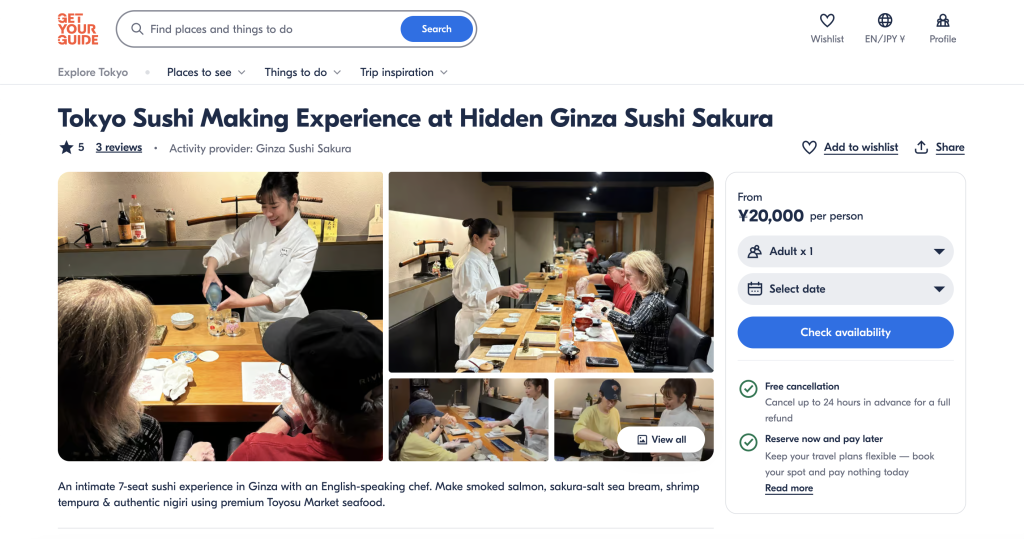
If you want a smaller, more personal class in Ginza, Hidden Ginza Sushi Sakura stands out. The class is capped at 7 participants, taught in English, and built around premium seafood sourced from Toyosu Market. The activity listing highlights a very specific menu rather than a generic “make sushi” promise: smoked salmon, sakura-salt sea bream, shrimp tempura, and nigiri. It also includes one complimentary sake and photo shooting.
For location, this is properly in Ginza. The class page says the meeting point is 3 minutes from Ginza or Hibiya Station, and the restaurant’s own official Tabelog listing places Ginza Sushi Sakura at 6-3-16 Ginza, Chuo-ku, with Ginza Station as the nearest station and only seven counter seats. That same official listing also says the restaurant caters to English speakers and offers vegan, vegetarian, and gluten-free options, plus child-friendly service.
That said, there is an important distinction between the restaurant’s regular dining policies and the specific sushi-making session. If you have dietary restrictions, ask whether the accommodation on the restaurant page also applies to the class format on your date. This option makes the most sense for travelers who want a very small setting, a central Ginza address, and a class that still feels tied to a real sushi counter rather than a big studio.
Tokyo: sushi experience Ginza on airKitchen
https://airkitchen.me/kitchen/11909.php
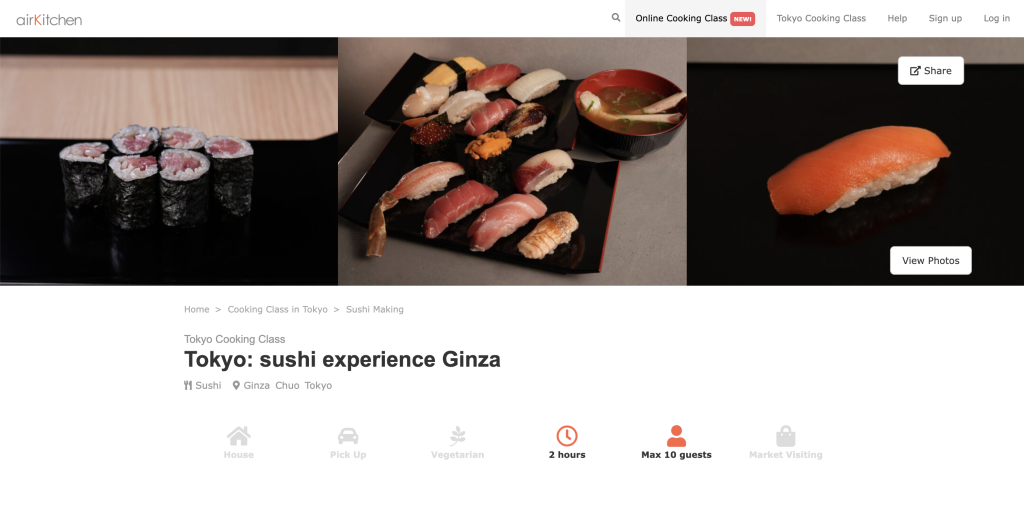
This airKitchen listing is one of the few bookable classes that is explicitly labeled Ginza, with Ginza Station as the nearest station and the location described as 0 minutes from Ginza Station once you arrive. The page lists a 2-hour class, vegetarian support, market visiting, and a maximum of 10 guests. It says the workshop teaches two especially popular styles: nigiri sushi and roll sushi.
The eye-catching detail here is price. airKitchen currently lists this class at ¥2,200 per person, with free refund up to 48 hours before the class under the platform’s cancellation policy. That is much lower than most central Tokyo sushi classes, so it is worth double-checking the booking page carefully to confirm the exact inclusions and whether the listed rate for your date still matches what is shown when you reserve.
This class looks practical for travelers who want a simple, central, less formal lesson. The booking page does not clearly spell out solo-booking rules, child policy, or the exact details of the “market visiting” element, so those are the three questions to ask before you commit.
Art SUSHI ROLL 3hrs @ Ginza/Tsukiji by Mami
https://airkitchen.me/kitchen/2616.php
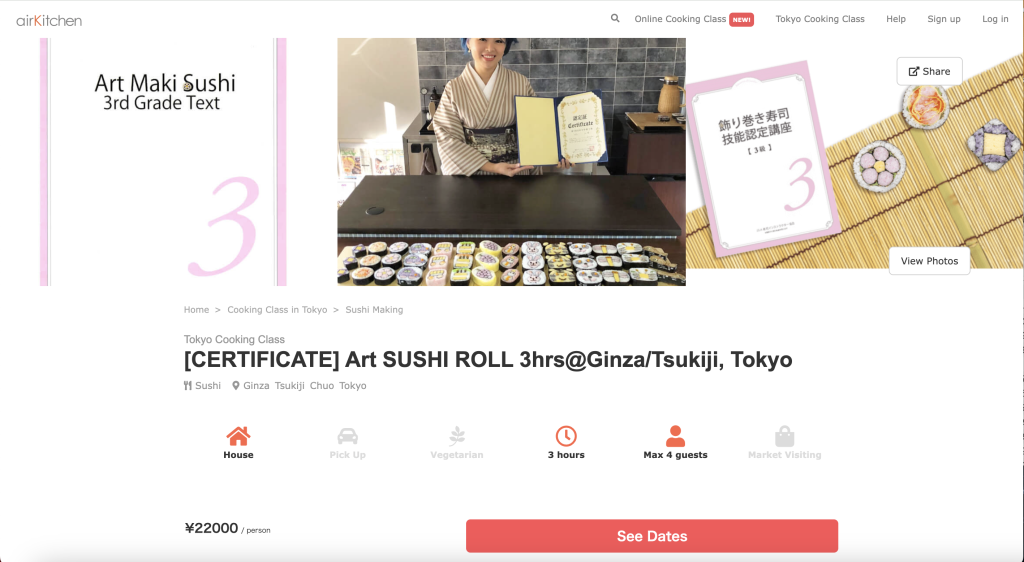
If standard nigiri is not your main goal, Mami’s Art SUSHI ROLL class is one of the more distinctive nearby options. It is held near Tsukiji Station, which the booking page describes as 5 minutes from Ginza, and it focuses on decorative sushi rolls rather than fish-heavy nigiri. In this three-hour class, you make three art rolls: a plum flower, a rose, and a four-seas roll. An English textbook is included, and participants receive a commemorative certificate.
For many travelers, the biggest selling point is what this class does not require. The host explicitly says there is no raw fish, and the class is tagged vegetarian. If you are traveling with children, are uneasy about handling raw seafood, or simply want a more colorful, design-focused workshop, this is one of the strongest choices near Ginza. The host also states that families with children are welcome, and the group size is capped at 4 guests, which keeps it personal.
The listed price is ¥22,000 per person, with full refund on airKitchen up to 48 hours before the class. Because it is in Tsukiji rather than central Ginza, it is slightly less convenient if you want to stay within Ginza the whole time. On the other hand, it is one of the most clearly differentiated classes in this area and is easier to recommend to non-raw-fish eaters than many chef-led sushi workshops.
Tsukiji Fish Market Sushi Making Class with Pro Chef
https://www.japanwondertravel.com/posts/sushi-making-workshop-tokyo
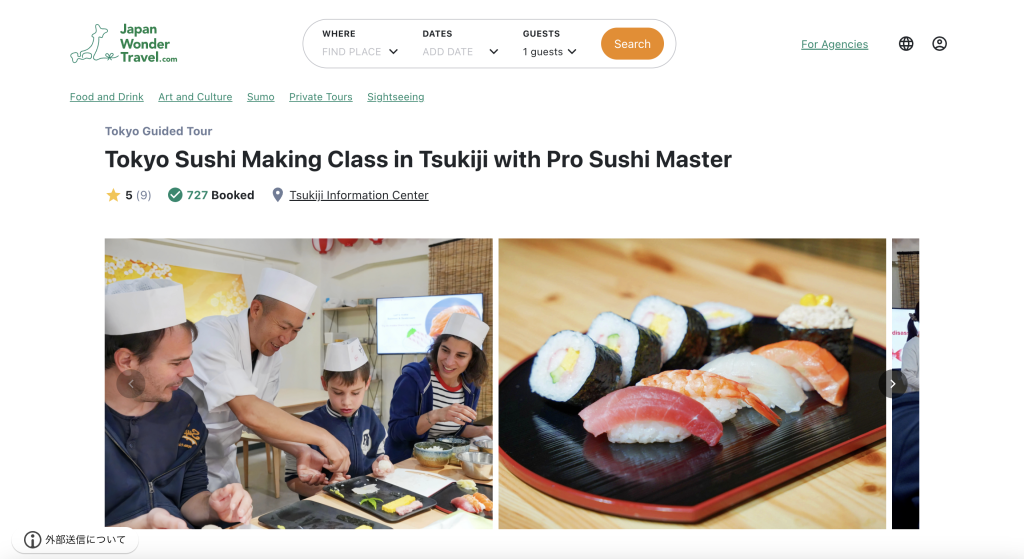
If your main goal is professional instruction rather than staying strictly inside Ginza, this nearby Tsukiji class is one of the most developed options. The provider is Japan Wonder Travel, and the class is led by a professional sushi master with an English-speaking host. The standard workshop includes 5 nigiri and 1 maki, plus an additional piece prepared by the master, and one of the headline features is a live fish-cutting show. The booking page also notes fresh wasabi grating and proper tableware sourced from local shops.
This class is especially strong if you want something that feels more like a food-culture activity than a casual cooking lesson. It is held inside a traditional building in the center of the Tsukiji outer market, and some booking options expand the format all the way to 4 hours or add sake pairing and sashimi elements. The public meeting point for the standard Viator listing is 4-16-2 Tsukiji, Chuo City, in front of the Plat Tsukiji information center.
Dietary and logistics notes matter here. Vegetarian and gluten-free requests are accepted, but the provider says vegan, halal, and kosher requests are not accommodated. The classroom is on the third floor with stairs only, so it is not suitable for wheelchair users or travelers with mobility impairments. Cancellation is free up to 24 hours in advance, but arrivals more than 15 minutes late are treated as a no-show. If you want the most structured nearby option and do not mind leaving Ginza for Tsukiji, this is one of the easiest classes to compare and book.
Sushi Academy Ginza for private groups
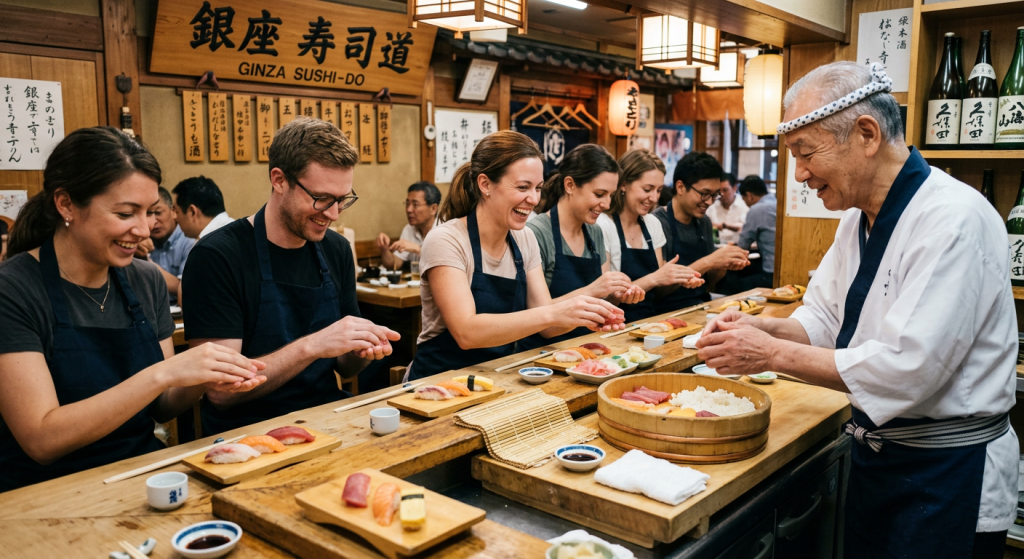
This is not the default choice for most individual tourists, but it is worth knowing about if you are planning a team event, company outing, or larger private group. Sushi Academy Ginza is operated by Tokyo Sushi Academy, and the site says the academy has more than 20 years of history with full instruction available in English. The Ginza venue is specifically positioned for private groups, while the academy’s small-group venue is in Shinjuku.
The Ginza venue is at Ginza Velvia-kan 7F, 2-4-6 Ginza, Chuo-ku, a 3-minute walk from Ginza Station, 1 minute from Ginza-itchome Station, and 4 minutes from Yurakucho Station. The standard course is described as a 90-minute “Nigiri & Dine” session, while the premium course is a 150-minute private masterclass with more from-scratch work, including fish slicing. The site does not clearly publish a simple public yen price on the booking pages, so you will need to check current booking details directly.
For ordinary solo or couple travel, this is not the first option I would check. For larger private groups in Ginza, though, it is one of the most credible choices because the venue, the English support, and the academy background are all clearly stated.
How to choose the right sushi class near Ginza
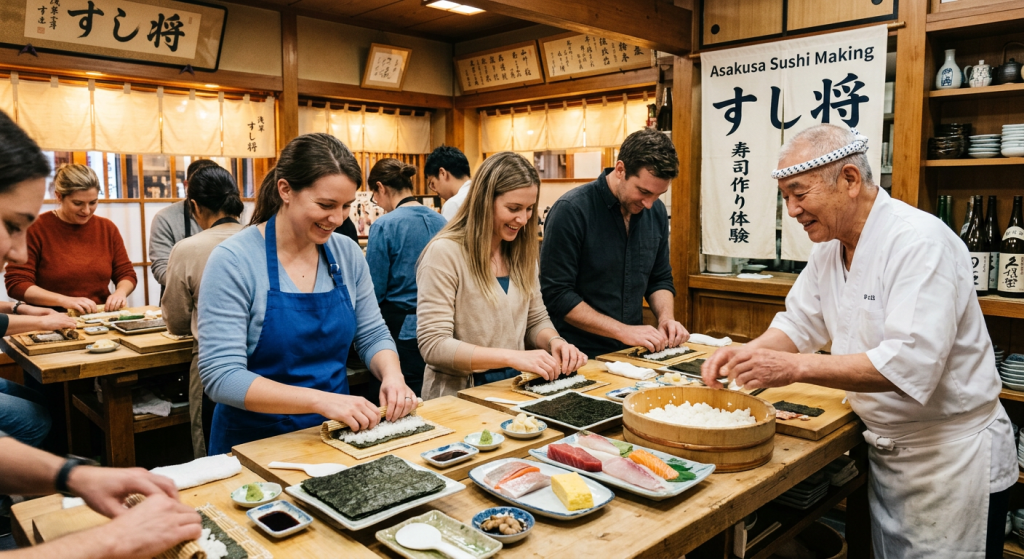
A lot of travelers searching for a sushi experience in Ginza are really deciding between location convenience and class depth.
If you want to stay in Ginza and keep transit to a minimum, the strongest picks are the two clearly Ginza-based small-group classes:
- Tokyo Sushi Making Experience in Ginza if you want a straightforward chef-led lesson in a working sushi shop.
- Hidden Ginza Sushi Sakura if you want the smallest setting and a more intimate counter-style feel.
If you are happy to go just outside Ginza for a more defined format:
- Japan Wonder Travel in Tsukiji is the better fit for chef demonstrations, fish-cutting, and clearer dietary and cancellation notes.
- Mami’s Art Sushi Roll class is the better pick for families, vegetarians, and anyone who prefers a no-raw-fish workshop.
A few booking checks make a real difference:
- Confirm whether the class is private or shared. Small Ginza classes feel personal, but they are not always private by default.
- If you need dietary support, ask whether the provider can handle vegetarian, vegan, gluten-free, halal, or allergies on your specific date. Policies vary sharply.
- If accessibility matters, check carefully. One Ginza class is explicitly wheelchair accessible, while the Tsukiji pro-chef class is explicitly stairs-only.
- If you are traveling solo or with children, do not assume the answer will be the same everywhere. Some pages state it clearly, others do not.
What to expect from a sushi-making class in this part of Tokyo
Most of the current classes in and around Ginza are built for international travelers rather than aspiring professionals. That usually means English support, a short lesson window, and a format that gets you making sushi quickly rather than spending hours on knife prep and fish theory. In practice, that is a plus for most visitors on a short Tokyo itinerary.
The biggest difference is not “touristy vs authentic.” It is what kind of hands-on experience you want. Some classes focus on shaping nigiri and eating it right away. Others add chef demonstrations, fish-cutting, sake pairing, decorative rolls, or market context. If you know whether you care more about location, fish handling, cultural explanation, or dietary flexibility, the right choice usually becomes obvious.
Frequently asked questions
Are there actually sushi-making classes in Ginza?
Yes. Current bookable options include at least a few classes in Ginza itself, including chef-led small-group lessons and platform-listed workshops near Ginza Station. If none match your date or preferences, Tsukiji is the easiest nearby area to expand your search.
What is the closest nearby alternative if Ginza options do not work?
Tsukiji is the most practical nearby alternative. One airKitchen class lists Tsukiji Station as 5 minutes from Ginza, and Japan Wonder Travel’s pro-chef workshop is explicitly described as being in Tsukiji near Ginza.
Are these classes taught in English?
Many are, but not all list language support in the same way. The Ginza class by Yummy Guide lists English and Japanese, Sushi Sakura lists English, Japan Wonder Travel lists an English-speaking host and instructor, and Sushi Academy states full instruction is available in English. Confirm your selected date before paying.
Can children join?
Sometimes, yes, but the policy depends on the provider. Mami’s class explicitly welcomes families with children, Japan Wonder Travel describes its workshop as family-friendly, and Ginza Sushi Sakura’s official restaurant listing says children are welcome. Other listings are less clear and should be checked in advance.
Are vegetarian or vegan options available?
Some providers can accommodate them, but the details vary. The airKitchen Ginza class is tagged vegetarian, Mami’s art roll class is vegetarian and uses no raw fish, Japan Wonder Travel says vegetarian and gluten-free guests are welcome but vegan is not available, and Ginza Sushi Sakura’s official restaurant page lists vegan, vegetarian, and gluten-free options. Ask whether those accommodations apply to the specific class session you want.
Should I choose a class in Ginza or Tsukiji?
Choose Ginza if convenience matters most and you want to keep the activity close to your hotel, shopping, or evening plans. Choose Tsukiji if you want more of a workshop atmosphere, stronger food-culture context, or extras like a fish-cutting show.
Final thoughts
For most travelers, the answer to “Which sushi making class in Ginza should I book?” is not one universal winner. It depends on what kind of day you want.
If you want a class inside Ginza, start with Tokyo Sushi Making Experience in Ginza or Hidden Ginza Sushi Sakura. If you want a wider range of formats nearby, Tsukiji gives you stronger alternatives, especially Japan Wonder Travel’s pro-chef class and Mami’s art sushi roll workshop. For larger private groups, Sushi Academy’s Ginza venue is worth a look.
Before you book, compare the class format, confirm the exact meeting point, check the latest schedule, and ask about dietary needs, children, solo participation, and cancellation terms. That is the fastest way to narrow the field and pick a class that actually fits your Tokyo itinerary.