Sushi Making Classes in Asakusa: Real Options, Prices, and How to Choose
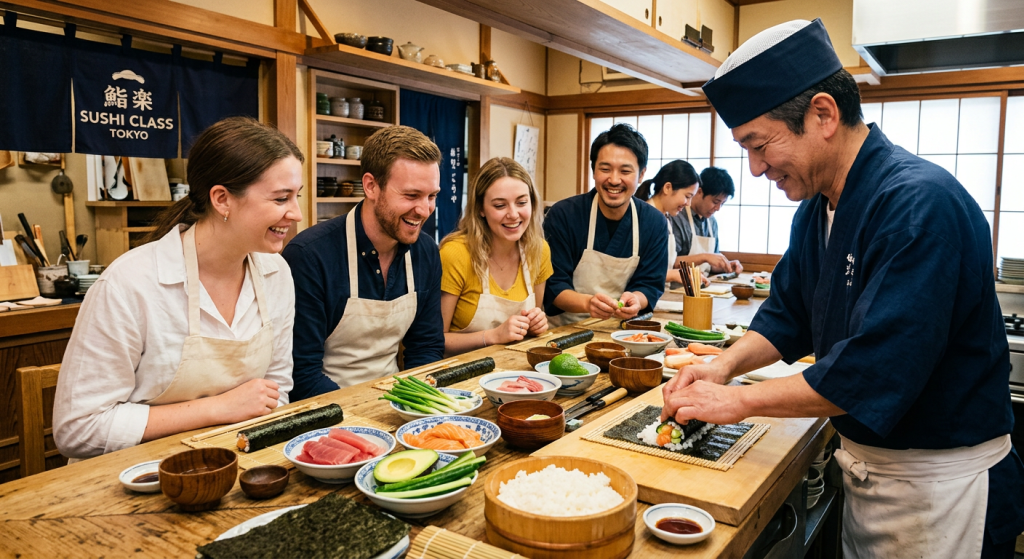
If you are searching for a sushi making class in Asakusa, you do not need to settle for vague “Tokyo” listings or generic cooking schools. There are several real, bookable hands-on classes in Asakusa itself, and the main differences are not just price. The practical choice comes down to the class format: a simple shared lesson, a sushi-and-matcha session, a family-friendly private class, or a more theatrical chef-led experience. If a market visit matters more than staying in Asakusa, Tsukiji is the clearest nearby alternative.
Current published details can change by date, package, and booking page, so treat the prices and schedules below as a starting point and recheck the official booking page before you pay. That matters especially for classes that run promotions, private plans, or date-based schedules.
Quick comparison
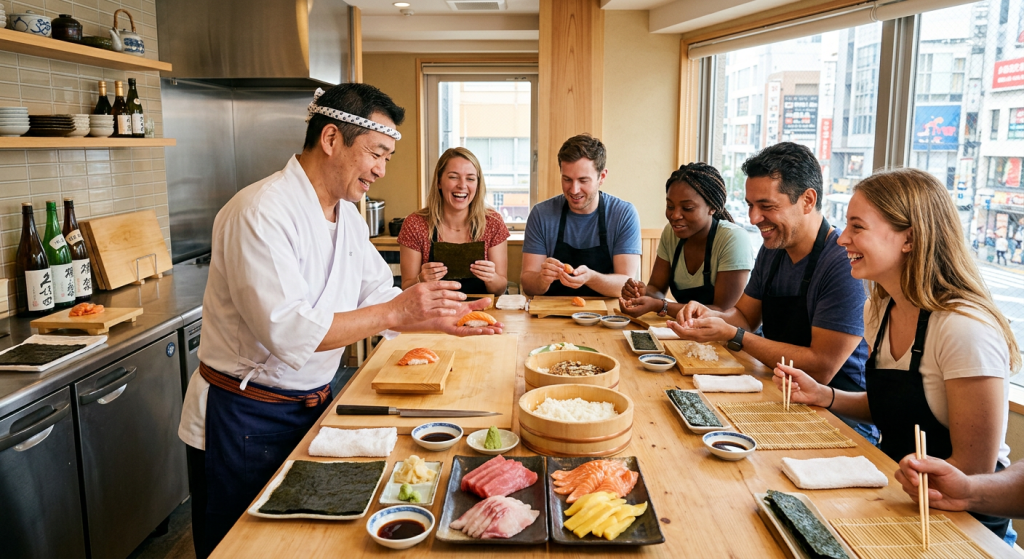
- Sushi Making Tokyo — a straightforward shared class in Asakusa with English instruction, nigiri and maki, a 1.5-hour format, and strong capacity for solo travelers, groups, and even large events. The operator’s site lists ¥13,000 per person.
- Sushi Matcha — a more layered Asakusa experience that adds a sake toast and matcha whisking to the sushi lesson. The signature class is 90 minutes, max 20 guests, and currently starts from ¥12,000 on the operator’s own page.
- Sushi Making JIN Asakusa Tokyo — the most entertainment-forward option here. It combines sushi making with chef performances, tasting games, and a samurai-themed setting. The standard Shogun course is 2 hours and ¥18,000, with a premium course at ¥23,000.
- TSUKIJI COOKING — not in Asakusa, but useful if you want a market tour plus cooking class. Current scheduled public classes are listed at ¥15,400 for the class only and ¥17,600 for the market-tour version.
The Asakusa classes worth considering
Sushi Making Tokyo
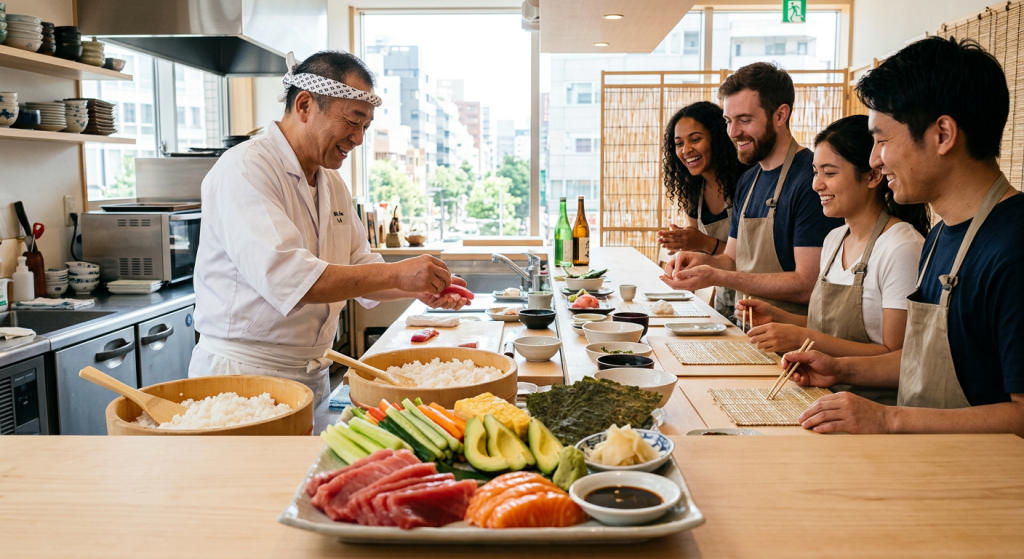
This is the cleanest pick if you want a classic hands-on sushi lesson without extra ceremony or a themed show. Sushi Making Tokyo teaches roll sushi and nigiri sushi, runs for about 1.5 hours, includes an English-speaking instructor, and lets you eat what you make at the end. The operator’s current published price is ¥13,000 per person.
Location is one of its practical strengths. The class is in Kaminarimon, Asakusa, at Relink Kaminarimon Building, 2-17-9 Kaminarimon, a short walk from Asakusa Station, so it fits easily into a day built around Senso-ji, Nakamise, or Tokyo Skytree.
This class also publishes more operational detail than many competitors. The site says it offers vegan, vegetarian, halal, and allergy-friendly options with advance notice, and the operator’s FAQ says children are welcome, there is no strict age limit, classes are conducted in English, and the Tokyo location can handle up to 90 people. That makes it one of the most practical options for solo travelers, mixed-age families, school groups, and corporate outings.
The main trade-off is that this is a broad-appeal format rather than a specialized one. If you want matcha, a private family pace, or a market walk, another option may fit better. The operator also notes free cancellation up to 24 hours before class, same-day booking subject to availability, and late-arrival rules, so it is worth reading the live booking terms before confirming.
Sushi Matcha
Sushi Matcha is a better fit if you want your sushi class to feel like a compact cultural activity rather than just a cooking lesson. The signature class in Asakusa combines hands-on nigiri and maki making with a sake toast and matcha whisking, and the published timeline makes it clear that all three are part of the same flow. The current class page lists 90 minutes, max 20 guests, and a current published rate from ¥12,000 per person.
The location is excellent for travelers staying in Asakusa. The studio is at 1-10-16 Hanakawado, Taito City, and the operator says it is 30 seconds from Tobu Asakusa Station North Exit, with short walking access from the Ginza Line, Toei Asakusa Line, and Tsukuba Express as well.
Where this option stands out is guest practicality. The FAQ says the classes are fully conducted in English, solo travelers are welcome, children aged 4 and above can join regular classes, gluten-free soy sauce is available, and the team can prepare vegetarian, vegan, allergen-free, no-raw-fish, shellfish-free, and some halal-adjusted options with advance notice. It also states that the studio has step-free access, luggage storage, and free cancellation up to 24 hours before the class.
This operator is also the most clearly family-oriented of the Asakusa providers reviewed here. If you are traveling with children and do not want to manage them in a shared class, Sushi Matcha’s separate Family Private Sushi Making Class in Asakusa is worth knowing about even if you do not book the standard lesson. That private family plan is listed at ¥25,000 per person, runs 90–120 minutes, requires 4 to 8 guests, and includes child-safe utensils, stroller-friendly access, luggage storage, and no-raw-fish options for kids.
The only caution is that the signature class has a distinct personality. If you want a stripped-down chef lesson and nothing else, the matcha-and-sake format may feel like more staging than you need.
Sushi Making JIN Asakusa Tokyo
JIN-Asakusa is the right comparison point if you want more than a standard cooking class. This experience is built as a small-seat entertainment dining format that still includes real hands-on sushi making. The published Shogun course includes chef performances, ingredient comparison tastings, a samurai sword show, and a sushi making experience with 10 pieces, all in a samurai-themed setting near Asakusa Station. The standard course is listed at ¥18,000, the premium course at ¥23,000, and a vegan full-course is also published.
It is also one of the easiest classes to pair with sightseeing. TableCheck lists the venue near Asakusa Station, at 1-10-14 Hanagawado / Asakusa area, and the course is scheduled at 11:00 a.m.–1:00 p.m. and 6:30 p.m.–8:30 p.m. on the published menu. English is part of the offering, with Japanese support and Chinese and Korean subtitles noted in the listing.
This is not the most budget-friendly option, and it is not the purest workshop either. A large part of the value is the live show, themed setting, tasting game, and full-course structure. For some travelers, that is exactly the point. For others, especially anyone who mainly wants a calm lesson on nigiri technique, it may be more experience-led than class-led.
It is also the option that deserves the most pre-booking checking if you have dietary, child-age, or accessibility questions. The menu clearly lists a vegan course, but if you need something more specific, it is better to confirm directly before booking.
TSUKIJI COOKING
If your real priority is not “Asakusa specifically” but “sushi class in Tokyo with a food-market angle,” TSUKIJI COOKING is the strongest nearby alternative I found. It is English-friendly, located in the Tsukiji Outer Market area, and offers both scheduled public classes and a Tsukiji Outer Market tour plus cooking class.
For individual travelers, the schedule page currently lists a Tokyo Sushi Cooking Class in Tsukiji at ¥15,400 per person from 11:00 a.m. to 1:00 p.m., plus a Tsukiji Outer Market Tour & Cooking Class at ¥17,600 per person from 10:00 a.m. to 1:00 p.m. on upcoming dates. That makes it the clearest option here if you want a market walk before the cooking starts.
The studio is at SOLASIA BLDG. TSUKIJI 5F, 4-13-8 Tsukiji, Chuo-ku, inside the Tsukiji food district. The operator says market-tour classes include about one hour in the outer market, followed by cooking and dining in the studio. It also states that classes are conducted or interpreted into English, and that dietary restrictions can be discussed in advance.
For an Asakusa-based traveler, the downside is simple: this is not in Asakusa. Go this route if the market component is your priority, not if you want to stay within a short walk of Senso-ji. Also note that published cancellation terms differ by plan; the private market-tour page shows staged fees, so check the exact policy for the plan you book.
Sushi Making Kakida: A Premium, Hands-On Sushi Experience in Tokyo
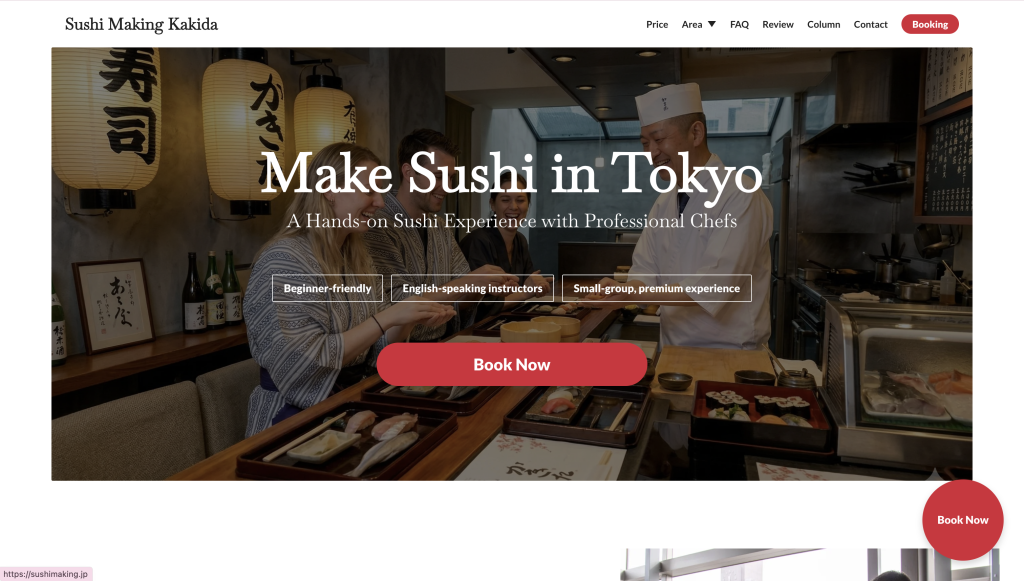
For travelers who want to do more than simply eat sushi, Sushi Making Kakida offers an authentic, hands-on experience guided by professional Japanese sushi chefs.
Rather than joining a large, demonstration-style cooking class, guests learn in a small, private-style group of up to four people. A professional sushi chef and English-speaking interpreter guide you through each step, making the experience easy to follow even if you have never cooked or made sushi before.
During the class, you will learn how to shape traditional nigiri and make approximately 10 pieces of sushi using fresh, high-quality ingredients. Depending on seasonal availability, the selection may include premium toppings such as otoro fatty tuna, chutoro medium-fatty tuna, akami lean tuna, sea urchin, scallop, sea bream, salmon and other Japanese seafood.
The experience is not only educational but also highly interactive. You can watch a professional chef demonstrate authentic techniques, practise making nigiri yourself, eat the sushi you have created and take memorable photos at the sushi counter while wearing a traditional Japanese kappogi apron.
Sushi Making Kakida has already welcomed international visitors from around the world. With clear English support, personal attention and a relaxed atmosphere, it is an excellent choice for couples, families, solo travelers and small groups looking for a memorable Japanese cultural experience.
More Than a Sushi Class: Experience the World of Japanese Tuna
What makes Sushi Making Kakida particularly special is the expertise of the restaurant group behind it.
The Kakida team also operates spectacular maguro tuna-cutting shows, where professional sushi chefs break down whole bluefin tuna weighing more than 100 kilograms in front of an audience. These live events have been held for corporate parties, international exchange events, weddings and large-scale gatherings with hundreds of guests.
Unlike a typical cooking workshop, Sushi Making Kakida is backed by working sushi professionals who regularly source, prepare and serve premium tuna and seafood. Their knowledge extends far beyond showing guests how to shape rice—the team understands how fish is selected, cut and transformed into high-quality sushi.
The tuna-cutting show is a separate event service and is not included in the standard sushi-making class. However, it demonstrates the level of craftsmanship, seafood knowledge and entertainment experience behind the Kakida name.
For visitors searching for a sushi making class in Tokyo or Shinjuku, Sushi Making Kakida offers more than a fun activity. It is an opportunity to step behind the sushi counter, learn directly from professionals and experience one of Japan’s most iconic culinary traditions for yourself.
Make sushi, meet real Japanese chefs and create a Tokyo memory you can actually taste.
How to choose the right sushi experience
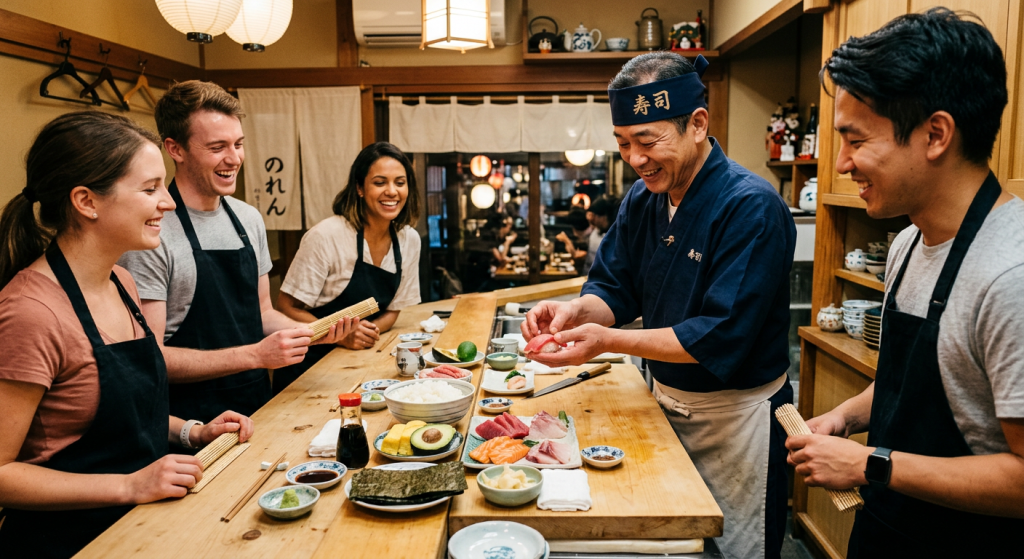
If you want the simplest answer, start with where you want to spend the rest of your day. For a class you can slot between sightseeing stops in Asakusa, Sushi Making Tokyo, Sushi Matcha, and JIN-Asakusa all keep you in the neighborhood. If you specifically want a market walk and ingredient-shopping angle, Tsukiji Cooking is the more natural fit even though it takes you out of Asakusa.
Then decide how much “extra experience” you actually want. Sushi Making Tokyo is the most straightforward cooking-first option. Sushi Matcha adds matcha and a sake toast without becoming a dinner show. JIN-Asakusa is closer to an immersive food-and-performance event that happens to include hands-on sushi making.
If you are booking for children, look especially closely at the family rules rather than just the headline price. Sushi Matcha is the clearest on this point, with a published age policy for regular classes and a dedicated family-private format. Sushi Making Tokyo also says children are welcome, but the family-specific structure is not as specialized on the public class page. If you are considering JIN-Asakusa with younger children, confirm the format before paying.
For dietary needs, do not assume that “Tokyo sushi class” means the same thing everywhere. Sushi Making Tokyo explicitly lists vegan, vegetarian, halal, and allergy-friendly menus with advance notice. Sushi Matcha is more detailed still, with vegetarian, vegan, allergen-free, shellfish-free, no-raw-fish, gluten-free soy sauce, and limited halal-adjusted requests in its FAQ. TSUKIJI COOKING says dietary-friendly arrangements are possible when discussed in advance, especially for private lessons.
For larger groups or team events, Sushi Making Tokyo has the clearest large-capacity pitch, with a published maximum of 90 people in Tokyo and a separate private option from ¥200,000. TSUKIJI COOKING also positions itself strongly for tours, travel agencies, and corporate groups.
What to expect at a sushi-making class in Asakusa
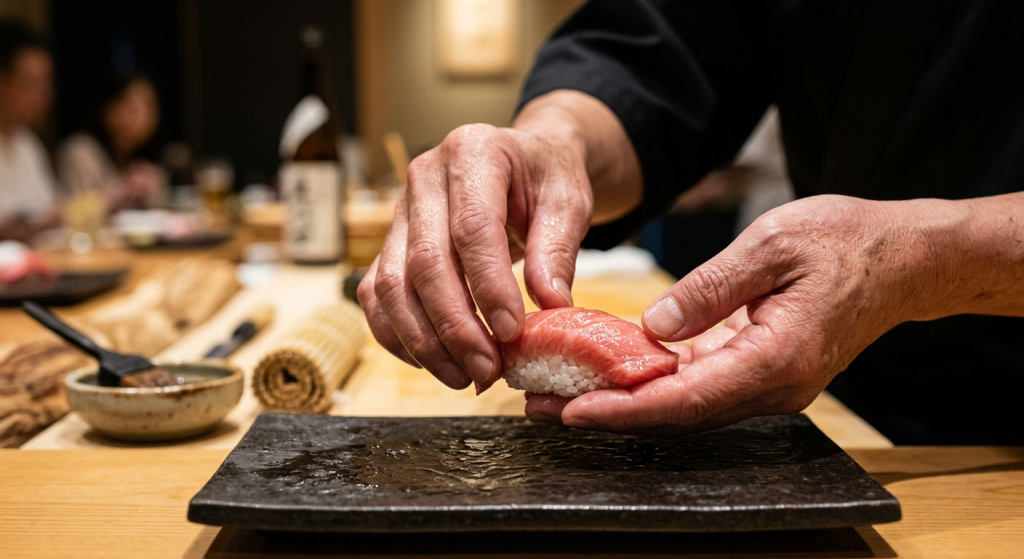
Most of the practical Asakusa options here are beginner-friendly. The standard formats usually involve learning the rice, shaping nigiri, rolling maki, and then eating what you make. None of the classes above require previous cooking experience based on the providers’ published descriptions and FAQs.
The shortest sessions are around 90 minutes, while the more elaborate or market-linked options run closer to 2 to 3 hours. That matters when you are fitting the class around temple visits, river cruises, or travel between neighborhoods. A quick class works well as a rainy-day indoor activity; a market-tour format works better if you want the class to be a half-day food experience.
Frequently asked questions
Are there sushi-making classes in Asakusa?
Yes. Asakusa has multiple real, hands-on options, including Sushi Making Tokyo, Sushi Matcha, and JIN-Asakusa, all published as bookable experiences in or around Asakusa Station.
How much does a sushi-making class in Asakusa cost?
For the options compared here, shared classes in Asakusa currently start around ¥12,000 to ¥13,000 for Sushi Matcha and Sushi Making Tokyo, while JIN-Asakusa’s standard full-course is ¥18,000. Private or family-focused plans cost more, such as Sushi Matcha’s family-private class at ¥25,000 per person and Sushi Making Tokyo’s private class from ¥200,000. Nearby Tsukiji Cooking currently lists ¥15,400 for a public class and ¥17,600 with a market tour.
Are these classes taught in English?
Yes, the main options reviewed here all publish English support. Sushi Making Tokyo states that classes are conducted in English, Sushi Matcha says all classes are fully conducted in English, JIN-Asakusa lists an English-language course with Japanese support, and TSUKIJI COOKING describes itself as English-friendly and says classes are conducted or interpreted into English.
Can beginners join?
Yes. The providers consistently describe these classes as beginner-friendly. If this is your first time touching sushi rice, you will not be out of place.
Can children join a sushi-making class in Asakusa?
Usually, yes, but the rules vary. Sushi Matcha says children 4 and above can join regular classes and also offers a dedicated family-private class. Sushi Making Tokyo says children are welcome, with parental support for younger children if needed. For JIN-Asakusa, confirm directly before booking if you are bringing younger kids.
Can solo travelers book a sushi class?
Yes. Sushi Matcha explicitly says solo travelers are welcome, Sushi Making Tokyo markets itself to solo travelers as well as couples and groups, and TSUKIJI COOKING says scheduled group lessons are suitable for FIT and solo travelers without a private minimum guarantee.
Are vegetarian, vegan, halal, or allergy-friendly options available?
They can be, but you should confirm before booking. Sushi Making Tokyo explicitly lists vegan, vegetarian, halal, and allergy-friendly menus with advance notice. Sushi Matcha publishes vegetarian, vegan, allergen-free, no-raw-fish, shellfish-free, and gluten-free options, plus limited halal-adjusted requests, and it also runs a dedicated vegan workshop. TSUKIJI COOKING says dietary-friendly arrangements can be discussed in advance, especially for private lessons.
Which class is the most practical choice?
For most travelers staying in Asakusa, the most practical move is to choose an Asakusa-based class first, then widen your search only if you want a specific add-on. Pick Sushi Making Tokyo for a clear, cooking-first shared lesson. Pick Sushi Matcha if you want sushi plus matcha and stronger family or dietary detail. Pick JIN-Asakusa if you want the evening to feel closer to a chef-led entertainment experience. Look at TSUKIJI COOKING only if the market-tour element matters enough to leave the neighborhood.
Before you book, compare the class format, check whether the plan is shared or private, confirm the latest price and schedule, and spell out any dietary needs, child requirements, or accessibility questions in advance. That is the easiest way to choose a class that actually fits your Tokyo itinerary instead of just looking good in search results.