Sushi Making Classes in and Near Akihabara
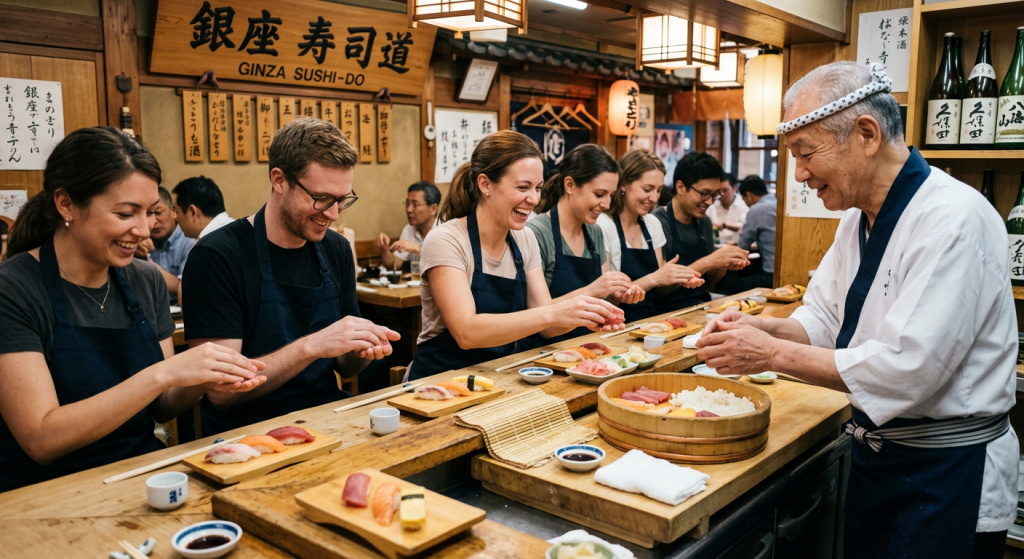
If you want a sushi making class in Akihabara, there is at least one current hands-on option inside the district. The wider and easier-to-compare set of classes, though, is in nearby Asakusa and Tsukiji, where you’ll find stronger official detail on pricing, English support, dietary requests, and optional market visits.
That makes the practical answer simple. Stay in Akihabara if location is your top priority. Expand your search to Asakusa or Tsukiji if you want more choice, better-published class details, or a market-focused experience.
Quick comparison of real options
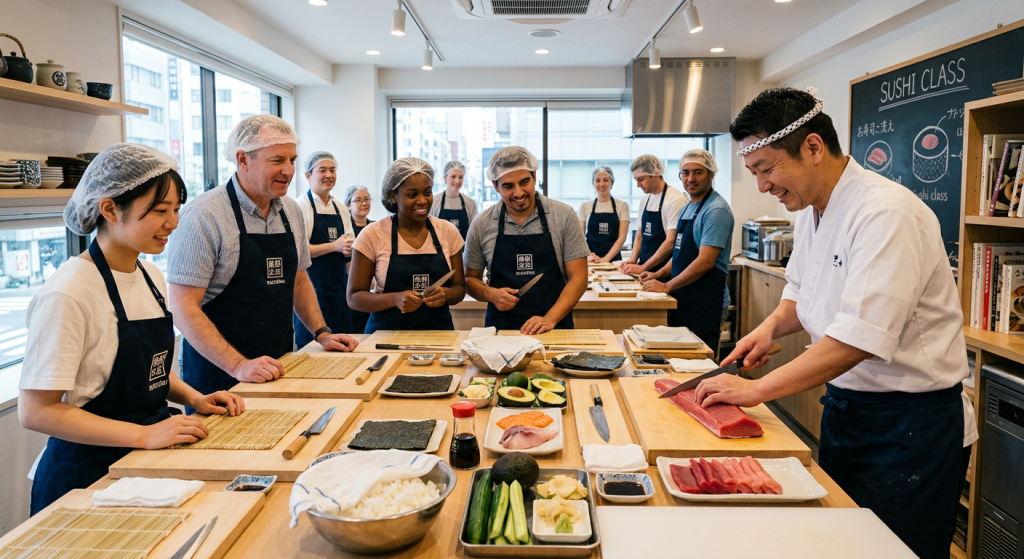
| Experience | Area | Best for | What you make | Duration | Price | Language | Format |
|---|---|---|---|---|---|---|---|
| Tokyo Sushi Making Experience in Akihabara | Akihabara | Travelers who want to stay in the neighborhood | Nigiri and rolls, 7 pieces total | 1.5 hours | Check current price | English, Japanese | Shared small group, up to 10; wheelchair accessible; free cancellation up to 24 hours. |
| Sushi Making Tokyo | Asakusa | First-time visitors, large groups, travelers who want clear English support | Nigiri and maki rolls | 1.5 hours | ¥13,000 per person | English | Shared class; capacity up to 90; vegan, vegetarian, halal, and allergy-friendly options with advance notice. |
| Vegetarian Sushi Making Class in Asakusa | Asakusa / Kappabashi area | Vegetarians and mixed groups with non-seafood eaters | Nigiri, gunkan-maki, inari, rolled sushi, plus dashi and miso soup | 2.5 hours | Check current price | Japanese, English | Shared class; 1–20 guests; wheelchair accessible. |
| Tsukiji Cooking sushi class | Tsukiji | Travelers who want a cooking-school format in central Tokyo | Sushi class with teriyaki fish and miso soup; optional market-tour version | 2 hours or 3 hours | ¥15,400 per person without market tour; ¥17,600 per person with market tour | English-friendly | Shared public classes for individual travelers; private and group formats also available. |
| Tsukiji Market Tour and Sushi-Making Class with Chef Saisho | Tsukiji meeting point, then Nagatacho | Couples or small groups who want chef-led market context and lunch | Sushi with chef guidance, plus sashimi meal and signature dishes | 3 hours | Check current price | English | Small group, 2–8 guests; market walk first, then taxi to the restaurant. |
| Private Tokyo Sushi-Making Class at 100-Year-Old Sushi Bar | Yotsuya-sanchome area | Private groups, couples, families, team outings | Five types of sushi including nigiri and tamagoyaki | 1.5 hours | Check current price | English support available, but confirm details | Private experience for 2–13 guests; certificate included; optional English-speaking assistant. |
The Akihabara option if location matters most
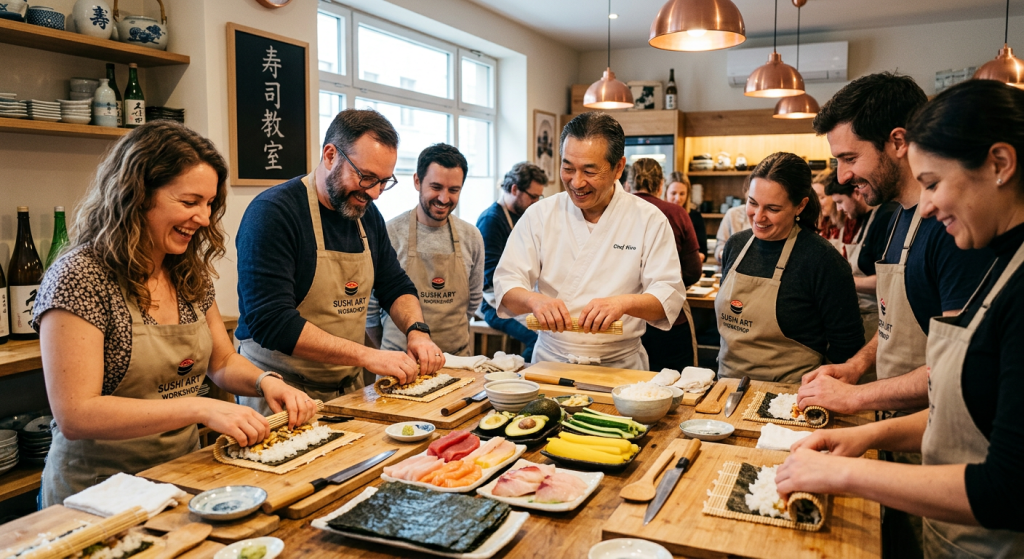
Tokyo Sushi Making Experience in Akihabara
This is the clearest hands-on class currently published in Akihabara itself. The class runs for 1.5 hours, is conducted in English and Japanese, and keeps the group small, with a published limit of 10 participants. The booking page also says the venue is wheelchair accessible.
What you actually do is straightforward and travel-friendly. You learn nigiri and roll techniques from a professional chef, make your own sushi, and eat what you make at the end. The public page lists seven pieces of sushi plus tea or water, with optional sake tasting.
This one makes sense if your Tokyo schedule is centered on Akihabara and you do not want to add another neighborhood just for a class. The trade-off is that the public page is lighter on practical detail than some nearby alternatives. It does not clearly publish the restaurant name in the class description, and it does not spell out a detailed policy for allergies, halal requests, or child participation. Check those points before you book.
Sushi Making Kakida: A Premium, Hands-On Sushi Experience in Tokyo
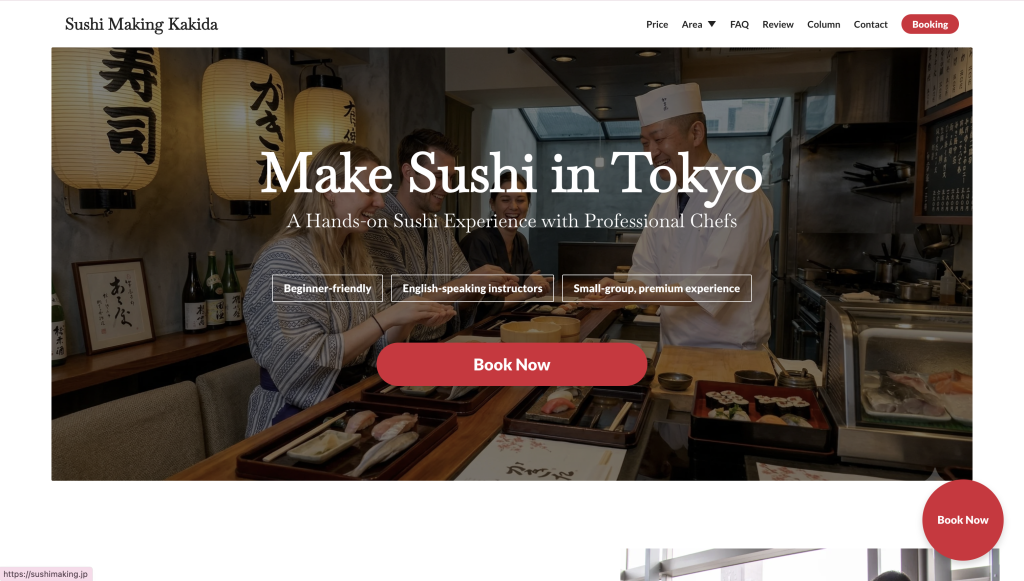
For travelers who want to do more than simply eat sushi, Sushi Making Kakida offers an authentic, hands-on experience guided by professional Japanese sushi chefs.
Rather than joining a large, demonstration-style cooking class, guests learn in a small, private-style group of up to four people. A professional sushi chef and English-speaking interpreter guide you through each step, making the experience easy to follow even if you have never cooked or made sushi before.
During the class, you will learn how to shape traditional nigiri and make approximately 10 pieces of sushi using fresh, high-quality ingredients. Depending on seasonal availability, the selection may include premium toppings such as otoro fatty tuna, chutoro medium-fatty tuna, akami lean tuna, sea urchin, scallop, sea bream, salmon and other Japanese seafood.
The experience is not only educational but also highly interactive. You can watch a professional chef demonstrate authentic techniques, practise making nigiri yourself, eat the sushi you have created and take memorable photos at the sushi counter while wearing a traditional Japanese kappogi apron.
Sushi Making Kakida has already welcomed international visitors from around the world. With clear English support, personal attention and a relaxed atmosphere, it is an excellent choice for couples, families, solo travelers and small groups looking for a memorable Japanese cultural experience.
More Than a Sushi Class: Experience the World of Japanese Tuna
What makes Sushi Making Kakida particularly special is the expertise of the restaurant group behind it.
The Kakida team also operates spectacular maguro tuna-cutting shows, where professional sushi chefs break down whole bluefin tuna weighing more than 100 kilograms in front of an audience. These live events have been held for corporate parties, international exchange events, weddings and large-scale gatherings with hundreds of guests.
Unlike a typical cooking workshop, Sushi Making Kakida is backed by working sushi professionals who regularly source, prepare and serve premium tuna and seafood. Their knowledge extends far beyond showing guests how to shape rice—the team understands how fish is selected, cut and transformed into high-quality sushi.
The tuna-cutting show is a separate event service and is not included in the standard sushi-making class. However, it demonstrates the level of craftsmanship, seafood knowledge and entertainment experience behind the Kakida name.
For visitors searching for a sushi making class in Tokyo or Shinjuku, Sushi Making Kakida offers more than a fun activity. It is an opportunity to step behind the sushi counter, learn directly from professionals and experience one of Japan’s most iconic culinary traditions for yourself.
Make sushi, meet real Japanese chefs and create a Tokyo memory you can actually taste.
Nearby classes that are often easier to compare
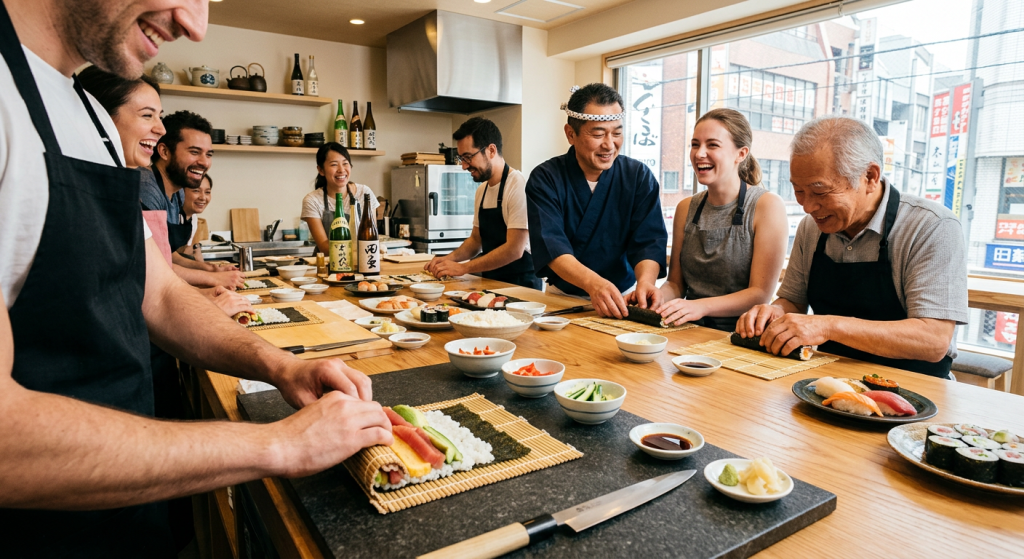
Sushi Making Tokyo in Asakusa
For many travelers staying near Akihabara, Asakusa is the most practical nearby alternative. Sushi Making Tokyo publishes the most complete official detail of the options reviewed here: a 1.5-hour class in Asakusa, English instruction, a current official price of ¥13,000 per person, and a location about a three-minute walk from Asakusa Station at 2-17-9 Kaminarimon, Taito City.
The format is simple and beginner-friendly. You learn nigiri sushi and maki rolls, eat the sushi you make, and receive the recipe after class. The official page also lists four daily class times and states that vegan, vegetarian, halal, and allergy-friendly options are available with advance notice. Free cancellation is published up to 24 hours before the class.
This is a strong fit for first-time visitors who want a polished experience with clear English support and published dietary information. It is also one of the better choices for larger groups, since the venue says it can accommodate up to 90 people. If you are traveling with children, though, ask directly about age requirements because the official page does not publish a clear age cutoff.
Vegetarian Sushi Making Class in Asakusa
If a regular seafood-based sushi class does not work for your group, this Asakusa option stands out. The booking page describes a 2.5-hour class in Japanese and English for 1 to 20 guests, with wheelchair accessibility, and a fully vegetarian menu. Participants make nigiri sushi, gunkan-maki, inari sushi, and rolled sushi, and also learn dashi and miso soup. Complimentary sake and green tea are included.
The meeting point is at the class location between historical Asakusa and Kappabashi Kitchen Town, so it also fits travelers who want to combine the activity with a neighborhood walk rather than a full market excursion. The page frames it as family-friendly, which is helpful for mixed-age groups.
The main reason to choose this class is obvious: it is designed around fish-free sushi rather than treating vegetarian needs as an afterthought. That matters if one traveler in your party avoids seafood and another still wants a sushi-making activity. Still, confirm the exact handling of vegan diets, individual allergies, and children’s participation rules before booking, because the public page is clearest on vegetarian support rather than every possible dietary case.
Tsukiji Cooking
Tsukiji Cooking is closer to a cooking school than a one-off tourist workshop. Its official site describes an English-friendly cooking school in Tsukiji that has welcomed international guests since 2013 and offers public classes, private lessons, group sessions, and corporate programs. The studio address is published as SOLASIA BLDG. TSUKIJI 5F, 4-13-8 Tsukiji, Chuo-ku, Tokyo.
For currently published sushi classes, the schedule page lists “Tokyo Sushi Cooking Class in Tsukiji (with Teriyaki fish and Miso soup)” at ¥15,400 per person for the 11:00 am to 1:00 pm cooking class. It also lists a longer “Tsukiji Outer Market Tour & Cooking Class” version at ¥17,600 per person from 10:00 am to 1:00 pm on scheduled dates.
This is one of the clearest options if you want to compare a sushi class and a sushi class with market tour side by side. The official market-tour page says classes are either conducted or interpreted into English, dietary restrictions can be accommodated if you notify them at booking, and the private market-tour format can host from one to 30 people. The homepage also states that the publicly available classes can be booked by individual travelers.
The main difference from the Akihabara and Asakusa classes is format. This feels more like a structured cooking lesson with a Tsukiji food-context angle, rather than a short drop-in activity. If that sounds appealing, it is one of the most practical choices near Akihabara. If you only want a very short sushi-only workshop, the Asakusa classes are simpler.
Market-based and private alternatives in central Tokyo
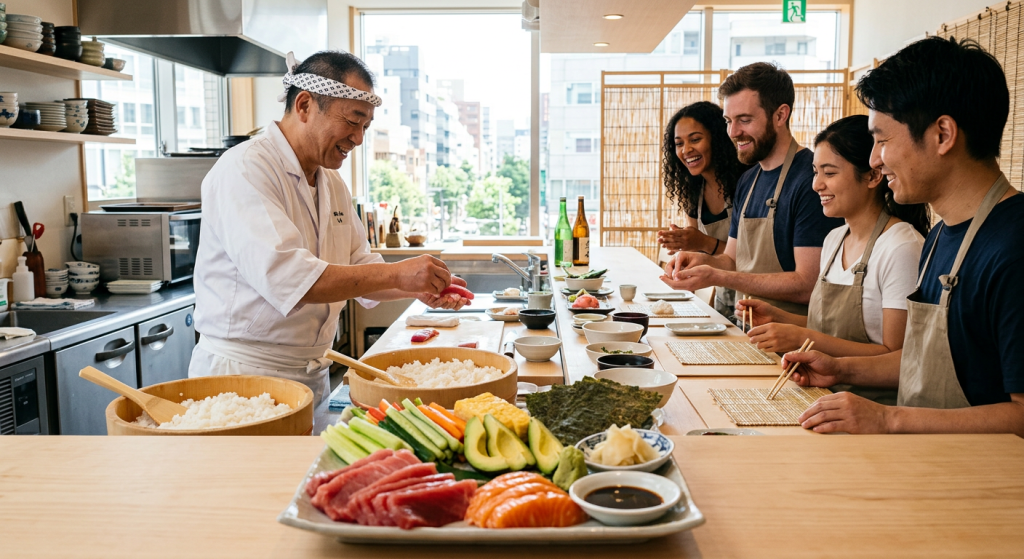
Tsukiji Market Tour and Sushi-Making Class with Chef Saisho
This option is more chef-led and more food-focused than a basic class. The byFood listing describes a three-hour English-language experience for two to eight guests. You meet near Tsukiji Market, tour the market with Chef Saisho, then take a roughly 10-minute taxi ride to Ginza Saisho in Nagatacho, where the chef demonstrates techniques and guides you through making sushi yourself.
What makes it different is the combination of market walk, restaurant setting, and meal. The listing says the experience includes the market tour, ingredients, a sashimi meal, and the chef’s signature “uniku” dish. It is a good fit for couples or small groups who want more than a standard class and do not mind paying for a more elaborate food experience.
A few practical caveats matter here. The booking page publishes a 48-hour cancellation window, but it also says seeing tuna being sliced at the market is not guaranteed. That means it is not a reliable pick if your priority is a dedicated tuna-cutting show. It is better thought of as a chef-hosted Tsukiji-and-sushi experience.
Private Tokyo Sushi-Making Class at a 100-Year-Old Sushi Bar
If you want privacy more than proximity to Akihabara, this is one of the stronger alternatives. The byFood page lists a 1.5-hour private class for two to 13 guests in English, meeting near Yotsuya-sanchome Station. The class is held at Sushi Bar Yachiyo, described as a historic sushi restaurant in central Tokyo with a private room overlooking a Japanese garden.
You make five types of sushi, including nigiri and tamagoyaki, and learn two traditional shaping techniques. A certificate of completion is included. That makes it particularly attractive for couples, families, and small private groups who want a more personal setting than a shared workshop.
This is also the class where English support needs the closest attention. The page states that the chef speaks limited English, written English materials are provided, and an English-speaking assistant is optional when booking. If fluent spoken instruction is essential for your group, confirm that assistant option before paying. Solo travelers should also look elsewhere, because the listing starts at two guests.
How to choose the right class from an Akihabara base
If you want to stay inside Akihabara, choose the Akihabara small-group class and keep the day simple. It is the only clearly bookable in-district hands-on option among the confirmed listings here.
If you want the easiest all-rounder nearby, Asakusa is usually the first place to check. Sushi Making Tokyo has the clearest official pricing in yen, strong English support, daily time slots, and published dietary flexibility.
If vegetarian support is your main issue, do not settle for a standard seafood class unless the provider confirms substitutions. The vegetarian class in Asakusa is built around fish-free sushi from the start, which is a very different proposition from “ask us in advance.”
If you want Tsukiji in the itinerary, decide whether you want a true market component or just a class in the neighborhood. Tsukiji Cooking gives you both formats, while Chef Saisho’s experience leans more toward a chef-hosted food outing with sushi making included.
If you want a private room and a more intimate format, the Yotsuya private class is the most clearly private option among the confirmed listings here. Just be careful to confirm language support and minimum guest requirements.
What to check before you book
A few details change the experience more than the headline title suggests.
- Meeting point: Some pages publish the exact address clearly, while others only share precise details after booking. That is especially true for the Akihabara class, Chef Saisho’s experience, and the Yotsuya private class.
- English support: “English available” does not always mean the same thing. Akihabara is bilingual, Sushi Making Tokyo is clearly English-led, Tsukiji Cooking says classes are conducted or interpreted into English, and the Yotsuya private class may rely on written English materials unless you add the assistant option.
- Dietary requests: Sushi Making Tokyo explicitly publishes vegan, vegetarian, halal, and allergy-friendly options with advance notice. Tsukiji Cooking says dietary restrictions can be accommodated if notified when booking. The vegetarian Asakusa class is the clearest fish-free option. Other classes should be checked directly.
- Shared or private: Several travelers search for “sushi making class Akihabara” when what they really care about is class style. Akihabara, Asakusa, and Tsukiji Cooking public sessions are shared. The Yotsuya class is private. Chef Saisho’s experience is a small group, not private by default.
- Cancellation rules: The Akihabara listing and Sushi Making Tokyo publish 24-hour free cancellation. The byFood experiences here publish 48-hour free cancellation. Tsukiji Cooking’s private market-tour page uses a sliding-fee cancellation policy, so check the exact class you are booking.
Frequently asked questions
Are there sushi-making classes in Akihabara?
Yes, but the choice inside Akihabara itself is limited. One current Akihabara class is published through an authorized booking platform, while several of the more detailed alternatives are in nearby Asakusa and Tsukiji.
How much does a sushi-making class near Akihabara cost?
Confirmed current yen prices include ¥13,000 per person for Sushi Making Tokyo in Asakusa, ¥15,400 per person for Tsukiji Cooking’s sushi class without the market tour, and ¥17,600 per person for the scheduled Tsukiji market-tour version. Other listings may display dynamic or foreign-currency pricing on the booking page, so check the latest published rate before payment.
Are these classes taught in English?
Yes, but the level of English support varies. The Akihabara class is listed in English and Japanese, Sushi Making Tokyo is published as English, Tsukiji Cooking says classes are conducted or interpreted into English, and the Yotsuya private class may require the optional English-speaking assistant if you want more active spoken support.
Can beginners join?
Yes. The Akihabara listing says no cooking experience is needed, and Sushi Making Tokyo also states that no prior experience is required. The private and Tsukiji options are also structured as guided, hands-on experiences rather than advanced professional training.
Can solo travelers book a sushi class near Akihabara?
Often, yes, but not every class. The vegetarian Asakusa class is listed for one to 20 guests, and Tsukiji Cooking’s public schedule is designed for classes bookable by individuals. Chef Saisho’s experience starts at two guests, and the Yotsuya private class also starts at two.
Are vegetarian or halal options available?
Sometimes, but not equally across all classes. Sushi Making Tokyo is the clearest on vegetarian, vegan, halal, and allergy-friendly support with advance notice. The vegetarian Asakusa class is designed specifically for fish-free participants, and Tsukiji Cooking says dietary restrictions can be accommodated if you inform them when booking. For the Akihabara, Chef Saisho, and Yotsuya options, ask directly before you confirm.
Are there sushi classes with a market tour or tuna cutting show?
Market tours are available, yes. Tsukiji Cooking has a scheduled market-tour version, and Chef Saisho’s experience begins with a Tsukiji walk. A dedicated tuna-cutting show is not clearly published among the confirmed options here. Chef Saisho’s page says you may see tuna being sliced, but it is not guaranteed.
Do you eat the sushi you make?
Yes, across the confirmed options here, eating your own work is part of the experience. That is stated on the Akihabara, Sushi Making Tokyo, vegetarian Asakusa, Tsukiji Cooking, Chef Saisho, and Yotsuya listings.
Which option makes the most sense?
For a strict Akihabara plan, the in-district class is the cleanest match. For the broadest range of practical choices, nearby Asakusa and Tsukiji are usually better hunting grounds. Asakusa works well for short, traveler-friendly classes. Tsukiji works better if you want a food-school feel or a market component. Private groups should look closely at the Yotsuya option.
Before you choose, compare the class format, meeting point, English support, and dietary handling rather than relying on the title alone. Then check the latest schedule, confirm whether your date is shared or private, and book through the official site or an authorized booking platform.