Sushi Making Class in Tokyo: What to Expect and How to Choose the Right Experience
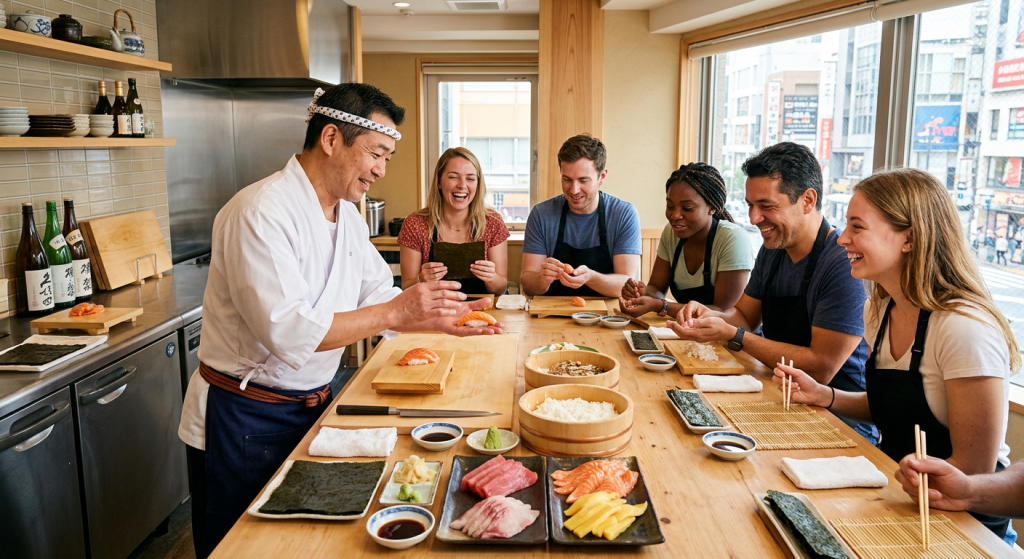
A sushi making class in Tokyo offers something a restaurant meal cannot: the chance to understand how sushi is prepared, shaped, and served while learning directly from a local instructor.
Most classes are designed for travelers rather than professional cooks, so beginners can usually participate without knife skills or previous experience. Depending on the program, you may prepare nigiri, rolled sushi, gunkan-style sushi, inari sushi, or side dishes such as miso soup and Japanese rolled omelet. Some experiences focus mainly on hands-on cooking, while others include a market tour, cultural explanation, or a meal prepared by a professional chef.
The quality and structure of these classes vary considerably. Before booking, compare the menu, instructor background, class size, language support, dietary options, location, and cancellation policy—not just the headline price.
What Is a Sushi Making Class in Tokyo?
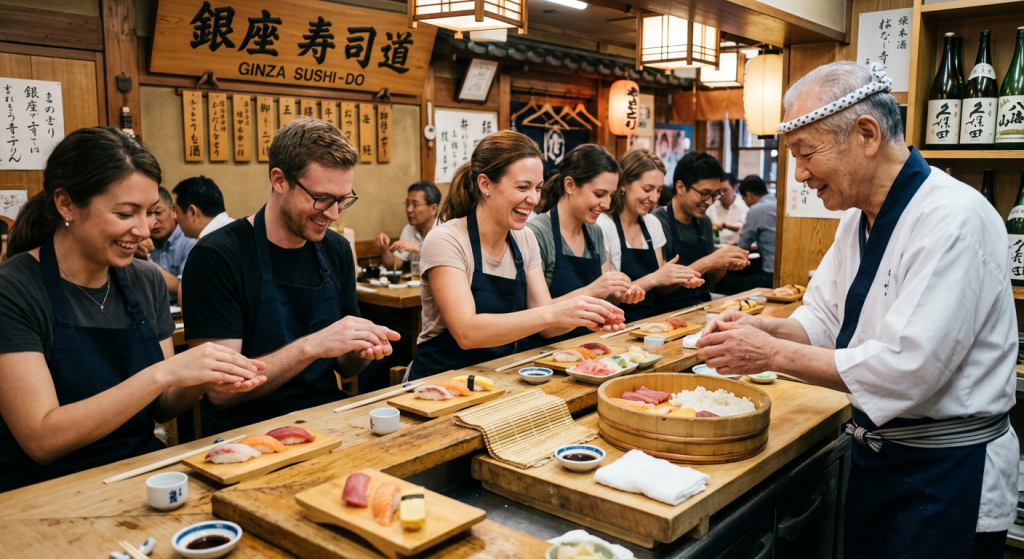
A sushi making class is a guided culinary experience in which participants learn to prepare one or more types of sushi. Ingredients and equipment are generally provided, and the class usually ends with participants eating what they have made.
These experiences are different from professional sushi-chef training. A visitor-focused class is not intended to reproduce years of restaurant apprenticeship in a few hours. Instead, it introduces practical techniques that beginners can understand and, in many cases, recreate at home.
A typical lesson may cover:
- How sushi rice is prepared and seasoned
- How much rice to use for each piece
- How to shape nigiri without compressing the rice too firmly
- How to place fish or other toppings on the rice
- How to roll maki with a bamboo mat
- How to use nori, wasabi, soy sauce, and garnishes
- Basic differences among common sushi styles
- Japanese dining customs and sushi etiquette
Some workshops teach only the final assembly because the rice and toppings have already been prepared. More detailed cooking classes may include making vinegared rice, preparing fillings, cooking tamagoyaki, or learning how ingredients are selected.
Why Take a Sushi Making Class While Visiting Tokyo?
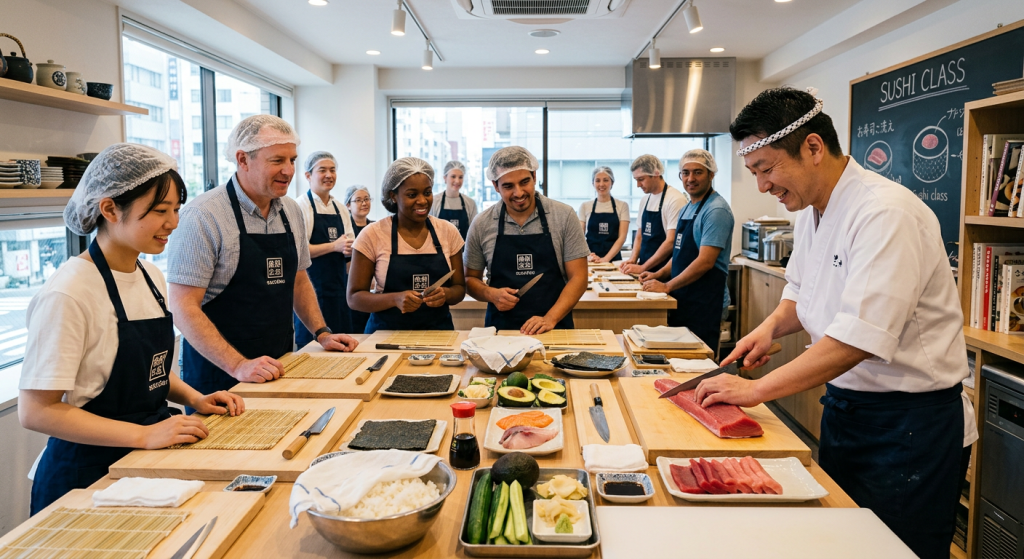
Tokyo has no shortage of excellent places to eat sushi. A class appeals to travelers who want a more active and personal connection to Japanese food culture.
Instead of simply receiving a finished plate, you see how small choices affect the result. The amount of pressure used to shape the rice, the position of a topping, the moisture on your hands, and the direction of a roll can all change the texture and appearance.
A class can also answer questions that may not come up during a restaurant visit. Why does sushi rice taste slightly sweet and acidic? What is the difference between nigiri and maki? Which sushi is eaten by hand? Why should rice not be packed too tightly?
For many visitors, the experience also provides a welcome change of pace. After several days of sightseeing, a scheduled indoor activity can be more relaxed than moving continuously between crowded attractions.
A sushi workshop may be especially appealing for:
- Couples looking for a shared activity
- Families with older children
- Solo travelers who want a social experience
- Food enthusiasts interested in technique
- Travelers celebrating a birthday or anniversary
- Groups planning a private cultural activity
- Visitors who want practical skills rather than another souvenir
Sushi Making Kakida: A Premium, Hands-On Sushi Experience in Tokyo
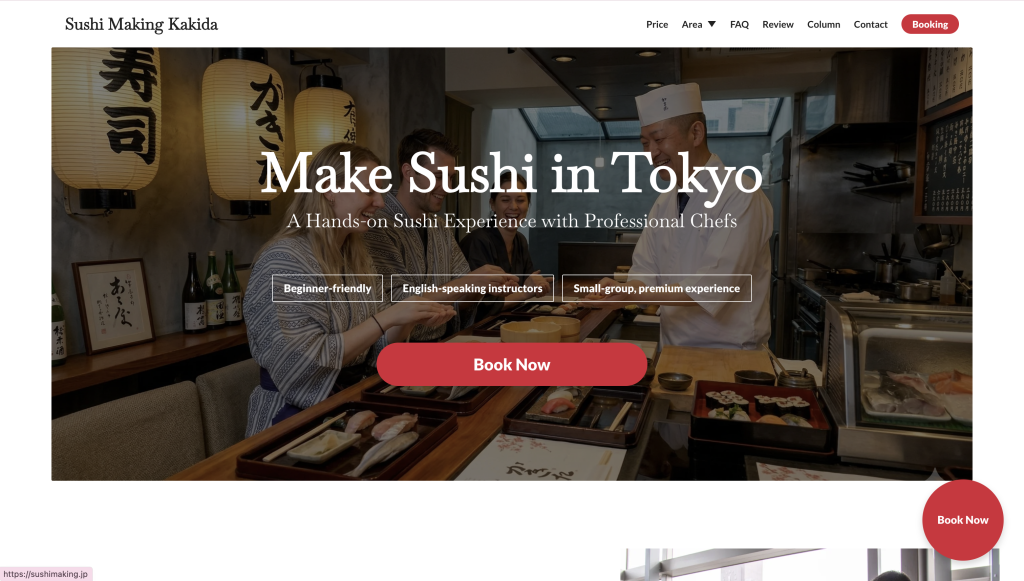
For travelers who want to do more than simply eat sushi, Sushi Making Kakida offers an authentic, hands-on experience guided by professional Japanese sushi chefs.
Rather than joining a large, demonstration-style cooking class, guests learn in a small, private-style group of up to four people. A professional sushi chef and English-speaking interpreter guide you through each step, making the experience easy to follow even if you have never cooked or made sushi before.
During the class, you will learn how to shape traditional nigiri and make approximately 10 pieces of sushi using fresh, high-quality ingredients. Depending on seasonal availability, the selection may include premium toppings such as otoro fatty tuna, chutoro medium-fatty tuna, akami lean tuna, sea urchin, scallop, sea bream, salmon and other Japanese seafood.
The experience is not only educational but also highly interactive. You can watch a professional chef demonstrate authentic techniques, practise making nigiri yourself, eat the sushi you have created and take memorable photos at the sushi counter while wearing a traditional Japanese kappogi apron.
Sushi Making Kakida has already welcomed international visitors from around the world. With clear English support, personal attention and a relaxed atmosphere, it is an excellent choice for couples, families, solo travelers and small groups looking for a memorable Japanese cultural experience.
More Than a Sushi Class: Experience the World of Japanese Tuna
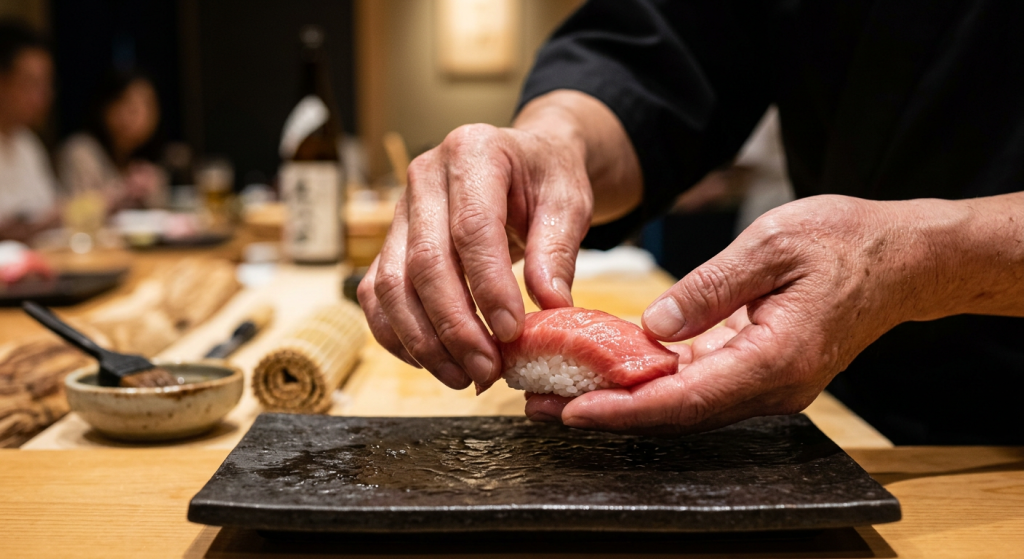
What makes Sushi Making Kakida particularly special is the expertise of the restaurant group behind it.
The Kakida team also operates spectacular maguro tuna-cutting shows, where professional sushi chefs break down whole bluefin tuna weighing more than 100 kilograms in front of an audience. These live events have been held for corporate parties, international exchange events, weddings and large-scale gatherings with hundreds of guests.
Unlike a typical cooking workshop, Sushi Making Kakida is backed by working sushi professionals who regularly source, prepare and serve premium tuna and seafood. Their knowledge extends far beyond showing guests how to shape rice—the team understands how fish is selected, cut and transformed into high-quality sushi.
The tuna-cutting show is a separate event service and is not included in the standard sushi-making class. However, it demonstrates the level of craftsmanship, seafood knowledge and entertainment experience behind the Kakida name.
For visitors searching for a sushi making class in Tokyo or Shinjuku, Sushi Making Kakida offers more than a fun activity. It is an opportunity to step behind the sushi counter, learn directly from professionals and experience one of Japan’s most iconic culinary traditions for yourself.
Make sushi, meet real Japanese chefs and create a Tokyo memory you can actually taste.
What Happens During a Typical Sushi Class?
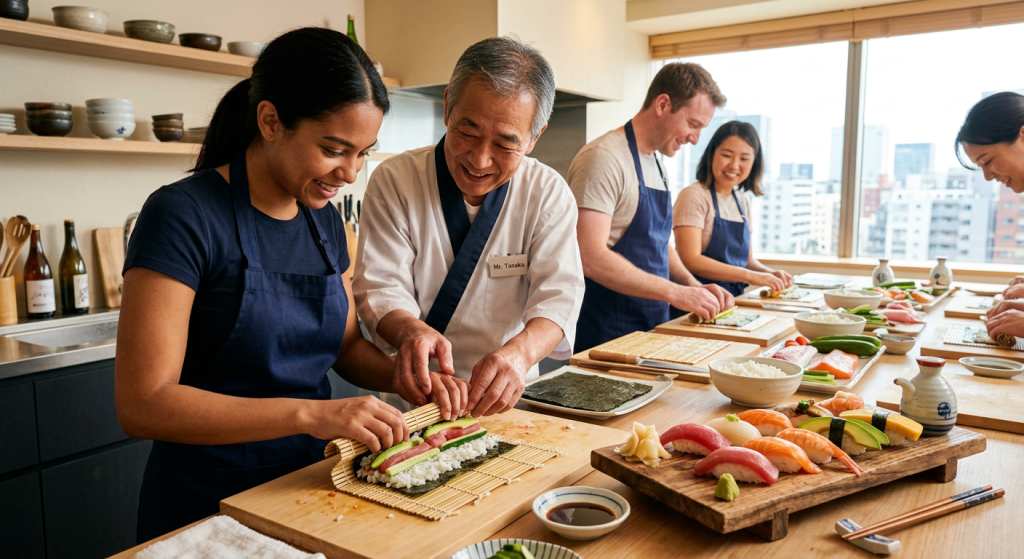
The exact format depends on the provider, but most classes follow a similar sequence.
Arrival and Introduction
Participants usually meet at a cooking studio, restaurant, private kitchen, or designated station exit. The host may begin with an introduction to the menu, the ingredients, and the types of sushi being prepared.
You may be asked to wash your hands, put on an apron, remove jewelry, or wear disposable gloves. Some providers use gloves throughout the lesson, while others teach traditional hand-shaping techniques after careful handwashing.
Arriving early is sensible. Small classes often begin promptly, and the instructor may not be able to repeat the opening explanation for late arrivals.
Explanation of Sushi Rice
Rice is the foundation of sushi, yet beginner classes handle it differently.
In shorter workshops, cooked and seasoned rice may already be waiting at each workstation. The instructor explains how it was prepared but focuses on shaping and assembly.
Longer classes may demonstrate washing, cooking, seasoning, cooling, and mixing the rice. This gives participants a better understanding of the process, although the rice may still be cooked in advance because of time constraints.
Sushi rice is generally seasoned with a mixture based on rice vinegar, sugar, and salt. The exact balance differs by recipe and regional or professional preference.
Demonstration
The instructor normally demonstrates each technique before participants try it. A good demonstration should be visible from every workstation and broken into manageable steps.
For nigiri, the instructor may show how to:
- Moisten the hands lightly.
- Pick up an appropriate amount of rice.
- Form it into a loose, compact shape.
- Place wasabi or another condiment beneath the topping.
- Position the topping over the rice.
- Shape the piece with minimal pressure.
For rolled sushi, the lesson may cover spreading rice evenly across nori, arranging the filling, lifting the bamboo mat, and completing the roll without crushing it.
Hands-On Preparation
Participants then prepare their own sushi under the instructor’s supervision. This is usually the main part of the experience.
Some classes give each guest an individual set of ingredients. Others ask pairs or small groups to share tools and prepare certain components together. Individual workstations tend to be better for people who want maximum hands-on time.
The instructor may correct the shape, rice quantity, hand position, or rolling technique. Expect your first pieces to look less polished than restaurant sushi. That is part of the experience.
Eating the Finished Sushi
Most classes finish with a sit-down meal featuring the sushi prepared during the lesson. Miso soup, tea, dessert, or other small dishes may also be included.
Portion size varies. Some programs provide enough food for a full meal, while others are more accurately described as tasting workshops. Check the menu and number of pieces before deciding whether to schedule another meal nearby.
What Types of Sushi Might You Make?
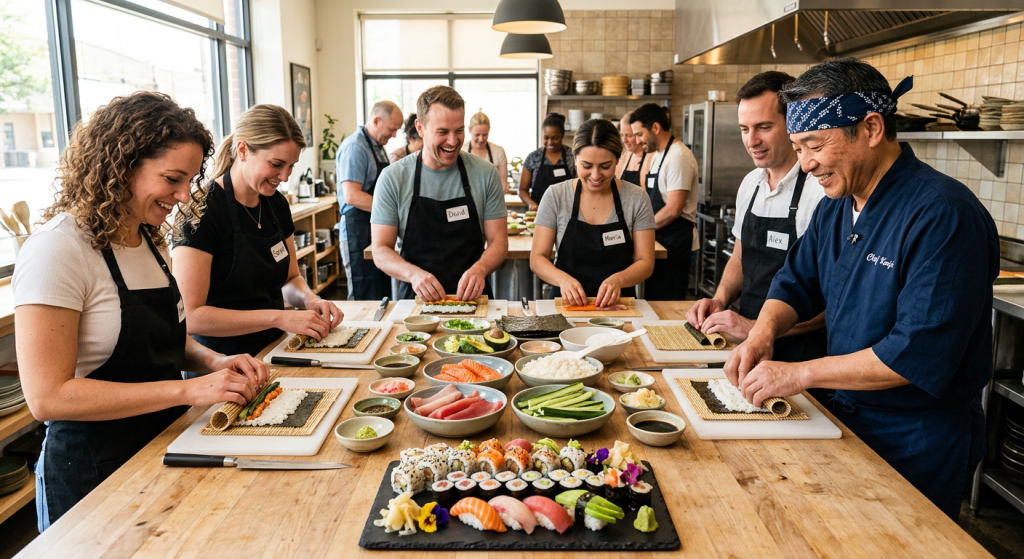
The menu is one of the clearest differences between classes. Look beyond the word “sushi” and check exactly what participants prepare themselves.
Nigiri Sushi
Nigiri consists of a hand-shaped portion of seasoned rice topped with fish, seafood, egg, or another ingredient.
It looks simple, but the texture depends on controlling the pressure. Rice that is packed too tightly becomes dense. Rice that is too loose may fall apart before it reaches your mouth.
Nigiri-focused lessons are well suited to travelers interested in traditional sushi technique. Some classes use pre-sliced toppings, while advanced experiences may include limited fish preparation.
Maki Sushi
Maki is rolled sushi, generally made by placing rice and fillings on a sheet of nori and rolling it with a bamboo mat.
Common classroom variations include thin rolls, larger rolls, decorative rolls, and inside-out rolls. Maki is approachable for beginners and often works well for children because fillings can be adjusted more easily than raw-fish nigiri.
Gunkan Sushi
Gunkan, sometimes translated as “battleship sushi,” uses a strip of nori wrapped around rice to create a small cup. Soft or loose toppings are placed inside.
The technique introduces participants to another common sushi shape without requiring advanced knife work.
Inari Sushi
Inari sushi consists of seasoned rice placed inside a sweet-savory pouch of fried tofu.
It contains no raw fish and may be included in vegetarian or family-oriented classes. It is also useful for learning that Japanese sushi is broader than sliced seafood placed over rice.
Chirashi Sushi
Chirashi is a bowl or container of sushi rice topped with assorted ingredients. It requires less shaping than nigiri and can be adapted to seasonal vegetables, cooked seafood, raw fish, or egg.
It may appear in home-style Japanese cooking classes rather than specialist sushi workshops.
Temaki Sushi
Temaki is hand-rolled sushi shaped like a cone. Guests add rice and fillings to nori and roll each piece by hand.
This format is informal, customizable, and suitable for social classes or private groups.
Short Workshop or Detailed Cooking Class?
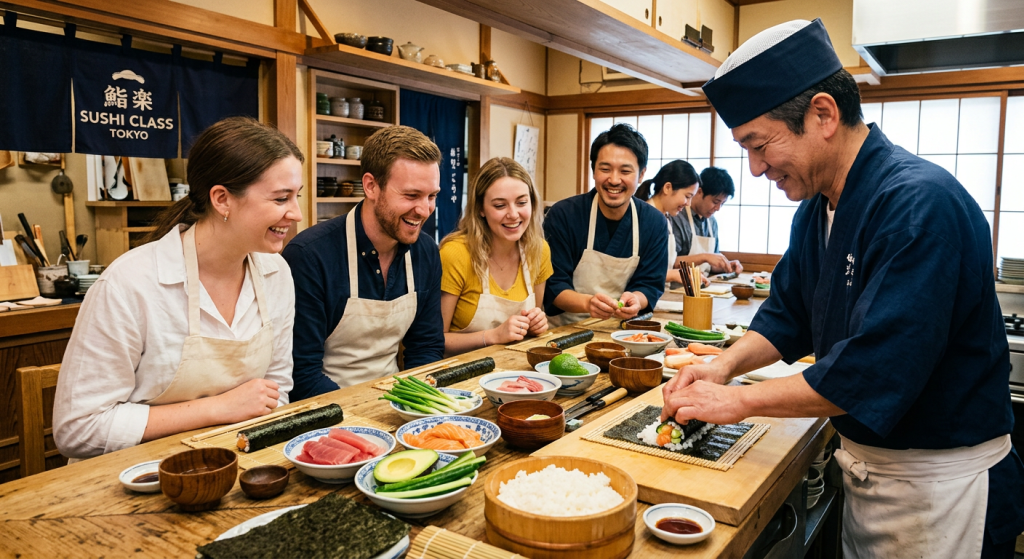
One of the first decisions is how much of your Tokyo itinerary you want to devote to the activity.
Current class listings show considerable variation: some experiences last roughly 90 minutes, while others run for two to three hours or include longer market-tour components.
A Short Class May Be Better When:
- Your sightseeing schedule is already full
- You mainly want to shape and roll sushi
- You are traveling with children who may lose concentration
- You prefer an introduction rather than a technical lesson
- The studio is near other places you plan to visit
Short classes commonly rely on advance preparation. Fish may already be sliced, rice may already be cooked, and sauces may already be measured. That is not necessarily a disadvantage, but it limits how much of the complete process you will learn.
A Longer Class May Be Better When:
- Cooking is a major reason for your trip
- You want to understand sushi rice in more detail
- You want to prepare side dishes
- You value questions and individual feedback
- You hope to reproduce the recipes at home
A longer duration does not automatically mean better instruction. Review the actual menu and schedule. A three-hour experience that includes a full meal, introductions, and cleanup may not provide three hours of active cooking.
Cooking-Only Classes Versus Market Tours
Some Tokyo experiences combine sushi making with a visit to a food market, supermarket, or shopping district.
Cooking-Only Experience
A studio-based class usually offers more predictable timing and may provide more hands-on preparation. It is easier to fit into a busy day and less likely to be affected by weather.
This format works well for travelers primarily interested in technique.
Market Tour and Cooking Class
A combined tour can add useful context about seafood, seasonality, condiments, knives, dried ingredients, and Japanese shopping habits. Some programs visit a market before moving to a separate cooking location.
The tradeoff is time. Transportation and walking reduce the portion of the experience spent cooking. Market conditions may also change according to the day, opening hours, crowd levels, and vendor activity.
Before booking, ask:
- Which market or shopping area is visited?
- How long is the tour portion?
- Is transportation between locations included?
- How much walking is required?
- Does the market operate normally on the selected day?
- Which ingredients will participants learn about?
- Is the cooking menu different from the cooking-only option?
A market tour has the greatest value when the guide explains how ingredients are chosen, rather than simply leading the group past stalls.
Group, Small-Group, Private, and Family Classes
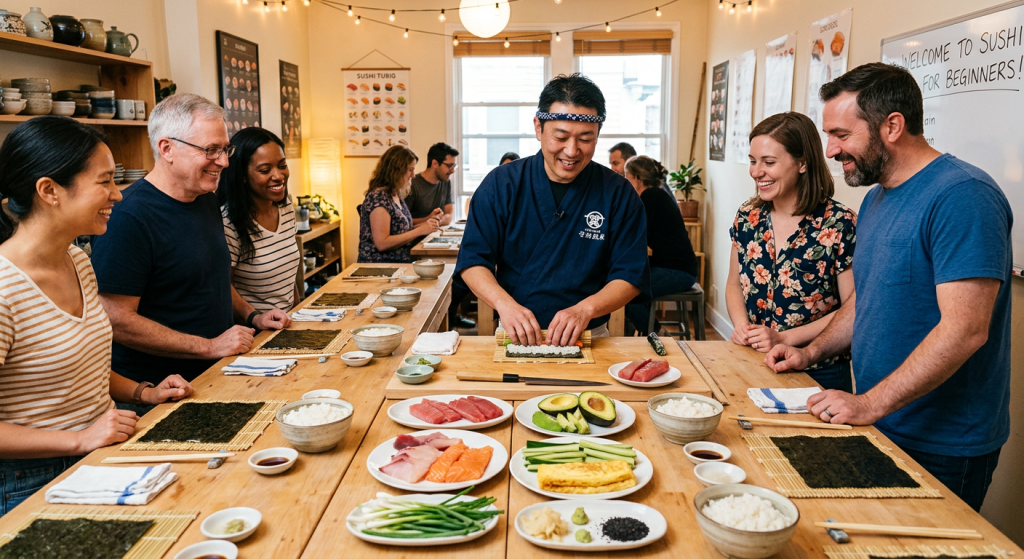
Class size has a direct effect on the experience.
Standard Group Classes
Group workshops are often the most economical option and can be social. They suit solo travelers and guests who enjoy meeting other visitors.
The disadvantages are reduced individual attention and a pace set for the entire group. Ask for the maximum number of participants rather than relying on the term “small group,” which may be interpreted differently by each provider.
Small-Group Classes
A genuinely small class gives the instructor more time to correct technique and answer questions. It may also be easier to hear explanations and see demonstrations.
Small-group programs usually cost more than large workshops, but the difference may be worthwhile for travelers focused on learning.
Private Classes
Private classes allow the host to adjust the pace, menu, and explanation to the group. They can work well for couples, families, corporate visitors, or guests with specific dietary requirements.
Check whether the price is charged per person or as a minimum group fee. A private booking for two people may be significantly more expensive than joining a scheduled class.
Family-Friendly Classes
A family class should offer more than permission for children to attend.
Look for:
- A clearly stated minimum age
- Child-sized equipment or appropriate work surfaces
- Cooked or vegetarian ingredient options
- Limited use of sharp knives
- A manageable lesson duration
- Space for parents to assist
- A menu children are likely to eat
- A policy for infants or nonparticipating family members
Some Tokyo providers advertise family-oriented menus with vegetarian and non-raw-fish alternatives, but availability and advance-notice requirements vary.
How Much Does a Sushi Making Class in Tokyo Cost?
There is no single standard price. The fee depends on class length, group size, menu, instructor, location, included meal, booking platform, and whether the experience is private.
Current publicly listed examples range from relatively accessible group workshops to premium small-group or chef-led programs costing well over ¥10,000 per participant. Some group-oriented courses list lower per-person prices but require a minimum number of guests.
Because prices and exchange rates can change, confirm the amount in Japanese yen before paying.
Factors That Commonly Affect the Price
Class Size
Large-group workshops generally have lower per-person costs. Private and very small classes charge more because the instructor serves fewer guests.
Instructor Background
A class taught directly by an experienced sushi chef may cost more than a general cooking workshop led by a cultural host or cooking instructor.
Professional experience can add value, but credentials alone do not guarantee good teaching. Clear English, patience, and a structured demonstration also matter.
Ingredients
Menus featuring several varieties of raw fish, premium seafood, or seasonal ingredients tend to cost more than menus centered on vegetables, egg, tofu, and rolls.
Ask whether the displayed menu is guaranteed or may change with availability.
Duration
Longer sessions may include rice preparation, side dishes, cultural instruction, or a full meal. Compare the content rather than calculating value only by the hour.
Location
Studios in heavily visited central districts may charge more than home-based classes in residential areas. A less central class can still be worthwhile, but include train transfers and walking time in your decision.
Market Tours and Other Add-Ons
Guided tours, drinks, printed recipes, photographs, transportation, certificates, and souvenirs may be included or sold separately.
Check What the Price Includes
Before booking, confirm whether the fee covers:
- Ingredients
- Use of tools and equipment
- Apron rental
- English-language instruction
- The meal after cooking
- Tea or other drinks
- Printed or digital recipes
- Market-tour expenses
- Transportation during the activity
- Taxes and booking fees
A cheaper listing may provide fewer ingredients or involve less hands-on work. A higher fee is easier to justify when it includes a small group, substantial meal, detailed instruction, and recipes you can use later.
How to Choose the Best Sushi Making Class in Tokyo
The best option is the one that matches your interests, schedule, dietary needs, and preferred style of learning.
Review the Exact Menu
Do not assume every class teaches nigiri or uses raw fish. One workshop may focus on decorative rolls, while another centers on Edomae-style sushi or home cooking.
Look for a menu that states:
- Which sushi types are included
- How many pieces you will prepare
- Which dishes the instructor prepares
- Whether participants make the rice
- Whether fish slicing is included
- Whether side dishes are part of the lesson
Photographs can help, but the written description should be your primary reference.
Confirm How Hands-On the Class Is
“Cooking experience” can mean different things. In some sessions, guests complete every major step. In others, the host prepares most components and participants mainly assemble the final dish.
Ask what you will personally prepare. This is particularly relevant if you want practical skills rather than entertainment alone.
Check the Instructor’s Teaching Style
A technically accomplished chef is not automatically an effective instructor for English-speaking beginners.
Reviews can reveal whether the host:
- Explains each step clearly
- Demonstrates slowly enough to follow
- Gives individual feedback
- Answers questions
- Creates a relaxed atmosphere
- Manages mixed skill levels well
- Shares cultural context without dominating the cooking time
Read several recent reviews rather than relying only on the average rating.
Verify the Language of Instruction
“English available” may mean the chef speaks English, an interpreter attends, written instructions are provided, or only basic explanations are possible.
Confirm whether the entire class is conducted in English and whether questions can be answered comfortably.
For multilingual families or corporate groups, ask whether interpretation in another language can be arranged.
Consider the Location Carefully
A class described as being in Tokyo may still require a substantial trip from your hotel.
Check:
- The nearest train or subway station
- Walking time from the station
- Number of transfers from your previous activity
- Whether the meeting point differs from the cooking venue
- Whether the location is accessible by elevator
- Whether luggage can be stored
- How late the class may finish
Tokyo’s rail network makes many neighborhoods accessible, but a class with several transfers can consume more of the day than expected.
Compare the Maximum Group Size
The number of workstations matters more than the number of people in the booking photos.
A class of twelve may feel personal if several instructors are present. A class of eight can feel crowded if everyone shares one table and one instructor.
Ask how many instructors are assigned when the class is full.
Read the Cancellation Policy
Cancellation terms differ across providers and booking platforms. Some listings offer free cancellation until a stated deadline, while others become nonrefundable much earlier. Current examples include policies requiring notice around 48 hours in advance.
Check what happens if:
- Your flight is delayed
- Your train is disrupted
- You become ill
- A child cannot attend
- The provider changes the menu
- The minimum group size is not reached
- Severe weather affects a market tour
Travel insurance may cover some disruptions, but coverage varies.
Dietary Requirements and Food Allergies
Dietary needs should be discussed before booking, not when the class begins.
Sushi may contain raw fish, shellfish, egg, soy, sesame, gluten-containing soy sauce, wheat-based seasonings, wasabi, mayonnaise, and other ingredients. Cross-contact is possible in shared kitchens.
Some classes can prepare vegetarian, vegan, gluten-conscious, halal-friendly, cooked-seafood, or non-raw-fish menus. That does not mean every provider can safely accommodate a medical allergy or strict religious requirement.
Questions to Ask the Provider
- Can the entire menu be adapted, or only selected pieces?
- Is soy sauce containing wheat used in the kitchen?
- Are separate utensils and preparation surfaces available?
- Can raw fish be replaced with cooked ingredients?
- Does the sushi vinegar contain any ingredients I need to avoid?
- Are fish stock or animal-based seasonings used in side dishes?
- Can the provider accommodate several restrictions at once?
- How much advance notice is required?
Travelers with celiac disease or serious allergies should distinguish between a menu that omits an ingredient and a kitchen that can control cross-contact. A provider may offer gluten-free soy sauce without operating a fully gluten-free environment.
Do not rely solely on platform filters. Contact the host directly and keep the written response.
Is Raw Fish Safe in a Sushi Class?
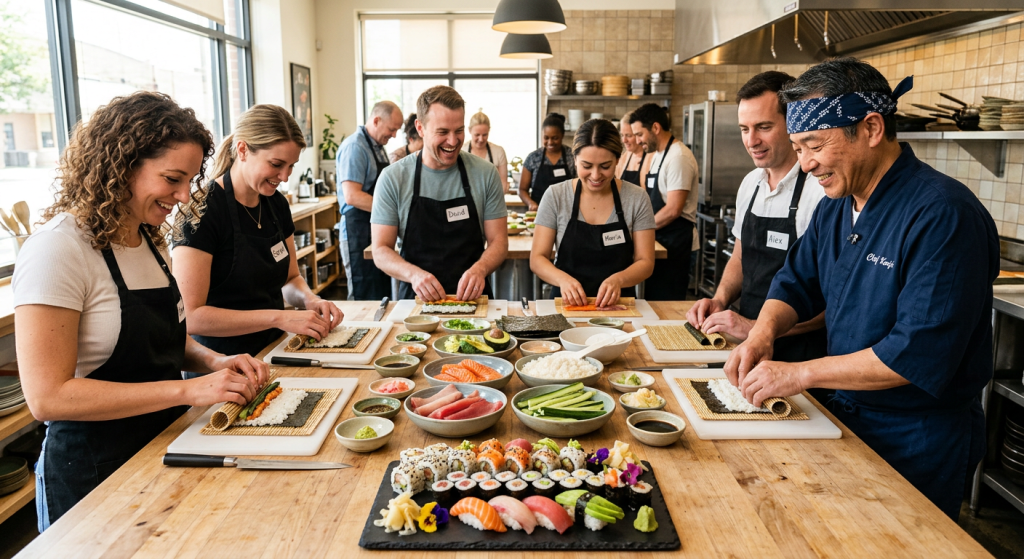
Reputable cooking experiences should follow appropriate food-handling procedures, but no listing can eliminate every food-related risk.
Look for a clean workspace, chilled ingredients, clear handwashing instructions, separate utensils where necessary, and a professional approach to food preparation.
People who are pregnant, immunocompromised, elderly, very young, or managing a health condition may need to avoid certain raw or undercooked foods. Personal medical guidance should come from an appropriate healthcare professional.
A cooked or vegetarian class can provide the same cultural and practical experience without raw seafood.
What Should You Wear and Bring?
Comfortable, practical clothing is best.
Avoid loose sleeves that could touch food or equipment. Long hair should be tied back. Closed-toe shoes are sensible, especially in classes that involve standing, market walking, or more extensive kitchen work.
Most providers supply aprons and cooking tools, but confirm this in the listing.
You may also want to bring:
- A hair tie
- A phone or camera
- A small notebook
- Reading glasses, if needed for recipes
- Details of any allergies in writing
- Socks, if the venue requires shoes to be removed
- A compact bag rather than large luggage
Strong fragrances can interfere with tasting. It is considerate to avoid heavy perfume or cologne before a food-focused activity.
Common Booking Mistakes
Choosing by Price Alone
The lowest-priced class may be completely suitable for a casual activity, but it may also involve a larger group, fewer ingredients, or limited instruction.
Compare the cost with the menu, duration, class size, and amount of individual cooking.
Assuming All Sushi Classes Teach the Same Skills
A roll-making workshop and a chef-led nigiri lesson are different experiences. Read the menu and technique descriptions closely.
Ignoring Travel Time
A class may begin at a convenient hour but still require an early departure from your hotel. Include transfers, station navigation, and walking time.
Booking a Market Tour on the Wrong Day
Market activity can differ by day and time. Confirm what will be open and what the tour includes on your chosen date.
Failing to Mention Dietary Needs Early
Substitutions may require advance purchasing and preparation. Hosts may be unable to redesign the menu after guests arrive.
Expecting Professional Training
A visitor class can teach useful foundations, but it will not qualify someone to work as a sushi chef. Choose a professional culinary program if your goal is commercial food preparation or advanced knife work.
Scheduling a Large Meal Immediately Before or After
Many classes end with a substantial meal. Check the portion size before booking an expensive restaurant reservation nearby.
Sushi Making Classes for Corporate and Private Groups
A private sushi class can also work as a team activity, incentive program, client event, or conference add-on.
For organizers, the practical requirements are different from those of an individual traveler.
Confirm:
- Minimum and maximum group size
- Private-use fees
- Per-person pricing
- English-language facilitation
- Dietary data collection
- Venue capacity
- Seating arrangements
- Accessibility
- Start-time flexibility
- Payment and invoicing
- Cancellation terms
- Name-list deadlines
- Options for nonparticipating guests
- Photography policies
- Availability of drinks
- Whether alcohol can be served
- Transportation from the hotel or meeting venue
Large groups may spend less time on individual coaching. Ask how many instructors or assistants will support the event.
A well-structured corporate session should keep everyone active. Long demonstrations followed by one-at-a-time participation can leave guests waiting.
Questions to Ask Before Booking
A brief message to the provider can prevent most disappointments.
Useful questions include:
- Which types of sushi will I make personally?
- Is the sushi rice prepared during the class or in advance?
- Will I use a knife or handle raw fish?
- How many participants can attend?
- How many instructors are present at full capacity?
- Is the entire lesson conducted in English?
- Can you accommodate my dietary restriction or allergy?
- Is cross-contact possible in the kitchen?
- How much food is served?
- Are drinks included?
- Are recipes provided afterward?
- Where is the exact meeting point?
- Does the class end at the same location?
- What happens if I arrive late?
- What is the cancellation and refund policy?
- Can children participate?
- Is the venue wheelchair accessible?
- Can large luggage be stored?
- May participants take photographs or videos?
- Are taxes and platform fees included in the displayed price?
The provider’s response can also indicate the quality of communication you are likely to receive on the day.
Frequently Asked Questions
Do I need cooking experience to join a sushi making class in Tokyo?
No. Most visitor-oriented classes are designed for beginners and provide step-by-step demonstrations. Check the listing if the lesson includes advanced knife work or professional techniques.
How long does a sushi making class take?
Many classes last approximately 90 minutes to three hours. Market-tour combinations may take considerably longer. Confirm whether the advertised duration includes eating time, transportation, and the tour itself.
Will I make sushi with raw fish?
Many classes use raw seafood, but some offer cooked, vegetarian, or non-raw menus. The menu may also change according to season and ingredient availability. Ask for written confirmation if avoiding raw fish is essential.
Can vegetarians take a sushi class?
Some providers offer vegetarian menus using tofu, vegetables, egg, pickles, mushrooms, and other toppings. Vegan guests should separately confirm whether egg, fish stock, mayonnaise, or animal-derived seasonings are used.
Are sushi classes suitable for children?
Some are, but minimum ages and supervision rules vary. Look for a family-specific program with an appropriate duration, safe equipment, and ingredients the child can eat.
Do I eat the sushi I make?
Usually, yes. Eating the finished dishes is generally part of the class. Confirm the portion size and whether the instructor provides any additional food.
Can I make the same sushi at home afterward?
Basic nigiri and rolled sushi can be recreated at home if the class explains rice preparation and provides a usable recipe. Access to suitable ingredients and safe seafood handling will affect the result.
Is a market tour worth adding?
It can be worthwhile for travelers interested in ingredients and Japanese food shopping. A cooking-only class may offer better value when hands-on preparation is the priority.
Should I book in advance?
Advance booking is advisable for private classes, small-group workshops, weekends, public holidays, and busy travel periods. Dietary accommodations also tend to require prior notice.
Is a sushi making class worth the cost?
It can be, particularly when the experience includes substantial hands-on instruction, a full meal, a small group, and techniques you can reuse. A shorter large-group workshop may be more appropriate when you mainly want a fun cultural activity.
Choosing Your Next Step
Start by deciding what you want from the experience. A short roll-making workshop can fit comfortably into a sightseeing day. A small-group nigiri class offers closer instruction. A market tour adds context about ingredients, while a private session gives families and groups more control over the menu and pace.
Compare several options using the same criteria: what you will make, how much cooking you will do, class size, English support, dietary suitability, location, total price, and cancellation terms.
Once those details are clear, choose a class that fits naturally into your Tokyo itinerary and confirm any dietary or accessibility requirements directly with the provider before making the reservation.