Sushi Experience Tokyo: How to Choose an Authentic and Memorable Activity
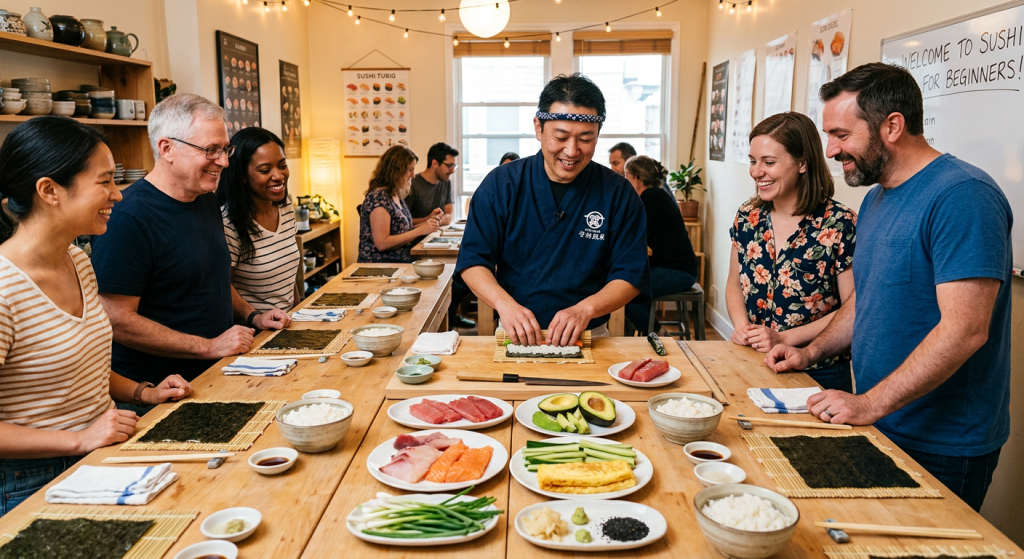
Tokyo offers far more than excellent sushi restaurants. Travelers can watch skilled chefs prepare an omakase meal, learn to shape nigiri themselves, explore seafood markets, attend a tuna-cutting demonstration, or arrange a private sushi event for a family or corporate group.
That variety makes searching for a “sushi experience Tokyo” surprisingly complicated. Some activities are primarily cooking classes. Others focus on dining, cultural education, market exploration, or entertainment. Prices, group sizes, language support, and the amount of hands-on participation can differ significantly.
The best option is not necessarily the most expensive or the most traditional. It is the one that matches what you want to do, how much time you have, who you are traveling with, and how comfortable you are with unfamiliar ingredients.
What Is a Sushi Experience in Tokyo?
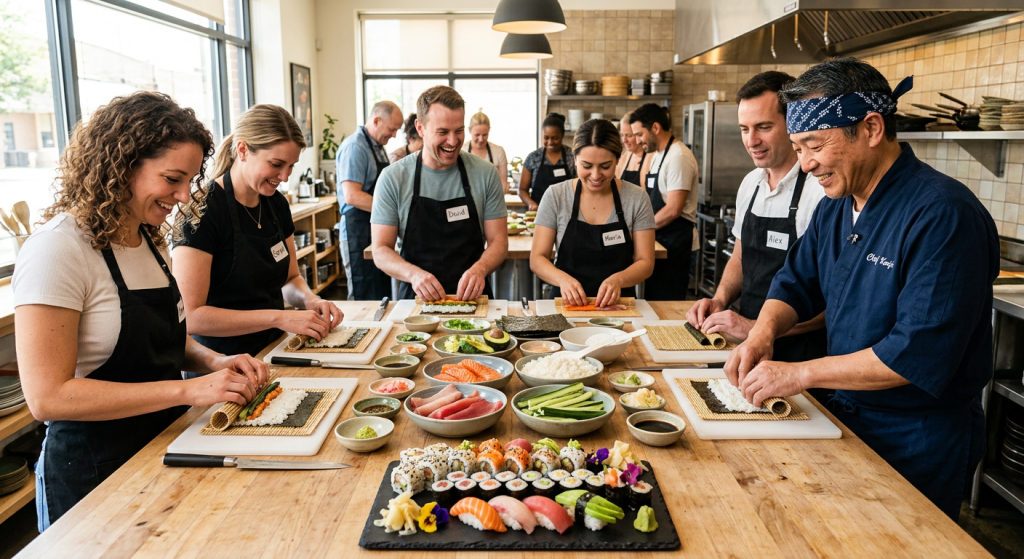
A sushi experience in Tokyo is an activity that gives visitors more context, participation, or interaction than an ordinary restaurant meal.
Depending on the provider, it may involve:
- Making nigiri sushi and rolls with an instructor
- Watching a chef prepare sushi at close range
- Learning how fish is selected, cut, seasoned, and served
- Visiting a seafood market before preparing or eating sushi
- Attending a tuna-cutting demonstration
- Joining a private sushi workshop at a dedicated venue
- Booking an interactive meal for a family, team, or special event
- Learning about sushi etiquette and Japanese food culture
The phrase does not describe one standardized service. Two activities listed under the same search term may provide completely different experiences.
A short workshop may teach the basic steps of making rice, shaping nigiri, and preparing rolls. A chef-led counter experience may offer little or no hands-on cooking but provide deeper insight into ingredients and technique. A market tour may focus more on sourcing and local food culture than on making sushi.
Read the full activity description rather than relying on the title alone.
Why Book a Sushi Experience Instead of Only Visiting a Restaurant?
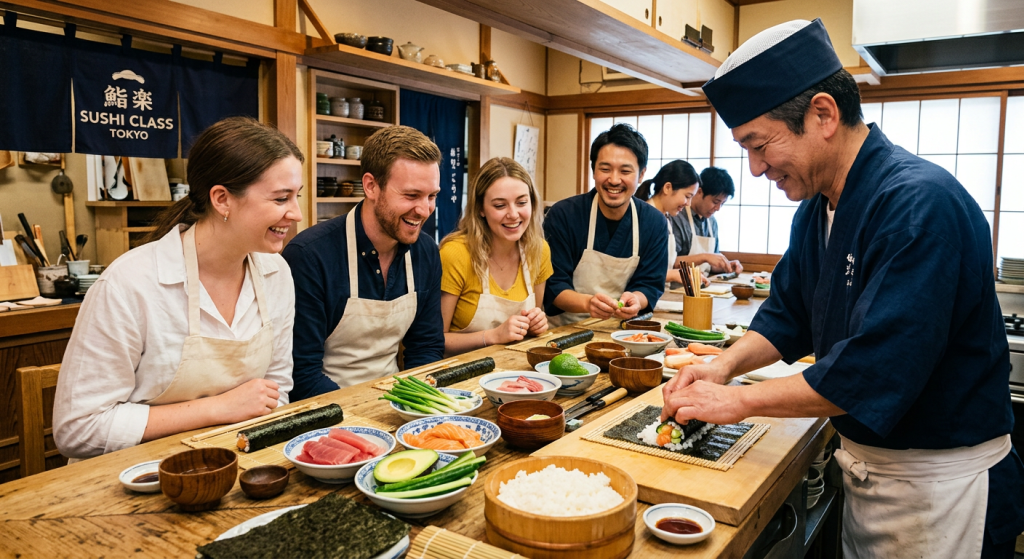
A good sushi restaurant lets you enjoy the final result. An interactive experience helps you understand how that result is created.
Even simple-looking sushi depends on several details: rice temperature, seasoning, pressure, knife work, ingredient preparation, and timing. Making a few pieces yourself often reveals why professional sushi requires years of repetition.
A structured activity can also reduce some of the uncertainty first-time visitors feel in traditional restaurants. You may have more opportunities to ask questions about ingredients, etiquette, dietary restrictions, and how each piece should be eaten.
For many travelers, the main benefits are:
A More Personal Connection to Japanese Food Culture
Sushi is internationally familiar, but its Japanese context is not always well understood. A well-run class or demonstration can explain why certain ingredients are prepared in particular ways, how sushi developed, and why the rice is as significant as the seafood.
The depth of cultural explanation varies. Some sessions are mainly recreational, while others include detailed information about regional styles, seasonality, tools, and dining customs.
Hands-On Participation
Preparing sushi creates a different kind of memory from simply ordering it. You may learn to wet your hands correctly, shape vinegared rice without compressing it, position seafood on top, or roll maki with a bamboo mat.
You are unlikely to master professional technique in one session. The value lies in understanding the process and trying it under guidance.
Easier Communication
Many experiences aimed at international visitors are designed to operate in English or with multilingual support. That can make it easier to discuss allergies, unfamiliar ingredients, and cultural questions than in a restaurant where staff may have limited time for detailed explanations.
The quality of English support can differ, so check whether the class is conducted fully in English, supported by an interpreter, or delivered mainly through visual demonstration.
A Social Activity
Group sushi classes can be a practical choice for couples, families, solo travelers, friends, and corporate groups. The activity gives participants something to do together rather than relying entirely on conversation during a meal.
Shared classes may also provide an opportunity to meet other travelers. Private sessions offer more control over pace, menu, and interaction.
The Main Types of Sushi Experiences in Tokyo
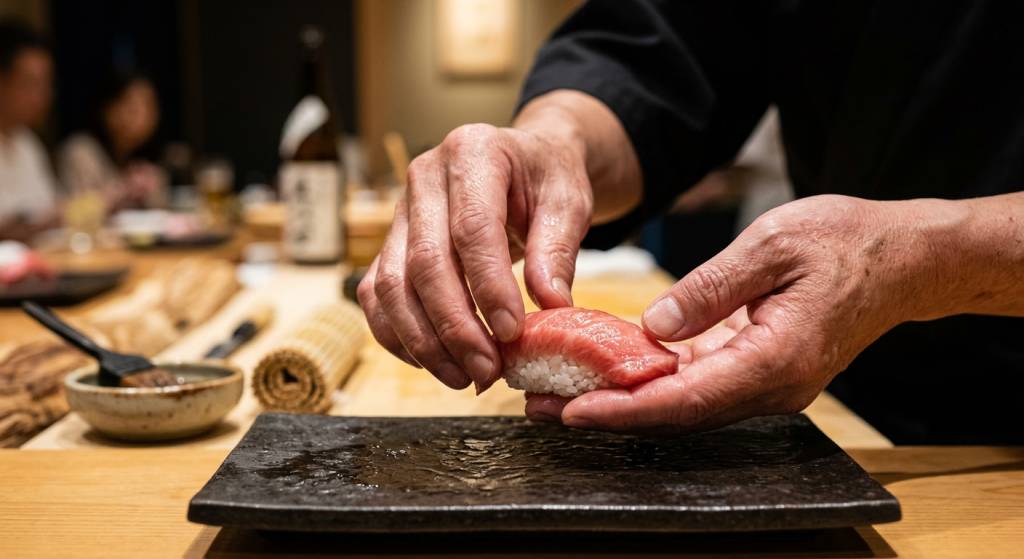
Before comparing providers, decide which type of activity fits your expectations.
Hands-On Sushi-Making Classes
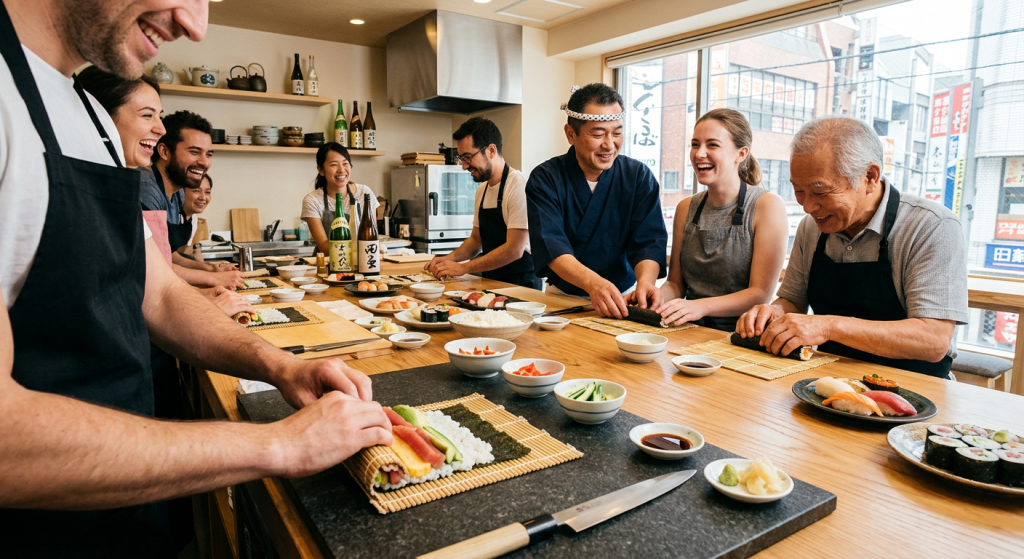
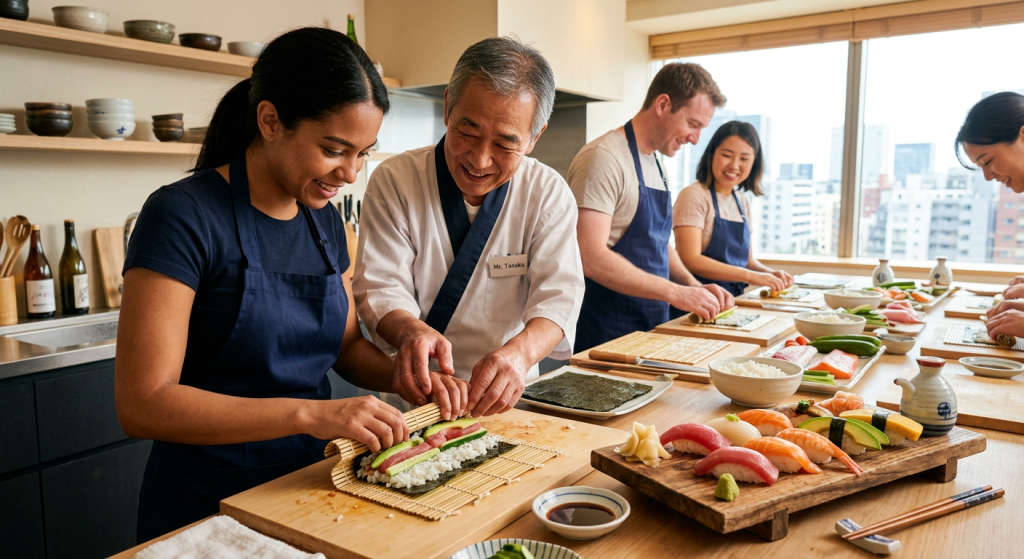
These are the most common choice for travelers who want active participation. Participants typically watch a demonstration and then prepare several pieces themselves.
A class may include:
- Preparing or seasoning sushi rice
- Shaping nigiri
- Making one or more types of rolls
- Using pre-sliced seafood
- Learning basic presentation
- Eating the sushi made during the session
- Taking photographs in a themed or traditional setting
Most beginner classes do not require cooking experience. For safety and time management, the fish may already be cut before the class begins. More advanced knife work is less common and may only be available in specialized or private sessions.
Hands-on classes are well suited to visitors who enjoy cooking, families looking for an interactive activity, and travelers who want something more participatory than a restaurant meal.
Chef-Led Sushi Demonstrations
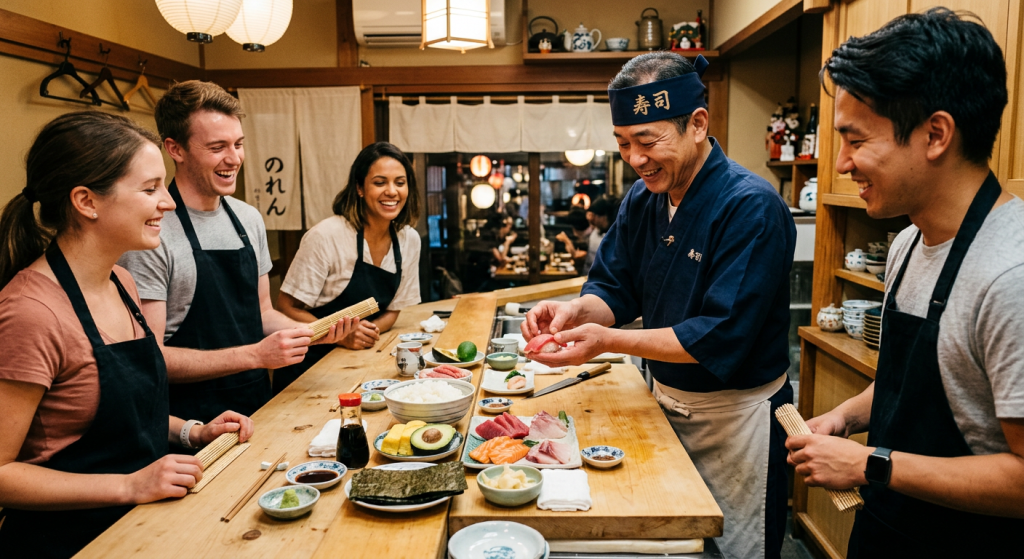
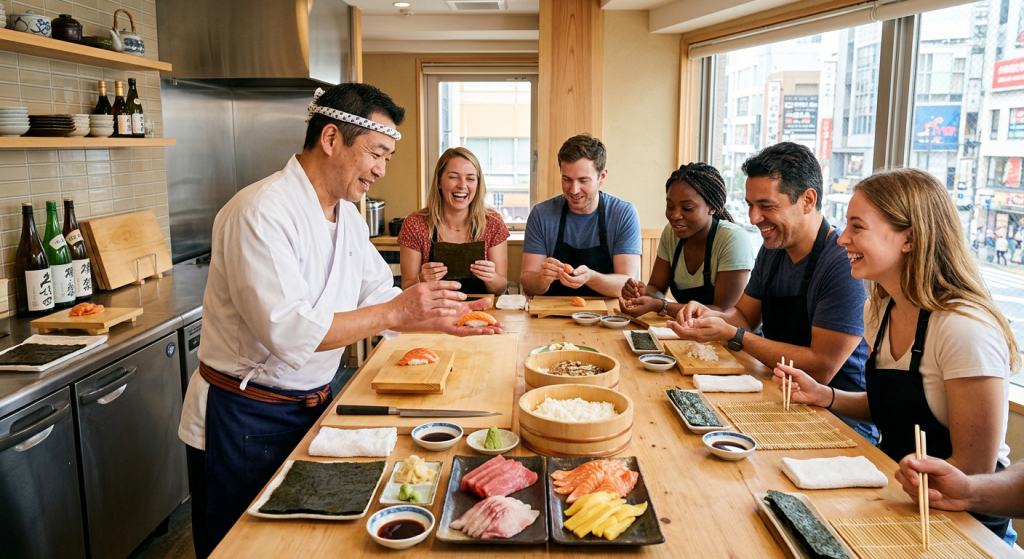
A demonstration focuses on watching a trained professional work. There may be explanations of fish preparation, knife techniques, rice handling, and presentation, followed by a meal.
This format can offer more technical depth than a casual cooking class, although participation may be limited. It is a good option for food enthusiasts who care more about craftsmanship than making every piece themselves.
Before booking, check whether the demonstration is interactive. Some events allow questions and close observation, while others function more like a performance.
Omakase Dining Experiences
Omakase means leaving the selection to the chef. Rather than ordering individual items, guests receive a sequence chosen according to the restaurant’s concept, available ingredients, and the chef’s judgment.
An omakase meal can be an experience in itself, especially at a counter where the chef prepares and serves each piece directly. However, it is not usually a cooking class.
This option suits travelers who want to focus on taste, seasonality, and professional technique. It may be less suitable for very young children, highly selective eaters, or guests who want complete control over the menu.
Dietary substitutions can be difficult because the sequence is built around seafood and the chef’s planned progression. Contact the restaurant before booking rather than assuming changes can be made on arrival.
Seafood Market Tours with Sushi
Some activities combine a guided market visit with a sushi meal or cooking session. These experiences can help visitors understand where ingredients come from and how seafood is sold, selected, and prepared.
The balance differs by tour. One may spend most of the time exploring food stalls, while another may use the market only as a short introduction before a cooking class.
Check the meeting point, walking distance, start time, and whether food samples are included. Market areas can be busy, and some parts are working commercial environments rather than attractions designed solely for tourists.
Tuna-Cutting Demonstrations
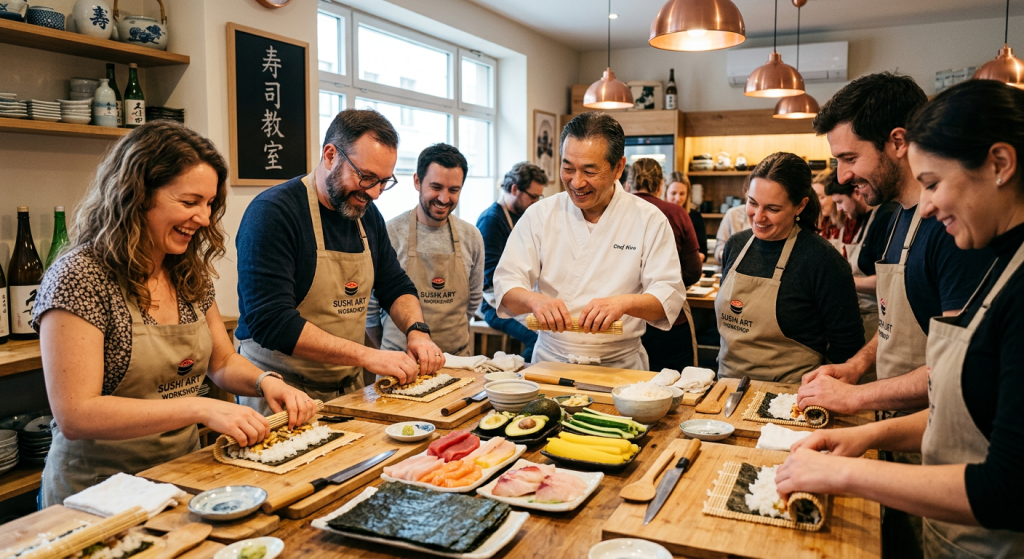
A tuna-cutting show centers on the breakdown of a large tuna using specialized knives and techniques. The demonstration may be followed by a tasting, sushi meal, or explanation of different cuts.
This format is visually dramatic and often works well for groups, celebrations, and corporate events. It can also show how one fish produces cuts with different textures, fat levels, and culinary uses.
However, the phrase “tuna show” can describe anything from a brief demonstration to a full event with commentary and dining. Confirm the duration, audience size, language, tasting portions, and whether guests participate in any part of the experience.
Private and Mobile Sushi Experiences
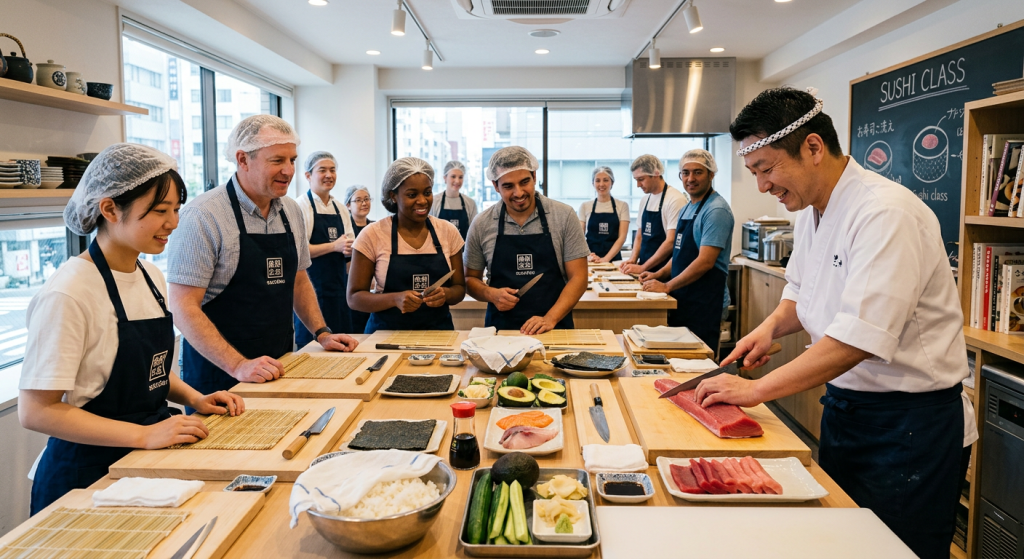
Private classes may take place in a dedicated studio, restaurant, rented venue, hotel space, or private residence where permitted. Some providers also offer chef services or workshops for events.
Private sessions generally offer greater flexibility around:
- Start times
- Group size
- Menu design
- Dietary requirements
- Children’s participation
- Language support
- Photography
- Celebrations and corporate objectives
They may cost more than shared classes, particularly when venue hire, transportation, staffing, or custom ingredients are required.
For a private event, ask for a clear breakdown of what the price includes.
Sushi Making Kakida: A Premium, Hands-On Sushi Experience in Tokyo
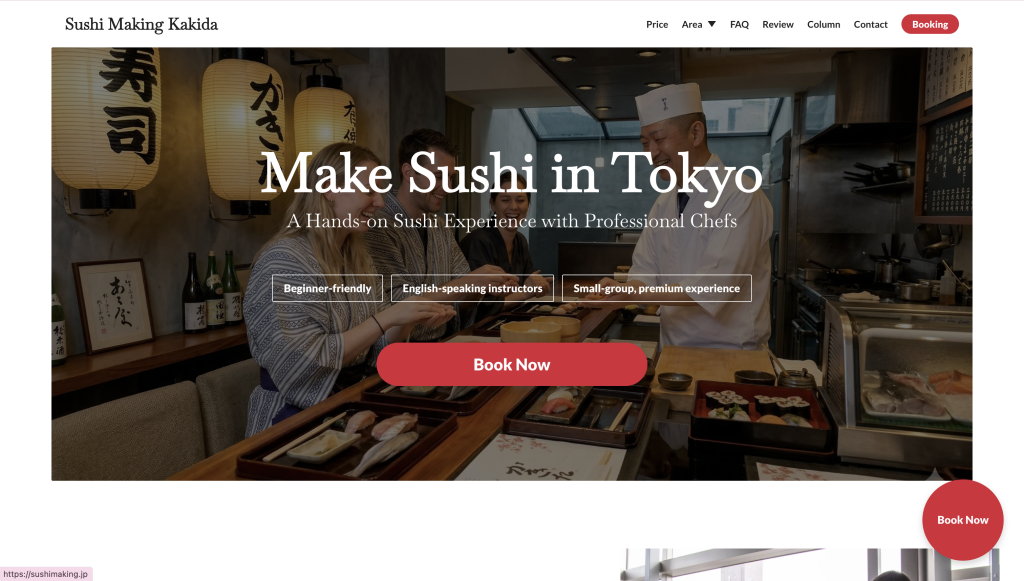
For travelers who want to do more than simply eat sushi, Sushi Making Kakida offers an authentic, hands-on experience guided by professional Japanese sushi chefs.
Rather than joining a large, demonstration-style cooking class, guests learn in a small, private-style group of up to four people. A professional sushi chef and English-speaking interpreter guide you through each step, making the experience easy to follow even if you have never cooked or made sushi before.
During the class, you will learn how to shape traditional nigiri and make approximately 10 pieces of sushi using fresh, high-quality ingredients. Depending on seasonal availability, the selection may include premium toppings such as otoro fatty tuna, chutoro medium-fatty tuna, akami lean tuna, sea urchin, scallop, sea bream, salmon and other Japanese seafood.
The experience is not only educational but also highly interactive. You can watch a professional chef demonstrate authentic techniques, practise making nigiri yourself, eat the sushi you have created and take memorable photos at the sushi counter while wearing a traditional Japanese kappogi apron.
Sushi Making Kakida has already welcomed international visitors from around the world. With clear English support, personal attention and a relaxed atmosphere, it is an excellent choice for couples, families, solo travelers and small groups looking for a memorable Japanese cultural experience.
More Than a Sushi Class: Experience the World of Japanese Tuna
What makes Sushi Making Kakida particularly special is the expertise of the restaurant group behind it.
The Kakida team also operates spectacular maguro tuna-cutting shows, where professional sushi chefs break down whole bluefin tuna weighing more than 100 kilograms in front of an audience. These live events have been held for corporate parties, international exchange events, weddings and large-scale gatherings with hundreds of guests.
Unlike a typical cooking workshop, Sushi Making Kakida is backed by working sushi professionals who regularly source, prepare and serve premium tuna and seafood. Their knowledge extends far beyond showing guests how to shape rice—the team understands how fish is selected, cut and transformed into high-quality sushi.
The tuna-cutting show is a separate event service and is not included in the standard sushi-making class. However, it demonstrates the level of craftsmanship, seafood knowledge and entertainment experience behind the Kakida name.
For visitors searching for a sushi making class in Tokyo or Shinjuku, Sushi Making Kakida offers more than a fun activity. It is an opportunity to step behind the sushi counter, learn directly from professionals and experience one of Japan’s most iconic culinary traditions for yourself.
Make sushi, meet real Japanese chefs and create a Tokyo memory you can actually taste.
What Usually Happens During a Sushi-Making Class?
The exact format varies, but a beginner-friendly session often follows a predictable structure.
1. Welcome and Introduction
The instructor introduces the activity, explains basic hygiene rules, and gives an overview of the sushi styles being prepared.
You may also learn about the role of rice, common ingredients, and the difference between nigiri, maki, temaki, and other forms.
2. Demonstration
The instructor demonstrates each step before participants try it. This may include hand positioning, the amount of rice to use, how firmly to shape it, and how to place the topping.
Good instruction should be visible from every seat. In a larger class, screens or repeated demonstrations may be used.
3. Preparation
Participants prepare their own sushi, usually with ingredients that have already been portioned. The instructor may move around the room to correct technique and answer questions.
The amount of individual attention depends heavily on the instructor-to-guest ratio.
4. Presentation and Photographs
Some classes include decorative plating, traditional clothing, certificates, or dedicated photo time. These elements can be enjoyable, but they should not replace meaningful instruction if learning is your priority.
5. Eating the Sushi
Participants normally eat what they have prepared. Tea, soup, side dishes, sake, or other beverages may be included, available for an additional charge, or not offered at all.
Check the menu in advance so you know whether the class replaces a full meal or provides only a light tasting.
How to Choose the Best Sushi Experience in Tokyo
“Best” depends on the traveler. A lively group workshop may be perfect for a family but disappointing for someone seeking detailed culinary instruction.
Use the following criteria to narrow your options.
Decide How Hands-On You Want the Activity to Be
Look for precise descriptions of what participants actually do.
“Learn about sushi” could mean watching a chef for most of the session. “Make sushi” could mean shaping rice with pre-cut toppings rather than preparing fish from the beginning.
Neither format is inherently better. The issue is whether the activity matches your expectations.
Useful questions include:
- Will I make the sushi myself?
- Which types of sushi will I prepare?
- Is the fish already sliced?
- Will I learn knife skills?
- How many pieces will I make?
- Do I eat everything I prepare?
- Is the activity suitable for complete beginners?
Check the Class Size
Smaller groups often allow more conversation and individual correction. Larger classes may have a more energetic atmosphere and lower per-person pricing.
Do not assume that “small group” has the same meaning across providers. Look for an actual maximum number of participants.
For serious learning, ask how many instructors support the group. A class of twelve with two attentive instructors may provide better support than a class of eight led by one person managing preparation, teaching, and photography alone.
Confirm the Language of Instruction
A listing may be available on an English-language booking platform without the entire class being taught in English.
Confirm whether:
- The instructor speaks English directly
- An interpreter is present
- Printed instructions are available
- Technical and cultural questions can be answered in English
- Private language support can be arranged
Visual teaching can work well for basic shaping, but clear communication matters when discussing ingredients and allergies.
Review the Menu, Not Just the Photographs
Promotional images may show premium tuna, salmon roe, sea urchin, or elaborate platters that are not included in every plan.
Read the menu details and ask whether ingredients change according to availability. Check the approximate number of pieces and whether side dishes or drinks are included.
A menu with fewer ingredients is not necessarily poor value. A well-taught class using a manageable selection may provide more useful instruction than a rushed session built around visual variety.
Consider the Location and Travel Time
Tokyo is large, and a short distance on a map does not always mean a simple journey. Compare the venue with your accommodation and other plans for the day.
Check:
- The nearest station
- The walking time from the station
- Whether transfers are required
- The building name and floor
- Accessibility for wheelchairs or strollers
- Whether shoes must be removed
- How early you should arrive
Leave additional time if the venue is inside a complex building or on a small street that may be difficult to locate.
Compare Duration Carefully
A longer activity is not automatically more detailed. Some experiences include long introductions, costume changes, or dining time, while others concentrate on technique.
Find out how much of the advertised duration is spent making sushi. Also check whether the end time is fixed, particularly if you have a train reservation, flight, performance, or other timed activity afterward.
Read Reviews for Specific Details
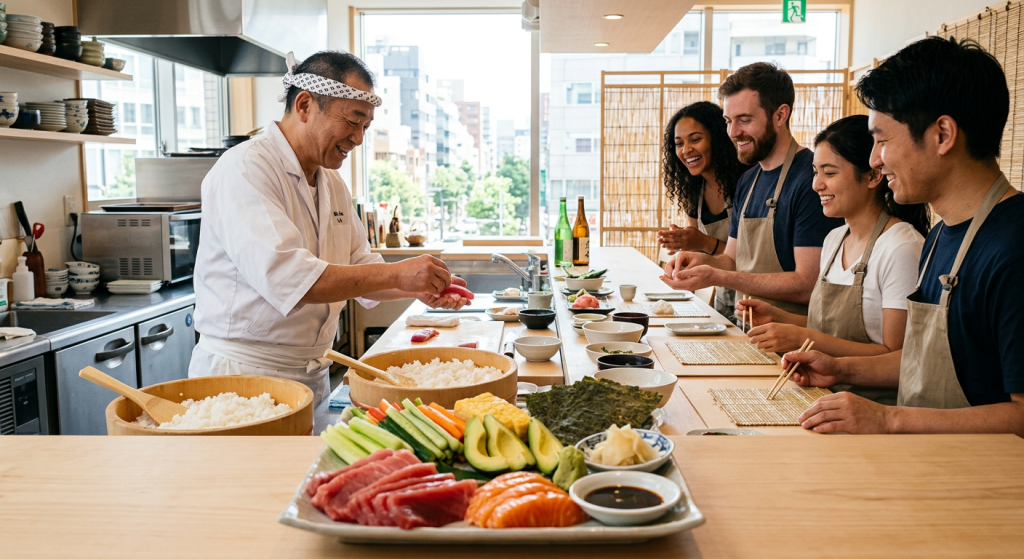
Overall ratings are useful, but the written comments are more revealing.
Look for repeated observations about:
- Instructor clarity
- English communication
- Group size
- Ingredient freshness
- Waiting time
- Amount of food
- Children’s engagement
- Organization
- Cleanliness
- Whether the experience matched the listing
A negative review about personal taste may not be relevant to you. Repeated complaints about overcrowding, unclear instructions, or unexpected charges deserve more attention.
Recent reviews may better reflect the current venue, staff, and format than comments posted several years ago.
Understand What the Price Includes
Sushi experience prices in Tokyo vary according to the format, location, duration, group size, ingredients, instructor expertise, and degree of customization.
Instead of comparing only the headline price, check whether it covers:
- Ingredients
- The completed meal
- Beverages
- Market purchases or tastings
- Private instruction
- Venue fees
- Interpretation
- Traditional clothing
- Photographs
- Taxes
- Booking platform fees
- Transportation during a tour
- Additional guests
- Cancellation or rescheduling
A less expensive activity may still be the better choice when it provides the right level of participation. A premium option should justify the difference through ingredients, privacy, instruction, location, or service—not simply presentation.
Shared Class or Private Session?
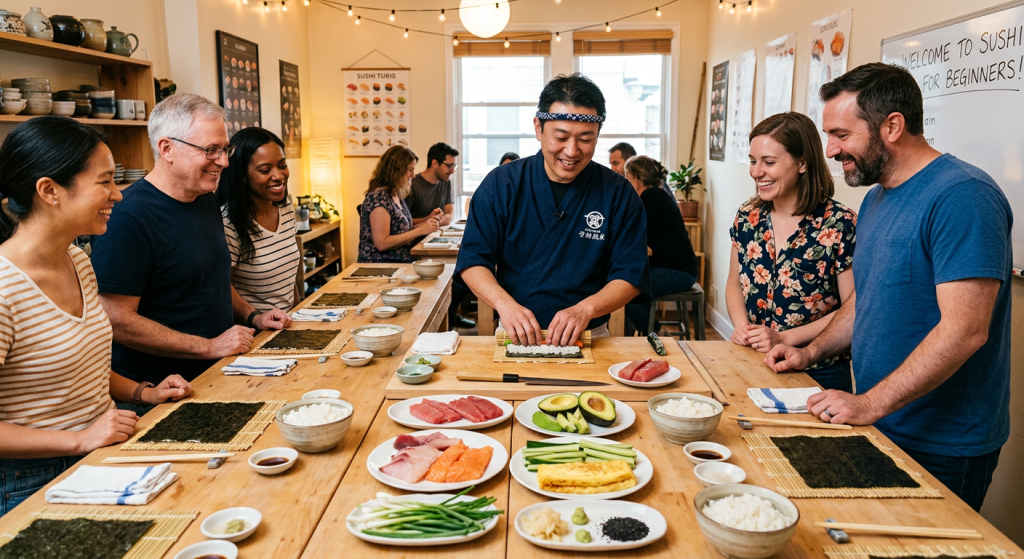
A shared class is usually the better fit for travelers who enjoy social interaction and do not need extensive customization. It may also be easier to book for one or two people.
A private session provides more control. It can be useful for:
- Families with young children
- Guests with dietary restrictions
- Travelers who prefer a slower pace
- Culinary professionals
- Corporate groups
- Birthday or anniversary celebrations
- Guests requiring interpretation
- People who want more time for questions
Private experiences may have minimum charges even when only a few people attend. Ask whether the quote is calculated per person, per group, or through a combination of both.
Dietary Requirements, Allergies, and Food Preferences
Sushi activities commonly use raw seafood, cooked seafood, eggs, soy, sesame, wheat, rice vinegar, wasabi, and other ingredients. Cross-contact may be possible in a shared kitchen.
Never rely only on a booking form note for a serious allergy. Contact the provider directly and explain:
- The specific allergen
- The severity of the reaction
- Whether cross-contact is a concern
- Whether shared utensils or surfaces are acceptable
- Which substitutions are safe
Soy sauce commonly contains wheat unless a gluten-free version is provided. Imitation seafood, sauces, marinades, and prepared ingredients may contain allergens that are not obvious from appearance.
Vegetarian and Vegan Options
Some providers can prepare vegetable-based sushi with ingredients such as cucumber, avocado, pickled vegetables, tofu, mushrooms, or seasonal produce.
However, vegetarian does not always mean vegan. Egg, mayonnaise, fish-based stock, bonito flakes, or sauces containing animal-derived ingredients may be used.
Ask for the planned menu and preparation method before booking.
Pregnancy and Raw Seafood
Guests who are pregnant may prefer cooked or vegetable-based options. Dietary guidance differs by individual circumstances and country, so consider following advice from an appropriate healthcare professional.
The provider can explain ingredients and preparation, but should not be expected to give personal medical advice.
Selective Eaters and Children
Children who do not eat raw fish may still enjoy making rolls with cooked or vegetable fillings. Confirm whether an alternative menu is available rather than expecting substitutions on the day.
Ask about minimum age, adult supervision, sharp tools, standing time, and whether the class pace suits younger participants.
Is a Sushi Experience Suitable for Families?
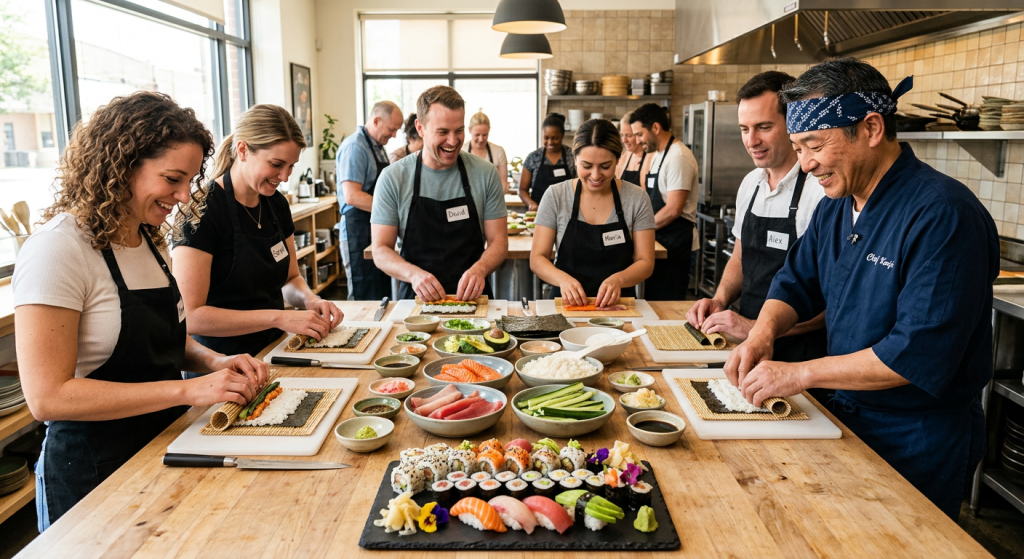
Many sushi-making classes work well for families because the shaping and rolling processes are visual and interactive. The best family option has a manageable duration, clear supervision, and ingredients children are willing to eat.
Check the provider’s policy on:
- Minimum participant age
- Children’s pricing
- Whether every child needs a paid place
- Knife use
- Step stools or accessible work surfaces
- Stroller storage
- Restroom access
- Private booking options
- Cooked or vegetarian fillings
A highly technical chef demonstration may be less engaging for small children. A casual workshop with short instructions and frequent participation is often easier for them to enjoy.
Sushi Experiences for Couples and Special Occasions
A sushi class can be a memorable date activity because it combines conversation, teamwork, and a meal. Couples may enjoy a shared group class, but a private session can feel more relaxed for an anniversary, proposal-related trip, or birthday.
For a special occasion, ask whether the provider can arrange:
- A private table or room
- A personalized menu
- A message plate or small celebration
- Photographs
- Sake or nonalcoholic pairings
- Additional time
- A surprise that can be coordinated discreetly
Confirm any extra charges in writing. Not every cooking studio is designed for formal celebrations, so match the atmosphere to the occasion.
Corporate, Incentive, and Group Sushi Events
Sushi-making can work as a team activity because participants share a structured task with a clear result. It may be used for international meetings, incentive travel, client entertainment, internal celebrations, or conference programs.
Organizers need more information than individual travelers.
Capacity and Group Format
Ask for the seated and standing capacity, the maximum number who can participate at one time, and whether the group will be divided into teams.
For a large event, find out whether every guest receives the same level of participation. Some formats invite only a few people on stage while the rest watch.
Timing and Event Flow
Request a schedule covering arrival, introduction, demonstration, hands-on preparation, dining, and departure.
Allow time for guests to wash their hands, move between stations, take photographs, and handle dietary questions. A program that appears to fit into sixty minutes on paper may feel rushed when a large group is involved.
Venue and Equipment
Confirm whether the provider supplies tables, ingredients, utensils, aprons, refrigeration, waste handling, and cleanup.
For an off-site event, check:
- Water access
- Food preparation space
- Electricity
- Refrigeration
- Loading access
- Venue food-service rules
- Insurance requirements
- Cleanup responsibilities
- Travel and staffing charges
Budget Structure
Group pricing may include a minimum event fee, per-person cost, venue charge, transportation, interpretation, equipment, and optional upgrades.
Ask for an itemized quote so the organizer can compare proposals fairly and explain the expense internally.
Guest Experience
A successful corporate event should work for both enthusiastic cooks and guests who prefer to observe. Ask whether non-participating attendees can enjoy the meal, demonstration, or tasting without completing every step.
Language support, dietary planning, and a clear host are especially valuable when participants come from several countries.
Potential Drawbacks and Limitations
A sushi experience can be memorable, but it is not ideal for every traveler.
It May Be More Recreational Than Technical
Many classes are designed for beginners and tourists. They may prioritize accessibility and enjoyment over professional-level instruction.
Experienced cooks should ask about knife work, rice preparation, ingredient sourcing, and instructor background before booking.
Ingredient Choices May Be Limited
Group classes usually use a fixed menu to control preparation and timing. Last-minute substitutions may not be possible.
Travelers with several dietary restrictions may need a private session or a class specifically designed around alternative ingredients.
You May Not Prepare Every Component
The rice may be cooked in advance, and seafood is often pre-sliced. This is practical and safer for a short class, but it may disappoint guests expecting to prepare sushi entirely from scratch.
Shared Classes Can Feel Rushed
Large classes have to move at a common pace. Guests who want detailed explanations or repeated practice may prefer private instruction.
Cancellation Terms Can Be Strict
Food activities require advance ingredient preparation and staffing. As a result, cancellation and rescheduling policies may be less flexible than those for attractions without perishable materials.
Review the deadline and refund conditions before paying.
Common Booking Mistakes
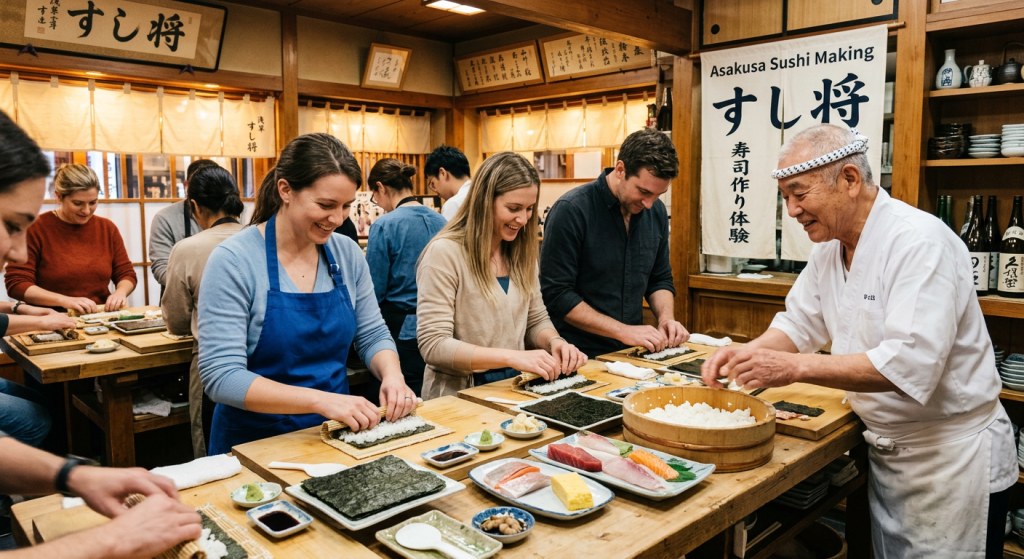
Several avoidable mistakes can turn a promising activity into a poor fit.
Choosing Based Only on the Lowest Price
A low price may reflect a shorter session, larger group, simpler ingredients, or fewer inclusions. Compare what you will actually do and eat.
Assuming Every Experience Includes a Full Meal
Some classes provide a substantial meal; others offer only a few tasting portions. Check the number of pieces and included dishes.
Expecting Professional Knife Training
Beginner tourist classes often avoid extensive fish-cutting. Look for specialized instruction if knife skills are your priority.
Failing to Disclose Allergies Early
The day of the class may be too late to source replacements or create a separate preparation area.
Booking an Inconvenient Location
Tokyo travel can take longer than expected. Check the complete route, not only the district name.
Ignoring the Cancellation Policy
Plans can change during a trip. Know when the booking becomes nonrefundable and whether weather, illness, or transportation disruption is covered.
Arriving Late
Classes often begin with safety instructions and a demonstration. Late arrival may disrupt the group, reduce your participation time, or result in denied entry under the provider’s policy.
What to Ask Before Booking
A clear listing should answer most practical questions. When it does not, contact the provider with a concise list.
Consider asking:
- What will each participant make?
- How many pieces are included?
- Is the activity fully hands-on?
- Are the seafood ingredients raw, cooked, or mixed?
- Can you accommodate my dietary requirement?
- How do you manage allergen cross-contact?
- Is the entire session conducted in English?
- What is the maximum group size?
- Is the class shared or private?
- What is included in the listed price?
- Are drinks, taxes, and booking fees included?
- Is the amount of food suitable for lunch or dinner?
- What is the minimum age?
- Is the venue wheelchair accessible?
- How early should guests arrive?
- What happens if a participant is late?
- What is the cancellation and rescheduling policy?
- Can the provider store luggage or strollers?
- May participants take photographs or video?
- Can the activity be customized for a celebration or business event?
For a corporate or private event, also ask for a written quote, detailed schedule, payment terms, venue requirements, and the deadline for confirming final attendance.
How Far in Advance Should You Book?
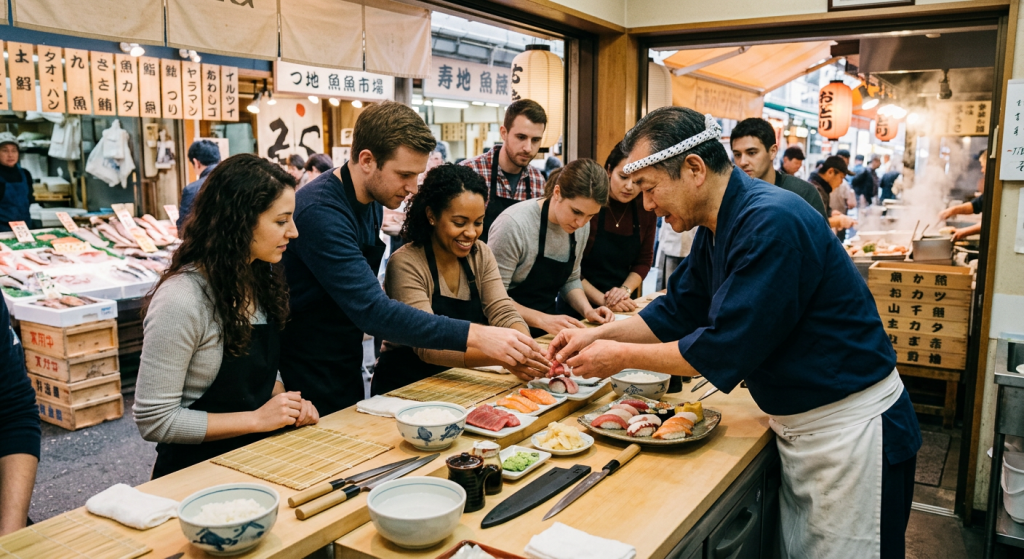
Availability depends on the season, day of the week, group size, and type of activity.
Small shared classes may have regular departures but limited seats. Private sessions, specialist chef experiences, and large-group events usually require more planning.
Booking earlier is sensible when:
- You are visiting during a busy travel period
- You need a specific date and time
- Your group is large
- You require dietary customization
- You want a private instructor
- You need a particular language
- The activity is part of a birthday or corporate itinerary
Last-minute spaces may be available, but relying on them reduces your choice of location and format.
What Should You Wear?
Most sushi classes do not require formal clothing. Choose clean, comfortable clothes that allow you to work at a counter or table.
Providers may supply aprons. Long hair may need to be tied back, and large jewelry can be inconvenient during food preparation.
Some venues require guests to remove their shoes. Wear socks and footwear that are easy to take off. Avoid strong perfume or fragrance, particularly for chef-led tastings where aroma is part of the dining experience.
Sushi Etiquette You May Learn
Etiquette varies by venue and level of formality, but instructors may introduce a few basic practices.
Nigiri can often be eaten with chopsticks or clean fingers. It is usually eaten in one bite when practical. Soy sauce should be used lightly, and the topping—not the rice—is commonly dipped when the piece can be turned without falling apart.
Pickled ginger is generally eaten between pieces as a palate cleanser rather than placed on top of sushi. Wasabi may already be included by the chef, although tourist-oriented classes may let participants adjust it.
These are useful conventions, not reasons to feel anxious. A welcoming instructor should help guests enjoy the food without turning the session into a test of perfect behavior.
Frequently Asked Questions
How much does a sushi experience in Tokyo cost?
Prices vary according to class length, group size, ingredients, location, instructor expertise, and whether the experience is shared or private. Check what is included before comparing options, as some prices cover a full meal and drinks while others cover only the activity and a small tasting.
Is a sushi-making class worth it?
It can be worthwhile for travelers who want an interactive cultural activity rather than only a meal. It may offer less value to someone who dislikes cooking, does not eat the available ingredients, or expects advanced professional training from a short beginner class.
Do I need cooking experience?
Most tourist-oriented sushi classes are designed for complete beginners. The instructor normally demonstrates each step, and complex preparation may be completed in advance.
Will I have to handle raw fish?
Many classes involve placing pre-sliced raw seafood on rice, but the amount of handling varies. Ask about cooked, vegetarian, or no-raw-fish options if you are uncomfortable with raw ingredients.
Can vegetarians join a sushi experience?
Some providers offer vegetable-based menus, but availability differs. Confirm the ingredients, sauces, stocks, and preparation surfaces before booking, especially if the requirement is vegan or connected to an allergy.
Are sushi classes suitable for children?
Many are, but minimum ages and safety rules differ. Check whether children use knives, whether cooked ingredients are available, and whether the session length is suitable for your child.
What is the difference between a sushi class and an omakase experience?
A sushi class emphasizes participation and learning. An omakase experience is a chef-selected dining sequence, usually with little or no guest preparation.
How long does a sushi experience take?
Formats range from short demonstrations to multi-hour market tours and cooking sessions. Review the schedule carefully and check how much time is spent preparing, dining, traveling, or taking photographs.
Can I book a private sushi experience?
Many providers offer private options for couples, families, groups, and corporate events. Minimum charges and customization fees may apply.
Is a market tour necessary?
No. A market tour adds context about ingredients and food culture, but travelers primarily interested in cooking may prefer to spend more time in the kitchen.
Can a sushi experience accommodate serious allergies?
Some providers may be able to make adjustments, but shared kitchens can present cross-contact risks. Explain the allergy directly before booking and ask detailed questions about ingredients, utensils, surfaces, and substitution procedures.
Should I tip the instructor?
Tipping is not traditionally expected in Japan in the same way it may be in some other countries. If a booking platform or provider has a specific policy, follow the information given there. A direct thank-you or positive review is often appreciated.
Choosing the Right Sushi Experience for Your Tokyo Trip
Start with the experience you want rather than the name of the activity. Choose a hands-on class if you want to make and eat your own sushi. Consider an omakase counter if tasting and craftsmanship matter more than participation. Add a market tour for sourcing and cultural context, or explore a tuna-cutting demonstration when visual impact and group entertainment are priorities.
Once you know the format, compare the details that affect the actual experience: class size, menu, English support, dietary flexibility, location, duration, inclusions, and cancellation terms.
Read recent reviews, ask direct questions where the listing is unclear, and confirm anything essential before payment. A carefully selected sushi experience in Tokyo can become more than a meal—it can give you a practical understanding of the techniques, ingredients, and customs behind one of Japan’s most recognized culinary traditions.