Sushi Making Classes in Shibuya and Nearby
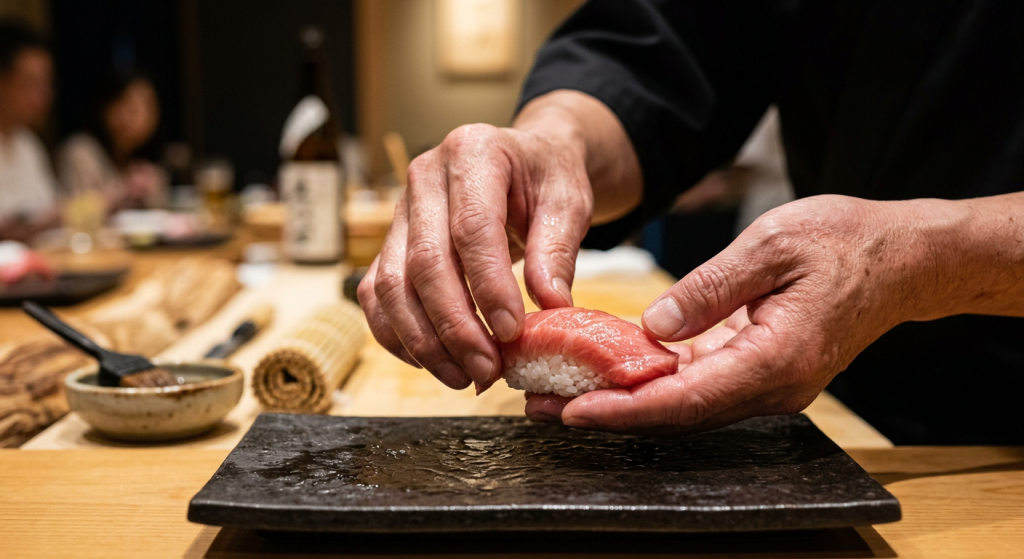
Shibuya does have bookable sushi-making classes, but the options split into a few very different styles. Some are quick, English-friendly workshops close to the station. Others are smaller host-led classes in residential parts of Shibuya. A few of the most interesting options are technically in nearby Ebisu or Harajuku rather than right around Shibuya Scramble, so it helps to compare the actual neighborhood before you book.
If you want the shortest, easiest plan near central Shibuya, the current front-runners are the hand-rolled sushi workshop near the Shibuya Scramble area and the Shibuya station-area class by Partners on airKitchen. If you care more about setting than distance, Ebisu gives you a class inside a real tuna dealer’s sushi bar, while Harajuku offers a family-friendly workshop with strong dietary flexibility.
The quick shortlist
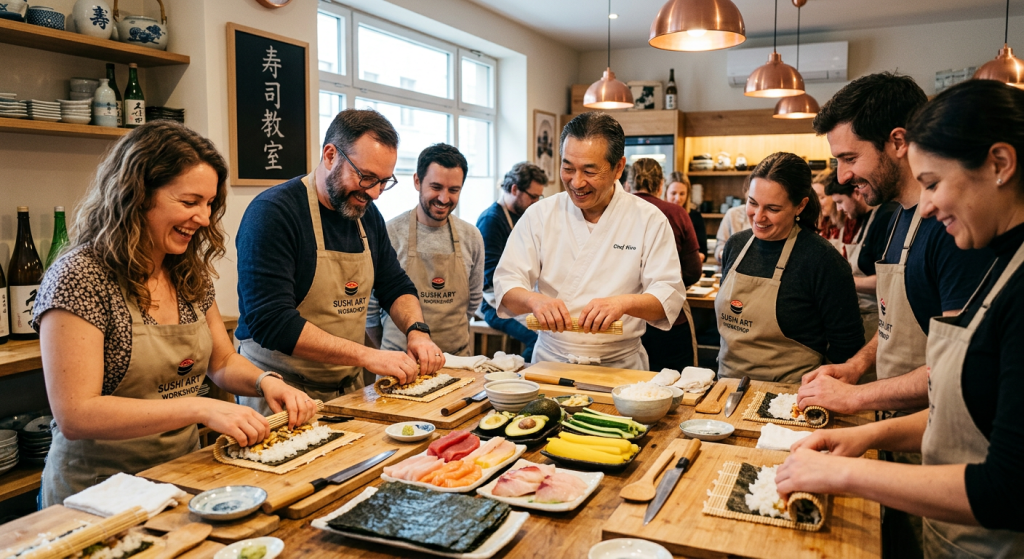
- For a central Shibuya workshop focused on temaki: Tokyo: Sushi Making Class in Shibuya Hand Rolled with Master. It runs for 1.5 hours, includes an English-speaking instructor, and current platform listings show pricing around ¥7,500 to ¥7,700, depending on where you book.
- For a budget-friendly Shibuya class with nigiri and California rolls: Sushi-Making Class in Shibuya | Fun & Easy for All Ages! by Partners on airKitchen. The listing shows ¥8,000 per person, 1.5 hours, vegan and vegetarian options, and a location about 10 minutes from Shibuya Station, with the exact address released after booking.
- For a more distinctive sushi-bar setting: Sushi Making Class at a Real Tuna Dealer’s Shop in Shibuya at Tsunaya Ebisu. This one is in Ebisu rather than the Shibuya Station area, but it includes sushi-making inside a real sushi bar using Toyosu-market tuna. Current listings show 1.5 hours and around ¥10,000 on Klook-linked pages.
- For families and dietary flexibility close to Shibuya: Tokyo: Sushi-Making Workshop in Harajuku. It is just minutes from Harajuku Station, runs 90 minutes, and current Klook-linked listings show ¥6,600. The workshop advertises vegetarian, vegan, and gluten-free options, plus English and Japanese instruction.
- For a small-group seafood-focused local class: Enjoy fresh Japanese fish! Sushi making class! by Shotaro on airKitchen. This listing shows ¥12,000 per person, 2 hours, a maximum of 5 guests, free pickup from Shibuya Station, and a menu built around assorted fish.
The classes worth comparing
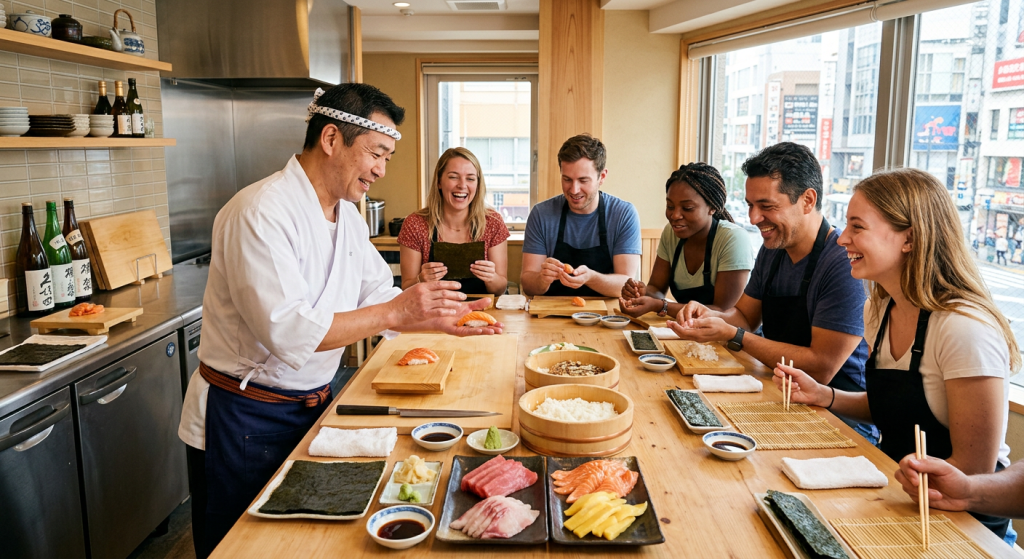
Tokyo: Sushi Making Class in Shibuya Hand Rolled with Master
This is one of the simplest answers if your search is specifically for a sushi making class in Shibuya and you want to stay close to the action. The workshop is positioned near the Shibuya Scramble area, lasts 1.5 hours, and includes an English-speaking instructor. The ingredient list shown on booking pages centers on tuna, salmon, shrimp, cucumber, avocado, and wasabi, so the class is built around temaki, or hand-rolled sushi, rather than a long chef-style nigiri lesson.
That makes it a good fit for first-time visitors who want a compact, beginner-friendly food activity they can slot between other Shibuya plans. It is less suited to travelers hoping for a deep dive into knife work, fish aging, or restaurant-level Edomae technique. Pricing currently appears around ¥7,500 on Klook-linked listings and ¥7,700 on Expedia Japan, which is a useful reminder that platform prices can differ slightly.
The cancellation policy shown on large booking platforms is also fairly traveler-friendly. GetYourGuide lists free cancellation up to 24 hours in advance. If you have allergies, need a child-friendly confirmation, or want a private format rather than a standard workshop, check the booking page for your date before committing, because those details are not as clearly published as the duration and language support.
Sushi-Making Class in Shibuya | Fun & Easy for All Ages!
Partners’ Shibuya class on airKitchen is one of the better value picks if you want a class that is actually based in Shibuya, reasonably priced, and more focused on nigiri plus California rolls rather than only hand rolls. The listing shows ¥8,000 per person, 1.5 hours, vegan and vegetarian options, and a location about 10 minutes from Shibuya Station, with the exact address sent after booking. airKitchen’s Tokyo sushi-class listings are described as being offered in English.
The menu is practical for beginners: participants make nigiri zushi and California rolls, and the class description leans into an interactive, relaxed format rather than a formal restaurant counter experience. That makes it especially workable for travelers who want something approachable, social, and not overly technical. It also helps if your group includes people who are curious about sushi but not necessarily chasing a chef-led omakase atmosphere.
This is also the sort of class that works well when budget matters. What you trade off is precision planning: the exact venue is not public before booking, and the listing is stronger on menu, price, and general access than on fine-grained details like final class size for each session. If you are booking for one person, a family with children, or anyone with serious food restrictions, it is sensible to reconfirm the current setup before checkout.
Sushi Making Class at a Real Tuna Dealer’s Shop in Shibuya
Despite the Shibuya wording in the title, this experience is held at Tsunaya Ebisu, so this is a near-Shibuya option rather than a class in the immediate Shibuya Station area. That distinction matters. If you are fine with Ebisu, this is one of the more distinctive choices because it takes place inside a real sushi bar operated by a licensed tuna broker and uses Toyosu-market tuna. The published class length is 1.5 hours, and current Klook-linked listings show pricing around ¥10,000.
Participants make seven types of sushi, including nigiri and maki, and the booking pages also mention an optional premium sake pairing. GetYourGuide lists the class with English and Japanese instruction and says the venue is wheelchair accessible, while Klook describes it as a small-group setting. If you want a more “real restaurant” feel than a studio workshop, this is the strongest candidate in the Shibuya orbit.
It is not the class I would pick for someone who wants vegetarian sushi, a market walk, or a simple family activity with lots of accommodation built in. The main draw here is the tuna-specialist angle and the sushi-bar environment. If those are your priorities, the short trip to Ebisu is easy to justify. If not, a central Shibuya or Harajuku class may be a more practical fit.
Tokyo: Sushi-Making Workshop in Harajuku
This workshop is not in central Shibuya, but it is still a very realistic option for travelers staying in or around Shibuya because it sits just minutes from Harajuku Station in a traditional-style studio. The official booking page gives the venue as SHOGUN Cafe, 2F, 3-61-7 Sendagaya, Shibuya-ku, and the published duration is 90 minutes. Klook-linked listings show current pricing from ¥6,600, making it one of the lower-cost organized workshops in the area.
The format is built around hand-rolled sushi with tuna, salmon, shrimp, egg, and seasonal vegetables. It also stands out for practical traveler details: the workshop advertises English and Japanese guidance, vegetarian, vegan, and gluten-free options, and notes that children under 4 can share a plate with a guardian. GetYourGuide also marks it as wheelchair accessible and shows free cancellation up to 24 hours in advance.
For families, mixed-diet groups, or anyone who wants a polished tourist-friendly class without paying restaurant-experience prices, this is one of the most balanced picks. The main compromise is geography: if your whole day is centered tightly on the Shibuya Station area, Harajuku is nearby but still not “right there.” If you are already planning time around Harajuku, Omotesando, or Meiji Jingu, the location makes much more sense.
Enjoy fresh Japanese fish! Sushi making class!
Shotaro’s class is a smaller airKitchen option for travelers who want more seafood emphasis and less polished-tour-product packaging. The listing shows ¥12,000 per person, 2 hours, a maximum of 5 guests, and free pickup from Shibuya Station. The menu is described as a nigirizushi class using ingredients such as tuna, sea bream, egg, horse mackerel, firefly squid, shrimp, squid, and salmon, with participants making about eight pieces.
That makes this a better fit for travelers who want a smaller group and a fish-forward menu rather than a colorful, beginner-leaning studio class. airKitchen’s Tokyo sushi-class pages are positioned as English-language classes, and the booking flow is straightforward, with confirmation within 24 hours and full refund up to 48 hours before the class.
A practical note: the listing is tagged with a vegetarian option, but the standard menu is clearly seafood-heavy. If you need a full vegetarian menu, ask exactly what will be substituted before booking. This is a good class for people who actively want fish variety, not for travelers who are still deciding whether they are comfortable with raw seafood.
Sushi Making Kakida: A Premium, Hands-On Sushi Experience in Tokyo
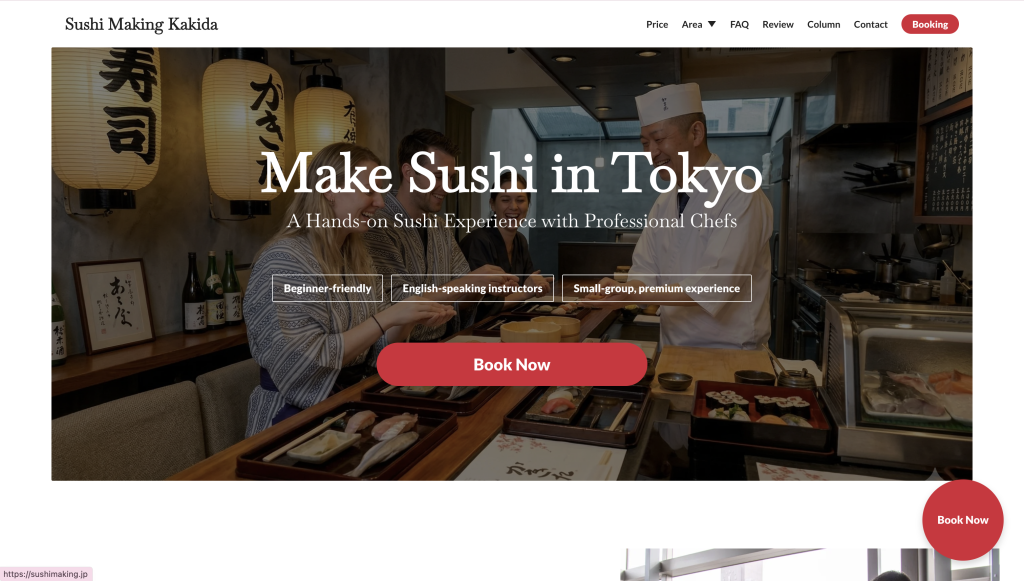
For travelers who want to do more than simply eat sushi, Sushi Making Kakida offers an authentic, hands-on experience guided by professional Japanese sushi chefs.
Rather than joining a large, demonstration-style cooking class, guests learn in a small, private-style group of up to four people. A professional sushi chef and English-speaking interpreter guide you through each step, making the experience easy to follow even if you have never cooked or made sushi before.
During the class, you will learn how to shape traditional nigiri and make approximately 10 pieces of sushi using fresh, high-quality ingredients. Depending on seasonal availability, the selection may include premium toppings such as otoro fatty tuna, chutoro medium-fatty tuna, akami lean tuna, sea urchin, scallop, sea bream, salmon and other Japanese seafood.
The experience is not only educational but also highly interactive. You can watch a professional chef demonstrate authentic techniques, practise making nigiri yourself, eat the sushi you have created and take memorable photos at the sushi counter while wearing a traditional Japanese kappogi apron.
Sushi Making Kakida has already welcomed international visitors from around the world. With clear English support, personal attention and a relaxed atmosphere, it is an excellent choice for couples, families, solo travelers and small groups looking for a memorable Japanese cultural experience.
More Than a Sushi Class: Experience the World of Japanese Tuna
What makes Sushi Making Kakida particularly special is the expertise of the restaurant group behind it.
The Kakida team also operates spectacular maguro tuna-cutting shows, where professional sushi chefs break down whole bluefin tuna weighing more than 100 kilograms in front of an audience. These live events have been held for corporate parties, international exchange events, weddings and large-scale gatherings with hundreds of guests.
Unlike a typical cooking workshop, Sushi Making Kakida is backed by working sushi professionals who regularly source, prepare and serve premium tuna and seafood. Their knowledge extends far beyond showing guests how to shape rice—the team understands how fish is selected, cut and transformed into high-quality sushi.
The tuna-cutting show is a separate event service and is not included in the standard sushi-making class. However, it demonstrates the level of craftsmanship, seafood knowledge and entertainment experience behind the Kakida name.
For visitors searching for a sushi making class in Tokyo or Shinjuku, Sushi Making Kakida offers more than a fun activity. It is an opportunity to step behind the sushi counter, learn directly from professionals and experience one of Japan’s most iconic culinary traditions for yourself.
Make sushi, meet real Japanese chefs and create a Tokyo memory you can actually taste.
How to choose the right sushi experience
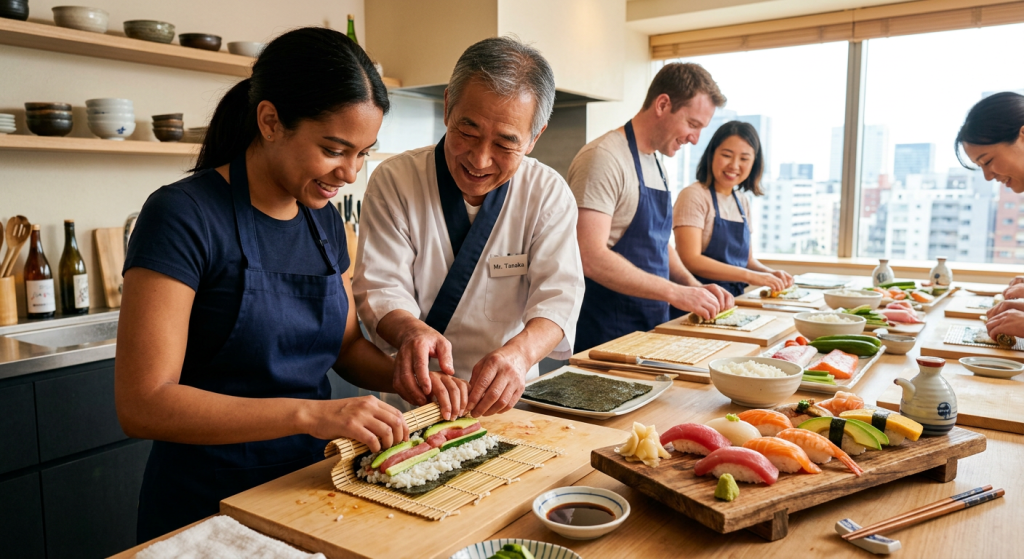
If you want the easiest answer to the keyword itself, stay with a class that is clearly in central Shibuya. That points you toward the Hand Rolled with Master workshop or the Partners class. The difference is simple: the hand-roll class is a shorter, more focused temaki experience, while the Partners class gives you nigiri plus California rolls at a very approachable price point.
If your priority is a more memorable setting, the decision is different. Tsunaya Ebisu is the better choice when you want a real sushi-bar backdrop and a class built around tuna. Harajuku is the better choice when your group includes children or people with dietary restrictions, because those details are actually spelled out on the booking pages.
Price is also part of the story, but compare carefully. Current public listings show the Harajuku workshop from ¥6,600, the Shibuya hand-roll class around ¥7,500 to ¥7,700, the Partners class at ¥8,000, and the tuna dealer class around ¥10,000 on Klook-linked pages. Because some platforms display prices in different currencies and can apply different fees or promotions, it is smart to check the final checkout price on the page you actually plan to use.
One more point matters for searchers who want a “full” culinary day. Market tours and tuna cutting shows are not the norm in the Shibuya-focused classes above. If that add-on is the real priority, broadening your search beyond Shibuya is practical. Current Tokyo booking pages show that Tsukiji and Toyosu are where those market-linked sushi experiences are more common.
Frequently asked questions
Are there sushi-making classes in Shibuya itself?
Yes. There are current bookable options in Shibuya itself, including the Hand Rolled with Master workshop and the Partners class listed on airKitchen. Just be aware that some results using “Shibuya” in the title are actually in Ebisu or Harajuku.
What is the closest sushi-making class to Shibuya Station?
The closest clearly marketed options are the classes based in central Shibuya, especially the Hand Rolled with Master session near the Shibuya Scramble area and the Partners class about 10 minutes from Shibuya Station. The Sushi Hajime and Wagokoro experiences exist in Shibuya too, but when checked, their byFood experience pages were showing unavailable booking status, so they are not the main practical choices right now.
How much does a sushi-making class in the Shibuya area cost?
At the moment, public listings in the Shibuya area start around ¥6,600 for the Harajuku workshop, around ¥7,500 to ¥7,700 for the Shibuya hand-roll class, ¥8,000 for the Partners Shibuya class, and around ¥10,000 for the tuna dealer class in Ebisu. Small-group host-led classes can also run higher depending on menu and format.
Are these classes taught in English?
Most of the strongest current options are clearly English-friendly. The Shibuya hand-roll class lists an English-speaking instructor, the Harajuku workshop lists English and Japanese guidance, the tuna dealer class lists English and Japanese, and airKitchen states that its Tokyo sushi-making classes are offered in English.
Can beginners join?
Yes. The current Shibuya-area options are all framed for beginners rather than professional cooks. The hand-roll workshop, the Partners class, the Harajuku workshop, and the tuna dealer class all present themselves as guided, hands-on sessions rather than advanced chef training.
Can children join?
Sometimes, but the policy depends on the class. The Harajuku workshop is the clearest family option because it explicitly says children under 4 can share a plate with a guardian and presents itself as suitable for all ages. With the other Shibuya-area classes, child rules are not always published as clearly, so it is worth confirming before you pay.
Do you eat the sushi you make?
Yes. That is part of the experience across the main options covered here, whether you are making hand rolls in Shibuya or Harajuku, crafting sushi in Ebisu, or joining a local host-led class around Shibuya Station.
Are vegetarian or vegan options available?
Some classes make this easy, and some do not. The strongest choice for dietary flexibility is the Harajuku workshop, which explicitly lists vegetarian, vegan, and gluten-free options. The Partners class in Shibuya also lists vegan and vegetarian support. For the tuna dealer class and the more seafood-heavy local classes, ask in advance rather than assuming.
Which Shibuya-area class should you book?
For most travelers, the decision comes down to format rather than hype. If you want a straightforward sushi making class in Shibuya, pick the option that matches the type of sushi you want to make: temaki near the scramble area, or nigiri plus California rolls in a relaxed Shibuya class. If you care more about atmosphere, go for Tsunaya Ebisu. If you want a family-friendly workshop with the clearest dietary support, Harajuku is the practical choice.
Before booking, compare the actual neighborhood, the sushi style, the published cancellation terms, and whether your date is handled in English. If you have allergies, need a child-friendly format, or are booking solo, check those details on the final booking page rather than relying on the headline alone. That extra minute usually matters more than the small price differences