Sushi Making Classes in and Near Roppongi
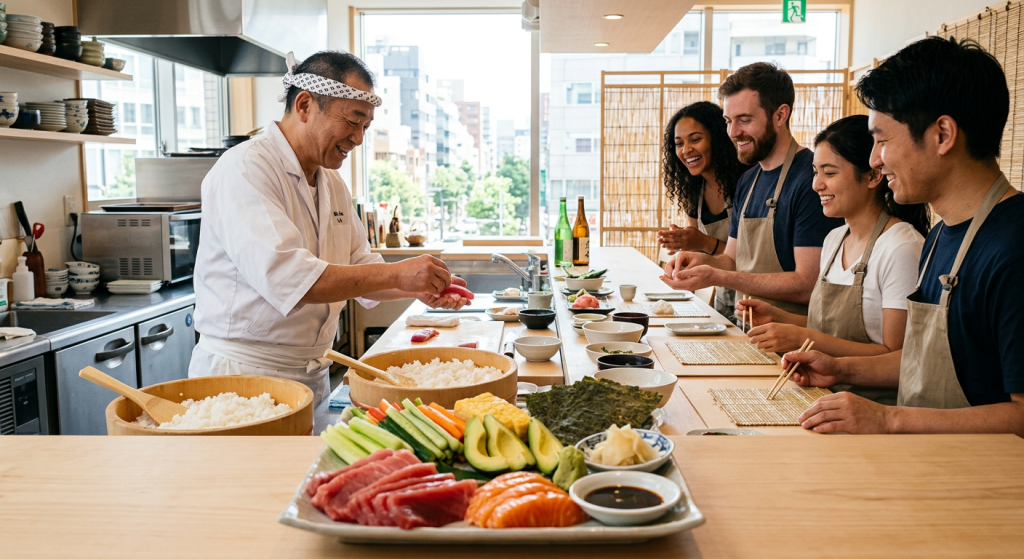
Roppongi does have a few real sushi-making options, but the selection is limited. The most practical approach is to look at two kinds of classes: hands-on experiences actually held in Roppongi, and nearby options in central Tokyo that are easy to reach from the neighborhood. In Roppongi itself, the clearest choices are a large-group restaurant workshop at Roppongi Hassan and a small home-style temari sushi class hosted near Roppongi Station. If your dates, group size, or dietary needs do not match those two, nearby Minato and Tsukiji classes are usually easier to fit into a Tokyo itinerary.
Quick comparison
| Experience | Area | Best for | What you make | Duration | Price |
|---|---|---|---|---|---|
| Roppongi Hassan Sushi Experience | Roppongi | Large groups, team outings, weekday lunch plans | Rolled sushi and nigiri sushi | 12 pm to 3 pm on weekdays | ¥6,000 per person |
| Temari Sushi Matcha & Wellness Cooking in Roppongi by Satomi | Roppongi | Couples, families, vegetarian or vegan travelers, travelers who want a slower cultural class | Temari sushi, seasonal vegetable dish, clear soup, matcha, sake | 2 hours | ¥20,000 per person |
| Sushi Making Class near Tokyo Tower by SUSHI GARYU | Higashi-Azabu / near Tokyo Tower | Beginners, short Tokyo itineraries, travelers staying around Minato | Nigiri-focused sushi workshop using common toppings such as tuna and salmon | 1.5 hours | Booking-platform prices vary; current listings include ¥8,910 on a Klook feed and ¥13,200 on airKitchen |
| Sushi Making Class in Tokyo Tsukiji Fish Market with Pro Sushi Chef | Tsukiji | Travelers who want a market-area class with chef instruction | Nigiri and rolled sushi | 90 minutes | ¥12,375 on a current Klook feed |
The strongest options to book
Sushi Making Kakida: A Premium, Hands-On Sushi Experience in Tokyo
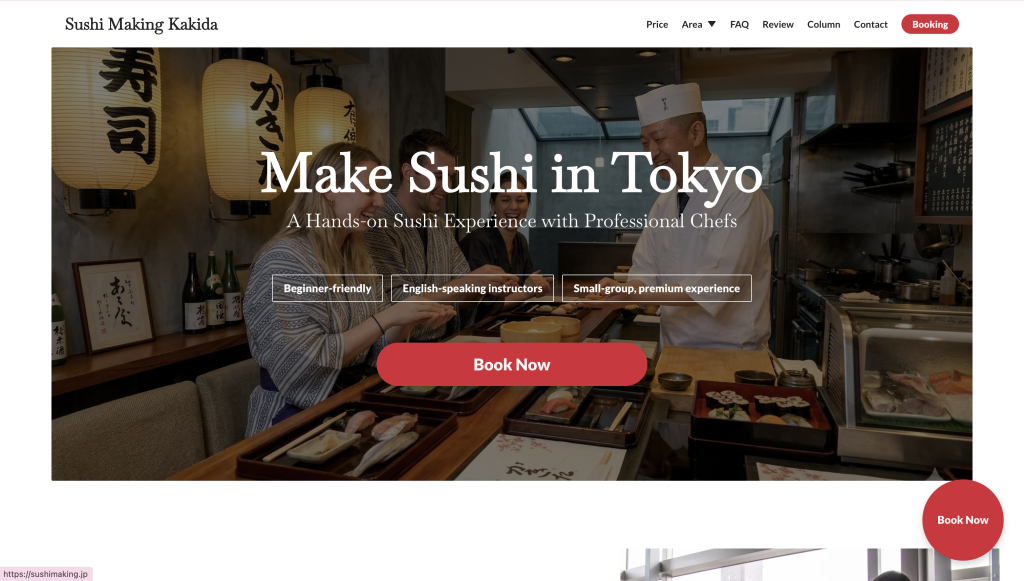
For travelers who want to do more than simply eat sushi, Sushi Making Kakida offers an authentic, hands-on experience guided by professional Japanese sushi chefs.
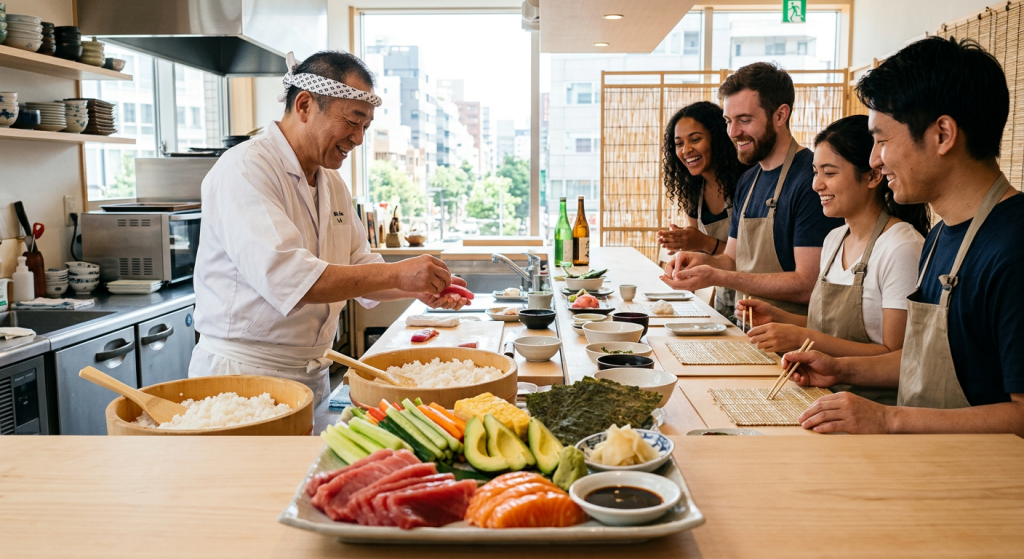
Rather than joining a large, demonstration-style cooking class, guests learn in a small, private-style group of up to four people. A professional sushi chef and English-speaking interpreter guide you through each step, making the experience easy to follow even if you have never cooked or made sushi before.
During the class, you will learn how to shape traditional nigiri and make approximately 10 pieces of sushi using fresh, high-quality ingredients. Depending on seasonal availability, the selection may include premium toppings such as otoro fatty tuna, chutoro medium-fatty tuna, akami lean tuna, sea urchin, scallop, sea bream, salmon and other Japanese seafood.
The experience is not only educational but also highly interactive. You can watch a professional chef demonstrate authentic techniques, practise making nigiri yourself, eat the sushi you have created and take memorable photos at the sushi counter while wearing a traditional Japanese kappogi apron.
Sushi Making Kakida has already welcomed international visitors from around the world. With clear English support, personal attention and a relaxed atmosphere, it is an excellent choice for couples, families, solo travelers and small groups looking for a memorable Japanese cultural experience.
More Than a Sushi Class: Experience the World of Japanese Tuna
What makes Sushi Making Kakida particularly special is the expertise of the restaurant group behind it.
The Kakida team also operates spectacular maguro tuna-cutting shows, where professional sushi chefs break down whole bluefin tuna weighing more than 100 kilograms in front of an audience. These live events have been held for corporate parties, international exchange events, weddings and large-scale gatherings with hundreds of guests.
Unlike a typical cooking workshop, Sushi Making Kakida is backed by working sushi professionals who regularly source, prepare and serve premium tuna and seafood. Their knowledge extends far beyond showing guests how to shape rice—the team understands how fish is selected, cut and transformed into high-quality sushi.
The tuna-cutting show is a separate event service and is not included in the standard sushi-making class. However, it demonstrates the level of craftsmanship, seafood knowledge and entertainment experience behind the Kakida name.
For visitors searching for a sushi making class in Tokyo or Shinjuku, Sushi Making Kakida offers more than a fun activity. It is an opportunity to step behind the sushi counter, learn directly from professionals and experience one of Japan’s most iconic culinary traditions for yourself.
Make sushi, meet real Japanese chefs and create a Tokyo memory you can actually taste.
Roppongi Hassan Sushi Experience
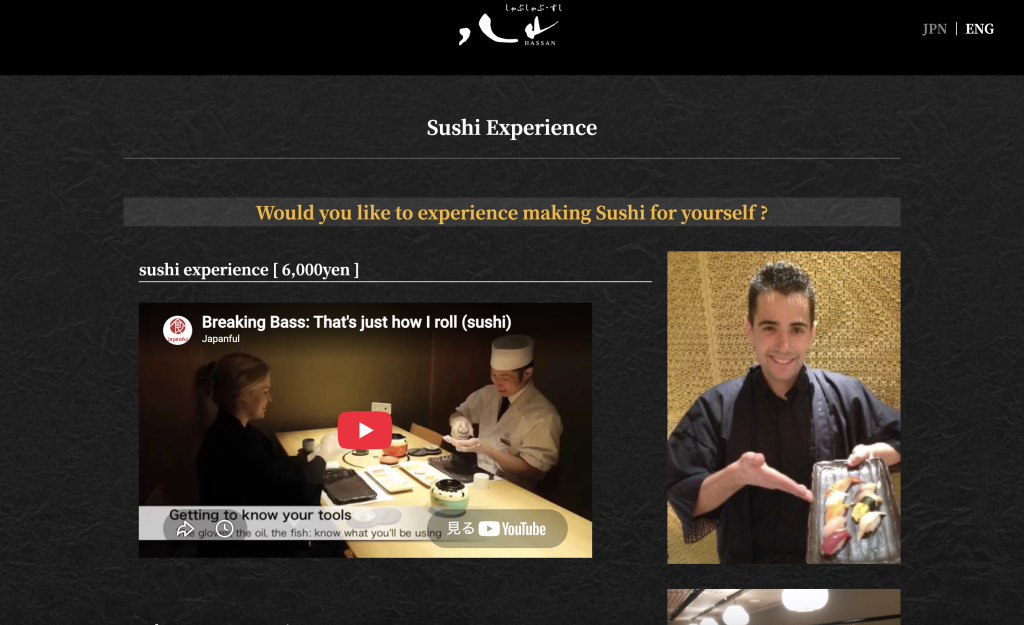
https://hassan.createrestaurants.com/roppongi/en/sushi-experience
If you specifically want a sushi making class in Roppongi, this is one of the clearest literal matches. Roppongi Hassan runs a weekday sushi experience where participants build their own rolled sushi and nigiri, watch a live fish-prep demonstration, and eat their handmade sushi with beef hot pot and miso soup. The restaurant also includes a certificate at the end. The published schedule is weekdays from 12 pm to 3 pm, and the listed cost is ¥6,000 per person.
The catch is group size. Hassan requires a minimum of 8 people, so it is not a practical pick for most solo travelers, couples, or small families. It makes much more sense for a corporate lunch, school trip, or a private group already traveling together in Tokyo. If you are staying in Roppongi and have the numbers, it is the most straightforward in-area option. If you are traveling with one to four people, you will probably need one of the smaller classes below.
Temari Sushi Matcha and Wellness Cooking in Roppongi
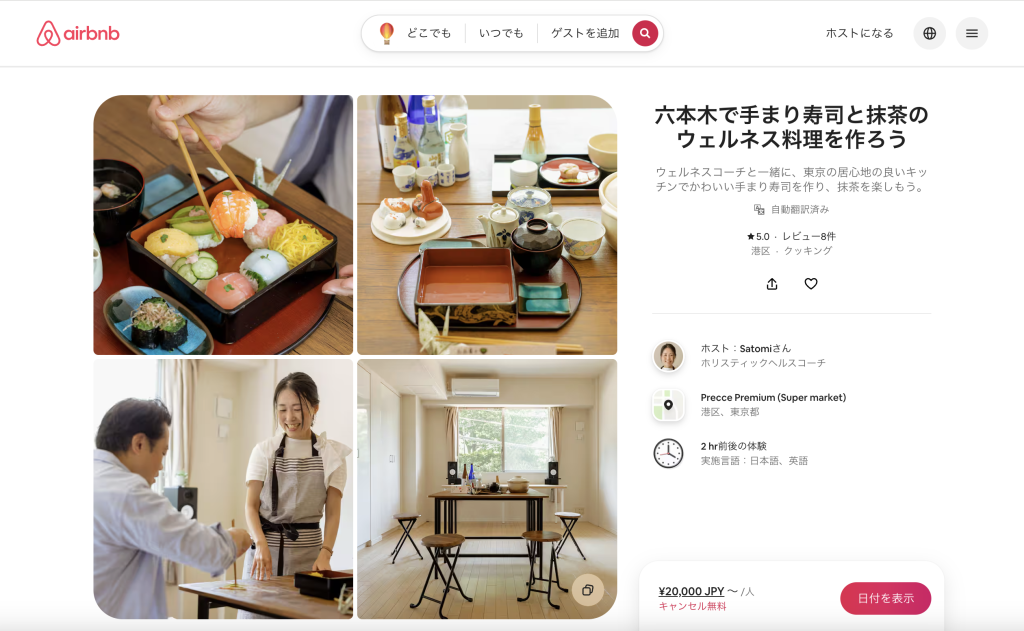
https://www.airbnb.jp/experiences/5656476
Satomi’s class is the most appealing small-group option actually based around Roppongi Station. The page lists Roppongi Station as the closest station, gives the class length as 2 hours, and caps the group at 6 guests. The menu is more home-style than restaurant-style: you make temari sushi, a seasonal vegetable dish, and clear soup from scratch, then finish with matcha, Japanese sweets, and sake. The published price is ¥20,000 per person.
This class stands out if you care about English support and dietary flexibility. Satomi describes herself as an English-speaking host, and the listing says vegan and vegetarian options are available on request. It is also explicitly framed as family-friendly, and the class includes take-home recipes plus a handmade souvenir. Another small detail that may matter to travelers: the host says she can include a short walk around Tokyo Midtown and a local supermarket before the cooking session, which gives the experience a little more neighborhood context than a standard kitchen-only class.
Before booking, check two things carefully. First, solo travelers should not assume this is the default choice for one person: the listing says solo guests can instead be offered a private food tour or food talk, so confirm what applies to your date. Second, this is a home-style class built around temari sushi and wellness-friendly cooking, not a traditional sushi-counter setting. If you want a chef-coat, restaurant-style nigiri workshop, GARYU will be a closer fit. The airKitchen cancellation policy for this class offers a full refund up to 48 hours before the start time.
Sushi Making Class near Tokyo Tower by SUSHI GARYU
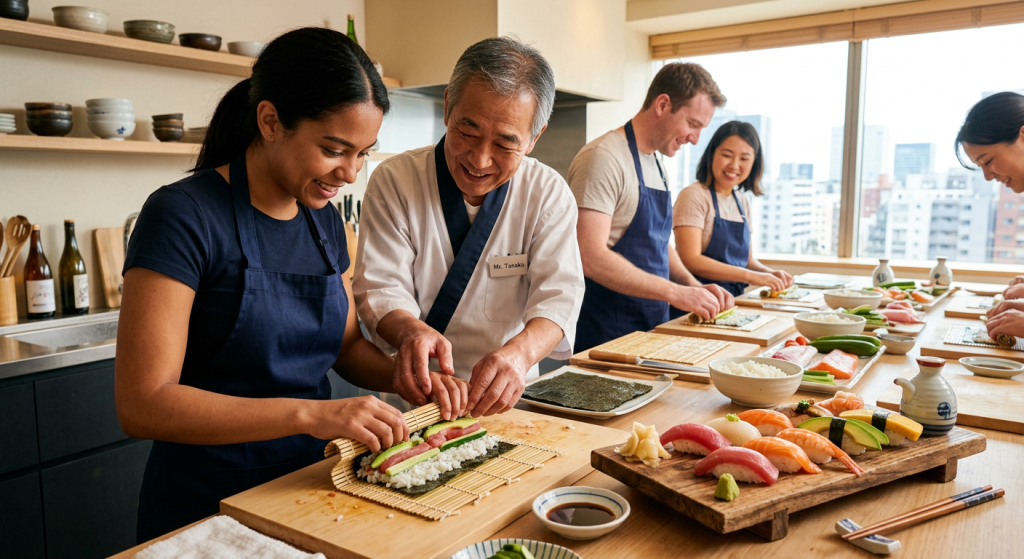
For travelers staying in Roppongi, Azabu-Juban, or around Tokyo Tower, SUSHI GARYU is one of the most practical nearby alternatives. Klook lists the venue as SUSHI GARYU Higashi Azabu Flagshipstore, while airKitchen places the class near Akabanebashi Station, about 5 minutes from Azabu-Juban. The class is beginner-friendly, runs for 1.5 hours, and recent listings describe a nigiri-focused workshop using ingredients such as tuna and salmon. Both Klook and airKitchen position it as a hands-on class rather than a demonstration-only event.
This is also one of the easier short-format classes to fit into a busy sightseeing day. Klook says the class is offered in English and Japanese, and both platforms emphasize the dress-up element: Klook mentions a Japanese happi coat, while airKitchen says guests can wear a Japanese costume or chef-style outfit during the workshop. Vegetarian and vegan options are also published on the airKitchen version, and the platform’s cancellation policy allows a full refund up to 48 hours in advance.
Pricing needs a quick note here because it varies depending on where you book. A current Klook-linked listing surfaced through LIVE JAPAN shows ¥8,910, while the airKitchen page lists ¥13,200 per person for a similar near-Tokyo-Tower class under the same GARYU name. That does not necessarily mean one is wrong. Platform fees, promotional discounts, and slightly different packages can all change the listed amount. Check the exact inclusions and cancellation terms on the page you plan to use.
Sushi Making Class in Tokyo Tsukiji Fish Market with Pro Sushi Chef
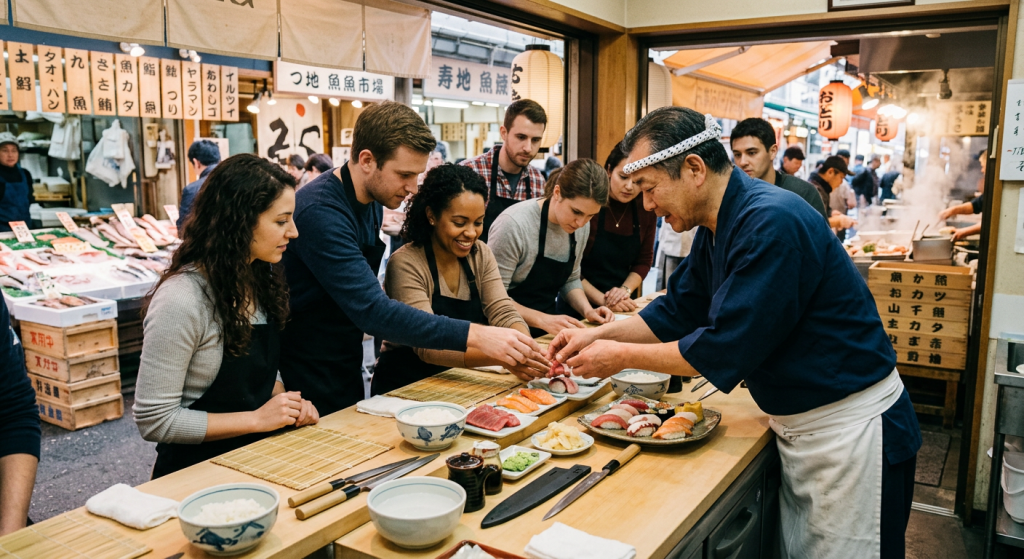
If your priority is a more classic Tokyo food-travel setting rather than staying inside Minato, the Tsukiji pro-chef class is one of the stronger alternatives within easy reach of central Tokyo. A current Klook feed shows this experience at ¥12,375, with English guidance, free cancellation, and a 90-minute format. Viator’s description says participants learn fish preparation, knife techniques, and sushi shaping while making nigiri and rolled sushi before eating what they made.
This option makes sense for travelers who already want to spend time around Tsukiji Outer Market and prefer a chef-led class over a home kitchen. Reviews on the Klook page repeatedly describe the class as smooth, organized, and easy to follow because an English-speaking guide translates the chef’s instruction step by step. One recent review also notes that the early start leaves plenty of time for the rest of the day, which is useful if you are trying to combine the class with Ginza, Hamarikyu, or afternoon sightseeing.
The main trade-off is location. This is not a Roppongi neighborhood activity, so book it because you want the Tsukiji setting and the chef-led format, not because you need something close to your hotel. It is a good step up if the Roppongi-area classes are sold out, your group is too small for Hassan, or you want a more classic sushi-chef atmosphere than the home-style temari class.
How to choose the right class from Roppongi
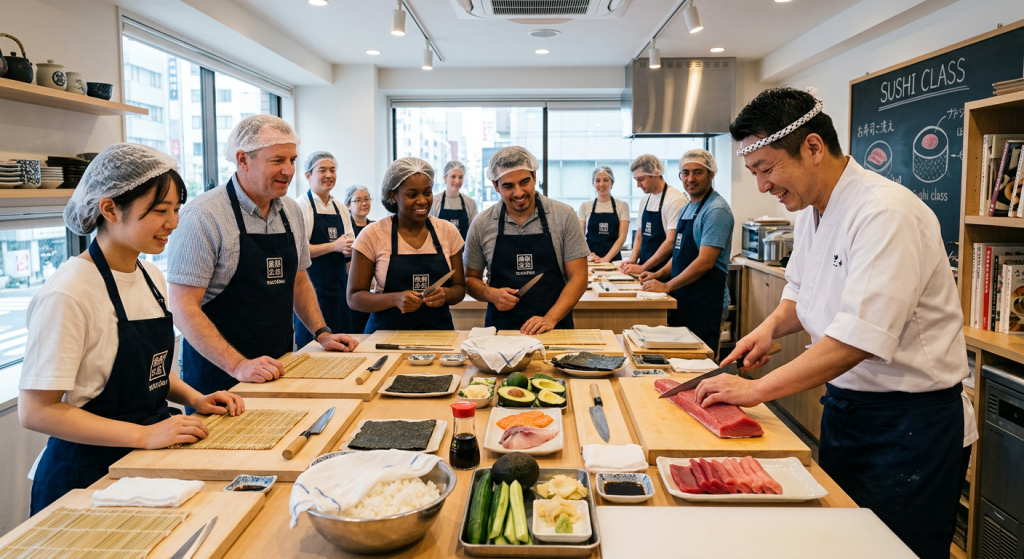
Start with group size. If you are traveling with a larger group and want a class actually in Roppongi, Hassan is the most direct fit because it is built around a minimum of eight participants. If you are a couple or a family, Satomi’s class is much easier to book and feels more personal. If you want something closer to a professional workshop without leaving Minato, GARYU is the cleaner match.
Then think about the style of sushi you want to make. Satomi’s class focuses on temari sushi and a broader home-cooking table. Hassan combines rolled sushi and nigiri in a restaurant-group format. GARYU is more of a compact, beginner-friendly nigiri workshop, while the Tsukiji pro-chef option leans into knife work, chef instruction, and the market-area atmosphere. These are not interchangeable experiences, even though all four sit under the broad label of “sushi making.”
Dietary needs matter too. Satomi clearly publishes vegan and vegetarian availability on request. GARYU’s listings also mention vegetarian, vegan, and gluten-free accommodations when requested in advance. Hassan does not clearly publish vegetarian or allergy handling on its English page, and the Tsukiji pro-chef class also does not make strong published promises in the snippets reviewed here, so those two should be treated as classes where you ask first and book second if you have strict requirements.
Finally, compare booking conditions before you commit. Satomi and GARYU both show 48-hour refund windows on their booking pages. The Tsukiji Klook listing also shows free cancellation. Hassan, by contrast, asks guests to reserve directly by phone and does not publish the same kind of checkout-style booking flow on its English page, so confirm any cancellation terms when you contact the restaurant.
What travelers should know before booking
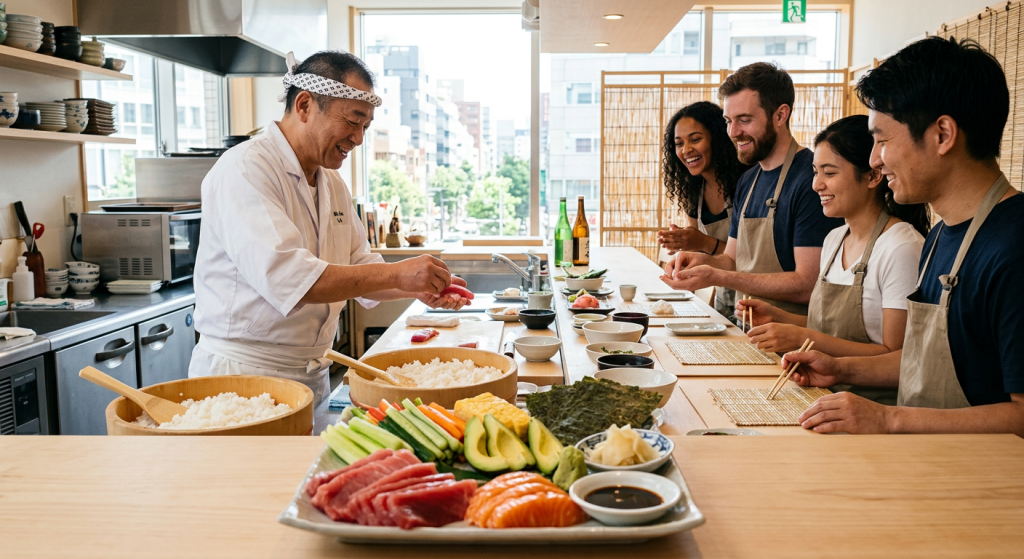
Roppongi is not one of Tokyo’s densest sushi-class neighborhoods. The area does have real hands-on choices, but they are fewer than what you will find around Tsukiji, Asakusa, or some other parts of central Tokyo. That is why articles targeting “sushi making class Roppongi” often need to widen the map slightly and include nearby Minato options rather than pretending the neighborhood is full of classes on every block.
That wider search is usually worth it. A class near Tokyo Tower or in Tsukiji can still fit easily into a Roppongi-based trip, especially if you are already planning museum time, city views, or food sightseeing elsewhere in Tokyo. For many visitors, the more useful question is not “Is it inside Roppongi?” but “Is it easy to reach, taught in English, and a good fit for my group and food preferences?”
Frequently asked questions
Are there sushi-making classes in Roppongi?
Yes, but the selection is small. The clearest confirmed options in Roppongi itself are the Roppongi Hassan Sushi Experience and Satomi’s temari sushi class near Roppongi Station. If those do not fit your dates or group size, nearby Minato and Tsukiji options are more flexible.
What is the closest practical alternative if Roppongi classes do not work out?
A class near Tokyo Tower in Higashi-Azabu is one of the easiest backups from Roppongi. The GARYU class is positioned near Tokyo Tower, and airKitchen places it near Akabanebashi Station, with Azabu-Juban noted as only a short access point away.
How much does a sushi-making class near Roppongi cost?
The confirmed options reviewed here range from ¥6,000 per person at Roppongi Hassan to ¥20,000 per person for Satomi’s small-group home-style class. Nearby alternatives vary: GARYU currently shows different prices by platform, and the Tsukiji pro-chef class appears at ¥12,375 on a current Klook-linked listing.
Are these classes taught in English?
Some are clearly marketed to English-speaking travelers, but not all publish the same level of detail. Satomi explicitly says she is English-speaking, GARYU lists English/Japanese, and the Tsukiji pro-chef class is sold as English-guided. If language support is essential, confirm it again on the exact date and package you choose.
Can vegetarians or vegans join?
Sometimes, yes. Satomi’s class accepts vegan and vegetarian requests, and GARYU’s booking pages also mention vegetarian and vegan options if requested in advance. For Hassan and the Tsukiji pro-chef class, dietary handling is not as clearly published in the sources reviewed here, so ask before paying.
Can solo travelers book a class?
Not every class is solo-friendly. Hassan requires at least 8 people, and Satomi’s listing says solo travelers may be offered a private food tour or food talk instead of the standard class. If you are traveling alone, a booking-platform class like GARYU is usually the more practical place to start, but you should still confirm the participant rules for your chosen date.
Roppongi works best if you treat it as a starting point, not a hard boundary. There are real sushi-making classes in the neighborhood, but the best fit depends heavily on whether you want a large-group restaurant session, a home-style small class, or a chef-led workshop just outside the area. Compare the class format, check the latest schedule and price, confirm dietary requirements and cancellation terms, and make sure the booking page matches the kind of experience you actually want before reserving.